
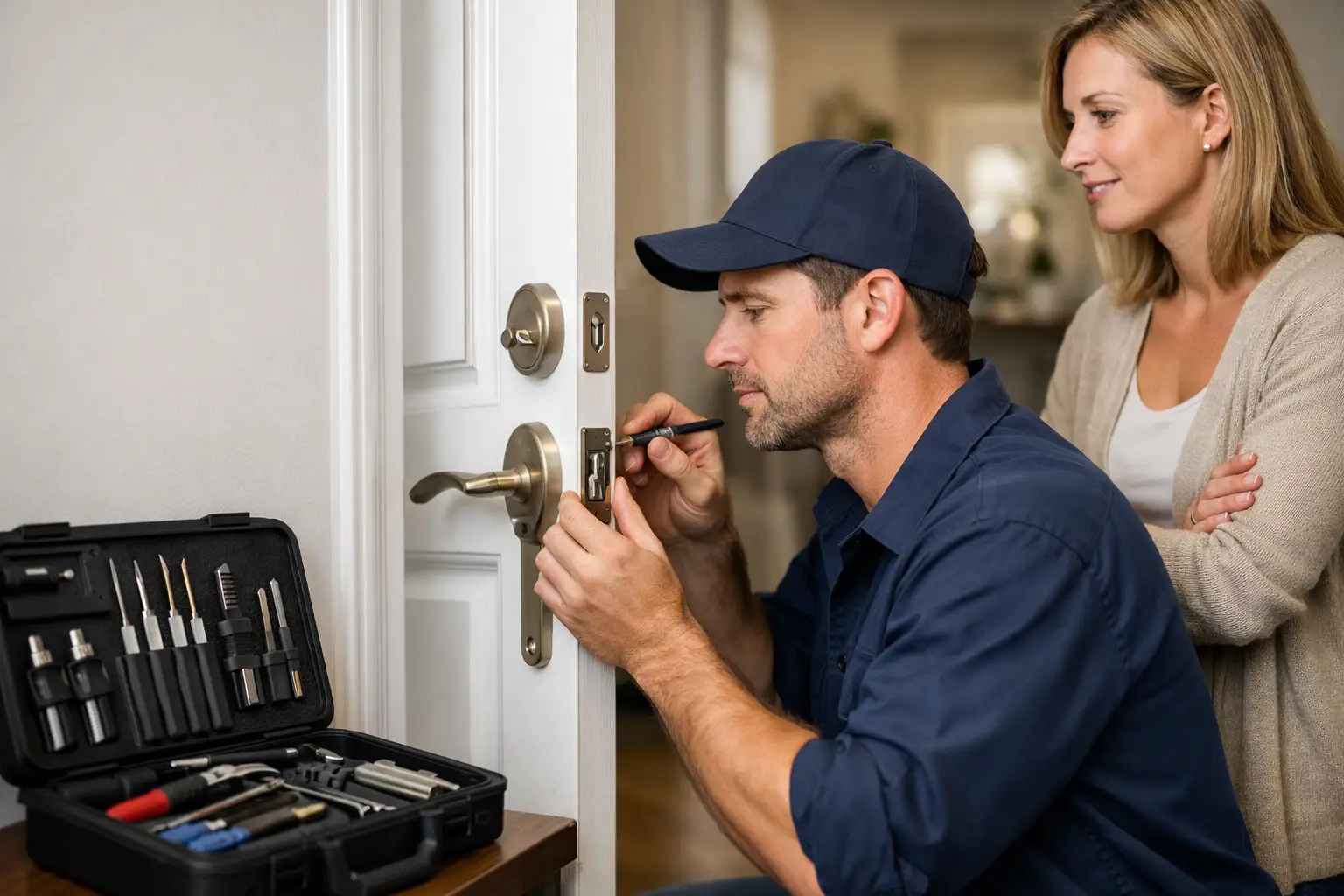
You’re locked out, stressed, and staring at the door like it personally betrayed you. At that moment, one question matters fast: will a locksmith damage my door? In most cases, a skilled locksmith can open a door without damaging it. The real risk usually depends on the lock type, the condition of the hardware, and whether the person showing up actually knows what they’re doing.
That last part matters more than most people realize. A trained locksmith is usually trying to preserve the door, the frame, and the lock whenever possible. Drilling or forcing entry is not the first move. It’s the last resort when non-destructive methods won’t work or the lock is already failing.
Will a locksmith damage my door in a normal lockout?
Usually, no. For a standard house or apartment lockout, the goal is clean entry. That means opening the lock with professional tools and technique, not prying on the door or kicking in hardware like a movie scene.
Most residential lockouts involve a knob lock, deadbolt, lever handle, or smart lock. If the lock is in decent shape and the door is properly aligned, a locksmith can often get you in without any visible damage. In many cases, the door itself is never the problem. The work is happening at the lock cylinder or latch.
The same idea applies to many office doors and storefront locks. A pro will first look for the least invasive method. If there is a way to open the door while keeping your existing hardware intact, that is usually the preferred route.
What customers fear is a locksmith showing up and immediately drilling. That does happen with unqualified or unethical operators. It should not be treated as normal.
What a professional locksmith tries first
A good locksmith starts by identifying the lock and figuring out why you’re locked out. That sounds basic, but it changes everything. A locked deadbolt, a broken key, a misaligned latch, and a failed smart lock all call for different approaches.
If the lock can be picked safely, that may be the first option. If the latch can be bypassed without harming the door or frame, that may work better. If the issue is a mechanical failure inside the lock, the technician may recommend repair or replacement because opening it cleanly may not solve the bigger problem.
The best service calls are straightforward. The locksmith inspects the situation, explains the options, gives you pricing before the work begins, and uses the least destructive method available. That is what customers should expect.
When damage can happen
There are cases where some damage is possible, but it’s usually tied to the lock, not the door itself.
If a lock is high-security, severely worn out, internally broken, or jammed in a way that blocks non-destructive entry, drilling may be necessary. Drilling often damages the lock cylinder so the lock can be opened and replaced, but that still does not mean the door will be damaged.
Damage is also more likely if the door or frame is already in bad shape. A swollen wood door, a shifted frame, rusted hardware, or a deadbolt that no longer lines up correctly can complicate the job. In those cases, the locksmith may be dealing with more than a lockout. They may be dealing with a door that has been fighting the lock for months.
Then there’s the biggest risk of all: bad technique. If someone uses excessive force, the wrong tools, or takes shortcuts, you can end up with scratched hardware, bent trim, chipped paint, or worse. That is not proof that locksmith work is destructive by nature. It is usually proof that the wrong person was hired.
The difference between lock damage and door damage
This is where a lot of confusion comes from. People ask if the door will be damaged, but what often gets replaced is the lock.
Those are not the same thing.
If a lock has to be drilled, the lock may be sacrificed to gain entry. The door slab, frame, hinges, and surrounding trim may remain perfectly fine. That is a very different outcome than splintering a frame or prying a door open.
A professional locksmith should tell you clearly what is at risk before starting. If the lock may need to be replaced, you should hear that up front. If the door itself is at risk because of existing damage or severe alignment issues, that should also be explained before any work begins.
Clear communication is a big part of good locksmith service. Fast matters, but so does fair.
Which doors and locks are harder to open cleanly?
Some jobs are naturally more complex. High-security deadbolts, restricted key systems, commercial panic hardware, older mortise locks, and certain smart locks can take more time and more specialized skill. That does not automatically mean damage, but it does narrow the options.
A basic residential knob lock is usually simpler than a commercial steel door with a heavy-duty latch. A standard deadbolt is usually easier to deal with than a damaged multipoint locking system. Double-cylinder deadbolts, which require a key on both sides, can also complicate entry depending on the setup.
Car doors and ignitions are another category entirely. Automotive locksmith work often requires specialized tools and programming equipment, especially with transponder keys and push-to-start systems. Again, a qualified locksmith aims to avoid damage, but the method depends on the vehicle and the nature of the lockout.
How to lower the chance of damage before work starts
You do not need to know locksmith tradecraft to protect yourself. You just need to ask the right questions.
Ask whether the locksmith expects non-destructive entry first. Ask what happens if the lock is failed internally. Ask whether drilling would damage only the lock or could affect the door hardware around it. Ask for the price before they begin and whether replacement hardware, if needed, is included or separate.
Pay attention to how they answer. A trustworthy locksmith is direct. They won’t promise magic, but they also won’t scare you into unnecessary drilling or expensive replacement. If someone is vague about the method and evasive about pricing, that is a red flag.
Photos can also help. If you can send a picture of the lock and door ahead of time, the locksmith may have a better idea of what tools and methods are likely. That saves time and can reduce surprises on-site.
Signs you hired the wrong locksmith
If the technician reaches for a drill before inspecting the lock, be cautious. If they refuse to explain the process, be cautious. If the original quote suddenly jumps after arrival with no clear reason, definitely be cautious.
The locksmith industry has plenty of solid professionals, but it also has operators who rely on urgency and confusion. Customers in a lockout are vulnerable. They want the problem solved now, and that urgency makes it easier for bad actors to push unnecessary work.
A good locksmith does not need to create pressure. They should be able to explain the problem, the likely method, the price, and the next step in plain English.
What if the lock is already damaged?
This is common, especially after a break-in attempt, a worn-out lock, or a key that snapped inside. In that case, the locksmith may not be choosing between damage and no damage. They may be dealing with damage that already happened.
When the lock is compromised, the priority shifts from simple entry to safe entry and secure repair. Sometimes that means opening the door and replacing the hardware right away. If the frame, strike plate, or door edge has also been affected, the locksmith may fix what they can and recommend a door contractor for anything structural.
That kind of honesty matters. A locksmith should not pretend to be a carpenter, and a carpenter should not pretend to be a locksmith.
So, will a locksmith damage my door?
Most of the time, no. A qualified locksmith is trained to open doors with the least damage possible, and many lockouts can be resolved without harming the door or even the lock. When damage does happen, it is often limited to the lock hardware, and only when the situation leaves no better option.
The bigger issue is not whether locksmith work can damage a door. It’s whether the person doing the work is skilled, honest, and clear about what the job requires. That is what protects your property and your wallet.
If you ever need emergency help in the San Diego area, the right locksmith should move fast, explain the price before the work starts, and treat your door like it’s their own. That’s the standard. Don’t settle for less when you’re already dealing with enough.
When you’re locked out, speed matters. But the best call is the one that gets you back in without turning a lock problem into a door repair bill.