
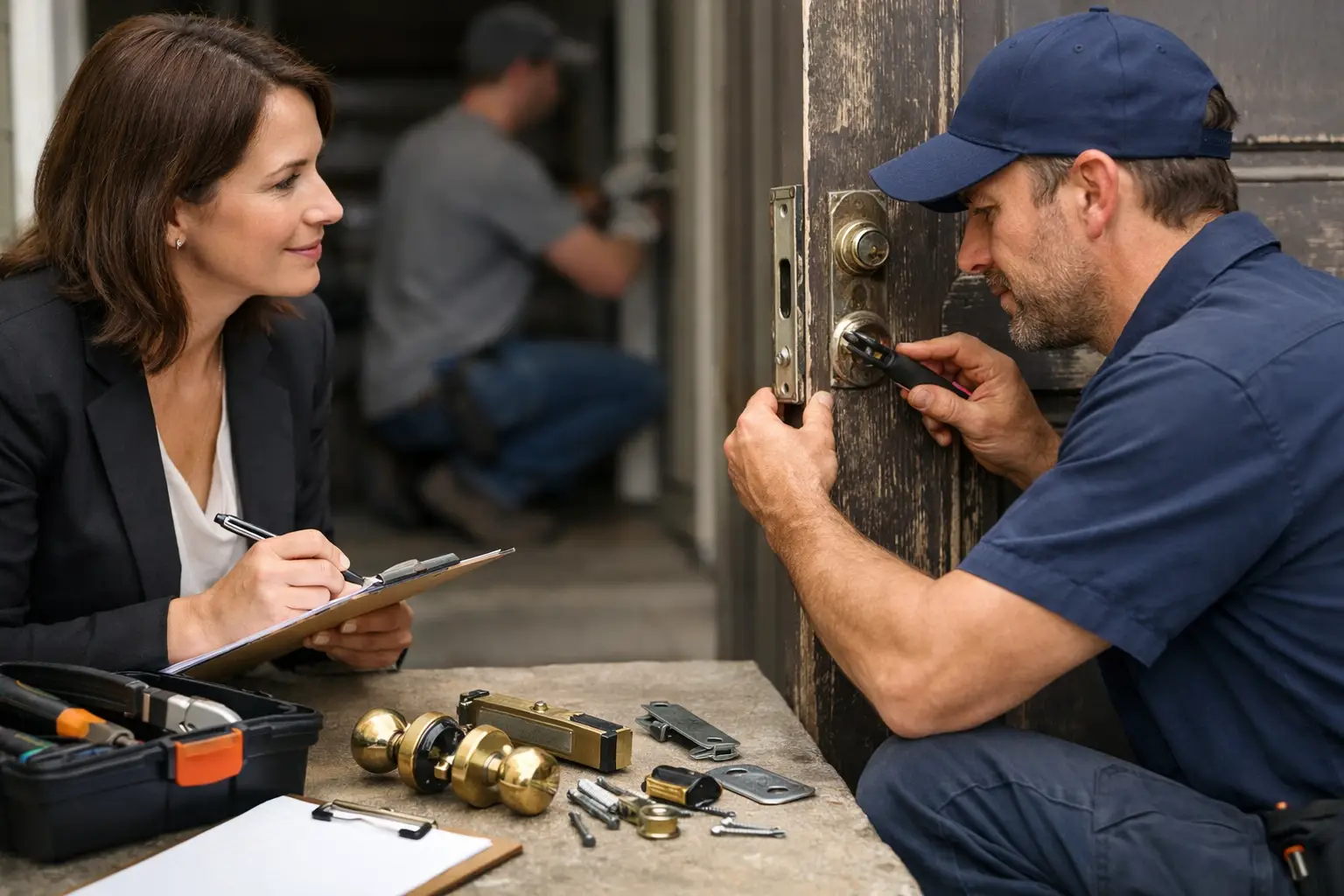
A key that needs a hard wiggle is not a minor annoyance. It is often the first warning before a failed lock, a broken key, or a late-night lockout. Knowing when to replace worn locks helps you act on your schedule instead of paying for an emergency call when the door will not open or secure.
For Orange County homeowners, renters, property managers, and business owners, the right answer is not always “replace everything.” Some problems can be repaired. Others call for rekeying. But when the lock itself is worn, unreliable, or no longer protecting the property, replacement is the safer and more cost-effective move.
When to Replace Worn Locks Instead of Waiting
Locks wear out because they are mechanical parts. Every turn of the key moves small pins, springs, and components inside the cylinder. Front doors, office entries, storefronts, gates, and rental units see especially heavy use. Add dirt, moisture, forceful key turns, or years of duplicated keys, and those parts can stop working as designed.
Replace a lock when it no longer operates consistently. A lock that works only after several attempts is not dependable security. It may still open today, but it can fail at the worst possible time.
The clearest signs include a key that sticks, turns roughly, or must be jiggled; a deadbolt that does not extend or retract smoothly; a latch that does not catch without pushing or pulling the door; and a lock that feels loose, worn, or damaged around the keyway. If a key is bending, catching, or coming out with visible metal shavings, stop forcing it. A snapped key can turn a simple service visit into an urgent extraction and repair.
A lock should also be replaced after obvious physical damage. That includes a bent bolt, cracked housing, damaged strike plate, signs of a break-in attempt, or a keyway that appears tampered with. Security hardware that has been forced may still appear to work, but its internal parts or door alignment may no longer be reliable.
The lock is old, and the problem keeps coming back
Age alone does not automatically mean a lock must go. A well-maintained lock in a low-use interior door can last for many years. The better question is whether the lock is becoming a repeat problem.
If you have already lubricated it properly, adjusted the door, replaced a worn key, or had the lock serviced and it still sticks, replacement is usually the fair call. Repeated small repairs can add up while leaving you with the same weak point at the door.
This matters most on doors that protect people, inventory, equipment, or private spaces. A temperamental bedroom privacy lock is inconvenient. A temperamental front-door deadbolt, office entry, or storefront lock is a security risk.
Worn Lock or Door Alignment Problem?
Not every hard-to-turn lock has worn-out internal parts. Doors shift with weather, settling, loose hinges, and everyday use. When a deadbolt works smoothly with the door open but binds when the door is closed, the issue may be alignment between the bolt and the strike plate.
That situation may require an adjustment rather than a complete lock replacement. The same is true when a latch drags because the door has sagged. Replacing the lock without correcting alignment can leave the new hardware under the same stress.
Still, alignment trouble and lock wear often happen together. Forcing a deadbolt into a misaligned strike plate over months or years can damage internal components. A trained locksmith should check both the lock and the door before recommending the work. A fair quote starts with identifying the actual problem, not selling hardware you do not need.
Replace, Repair, or Rekey: Choose the Right Fix
These services solve different problems. Choosing the right one keeps costs clear and avoids unnecessary work.
Repair makes sense when the lock body and cylinder are in good shape but a specific part has failed. A loose handle, damaged strike plate, misalignment, or minor mechanical issue may be repairable. The result depends on the lock type, its age, and whether replacement parts are available.
Rekeying changes the lock so old keys no longer work. It is a smart option after moving into a home, changing tenants, losing keys, ending an employee relationship, or giving too many copies to contractors or guests. Rekeying does not fix worn internal hardware. If the lock is sticking or failing because it is physically worn, rekeying alone will not make it dependable.
Replacement is the right option when the hardware is damaged, unreliable, outdated, or no longer fits your security needs. It also gives you a chance to upgrade a weak deadbolt, standardize keys across a property, add a keypad lock, or choose hardware better suited to a high-traffic commercial door.
For a rental property, it may be practical to rekey a solid, well-functioning lock between tenants and replace it only when wear appears. For a business with frequent employee turnover or daily customer traffic, durable commercial-grade hardware and a managed key plan may save trouble over time.
Do Not Ignore These Security Red Flags
Some lock issues are not maintenance concerns. They require prompt action.
Replace the lock or have it assessed immediately after a break-in attempt, a stolen key ring with identifying information, or a situation where you cannot account for who has keys. If a former tenant, roommate, employee, contractor, or caregiver may still have access, rekeying or replacement should not wait.
Also act quickly if the door will not lock from the outside, the deadbolt will not fully extend, or the latch can be bypassed because the strike plate is loose. The door may look closed while offering little real protection.
For businesses, do not overlook back doors, storage rooms, side gates, and employee-only entries. These are often used more roughly and checked less often than the front entrance. A failing lock at a secondary door is still a weak point.
What You Can Do Before a Locksmith Arrives
If the lock is sticking but the door still works, avoid brute force. Do not use pliers to twist the key, hit the lock, or flood the keyway with household oil. Those quick fixes can damage the key, collect grime inside the cylinder, and make the problem worse.
Use the original key if possible. A heavily copied key can be slightly worn or poorly cut, causing trouble even when the lock is still serviceable. Check whether the door works differently when you lift, pull, or push it gently. That information can help identify an alignment issue.
If you are locked out, a key has broken inside, or the door will not secure, call for on-site service rather than trying to drill or force the lock yourself. Drilling is sometimes necessary, but it should be a last-resort method, not the default answer to every lockout.
How to Avoid Surprise Costs During Lock Replacement
Locksmith pricing should be straightforward. Before work starts, ask what the service call covers, whether hardware is included, and what could change the price. The technician should explain whether the issue calls for repair, rekeying, or replacement before beginning work.
Be cautious with quotes that sound unusually low but do not specify the service, hardware, or possible after-hours charges. A legitimate locksmith should be able to explain the scope clearly at the door. You deserve to know what you are paying for before authorizing the job.
The cheapest replacement lock is not always the best value either. A low-quality lock on a busy entry can wear quickly, while a better-grade option may last longer and operate more reliably. The best choice depends on the door, level of traffic, existing hardware, and security needs.
A Better Time to Replace Locks
The best time to replace a worn lock is before it becomes an emergency. Pay attention to rough key turns, loose hardware, repeated sticking, and doors that do not lock cleanly. These are small warnings with a habit of becoming big problems at inconvenient hours.
If you are unsure whether a lock needs repair, rekeying, or replacement, get it checked while the door is still usable. Fast & Fair Locksmith focuses on clear answers, prompt on-site help, and fair pricing so you can secure the property without guessing what comes next.