
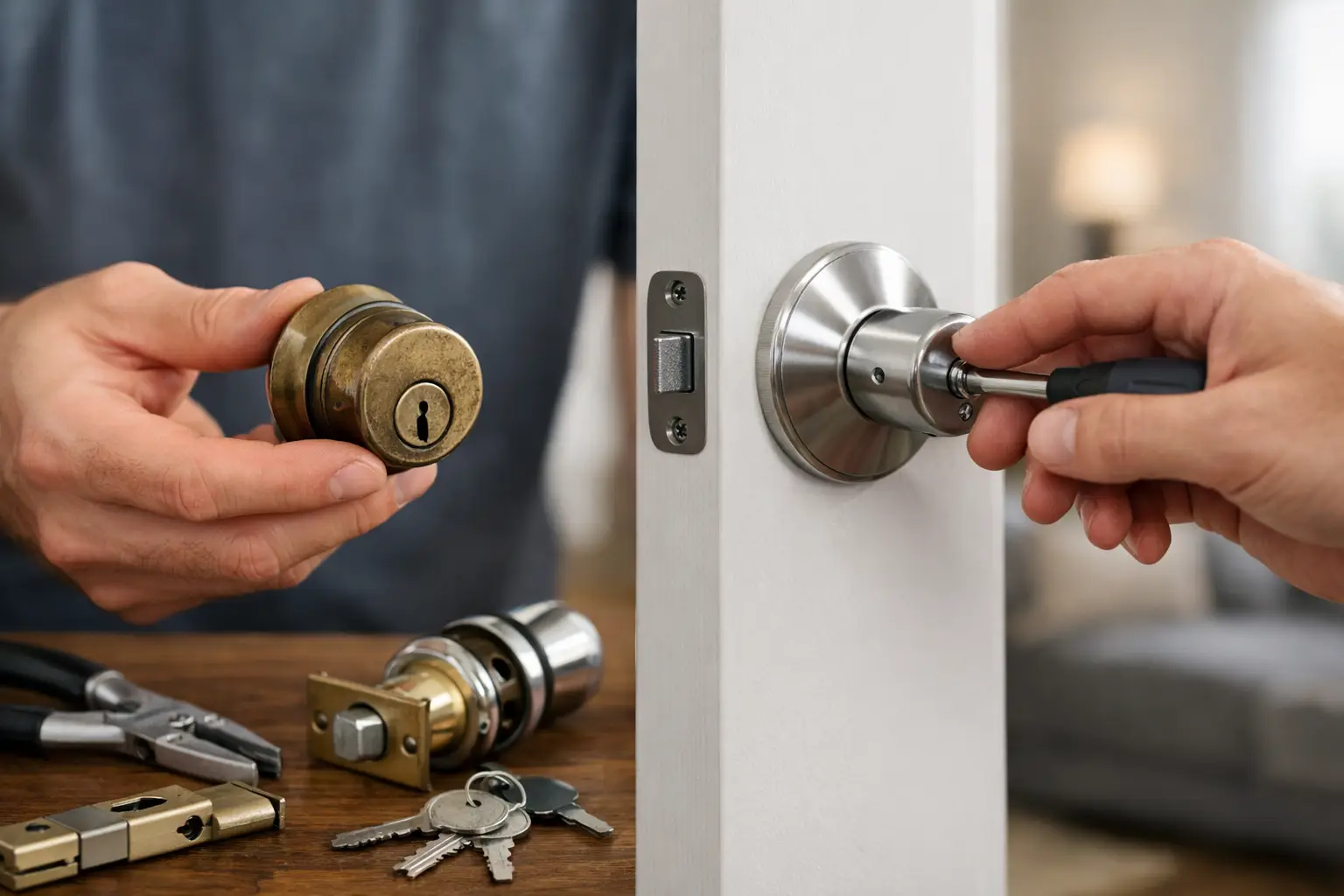
A key that suddenly sticks at your front door is more than an annoyance when you are late for work. It can be the first warning that the lock is wearing out. So, when should locks be replaced? Replace them when they can no longer protect the property, work reliably, or give you confidence about who may have a key.
You do not need to replace every lock after every problem. In many cases, a repair or rekey is the faster, fairer answer. But waiting too long on a damaged or outdated lock can turn a manageable service call into a lockout, a broken key, or a real security gap.
When Should Locks Be Replaced Instead of Rekeyed?
Rekeying changes the internal pins in a working lock so old keys no longer work. It is usually the right move after a tenant moves out, an employee leaves, or keys are lost but the hardware is otherwise in good condition. You keep the lock body and get a new key combination.
Replacement means installing new lock hardware. It makes sense when the lock itself is damaged, unreliable, low quality, incompatible with the door, or no longer provides the level of security you need. A locksmith should explain that difference before starting work. If the existing lock can be rekeyed safely, you should not be pushed into a costly replacement just because it is the bigger sale.
There are also situations where both are needed. For example, if a back door has a worn deadbolt and the front lock is fine, replace the bad deadbolt and rekey the remaining locks to one new key. That gives you better security without replacing hardware that still works.
8 Signs It Is Time to Replace Your Locks
1. The lock is hard to turn, stick, or jam
A key that catches, needs to be wiggled, or only turns after several tries deserves attention. Dirt, weather exposure, and a door that has shifted out of alignment can all cause trouble. Sometimes a locksmith can clean, adjust, or repair the lock.
If the cylinder is worn, internal parts are failing, or the key repeatedly gets stuck, replacement is often the safer choice. Do not force it. Forcing the key can snap it inside the cylinder and leave you locked out.
2. The lock was damaged during a break-in or attempted break-in
After an attempted break-in, replace any lock that is bent, loose, drilled, pried, or visibly damaged. Even if it still accepts a key, hidden damage can weaken the mechanism or keep the deadbolt from fully engaging.
The door frame matters too. A strong new deadbolt will not help much if the strike plate is loose or the frame is split. A proper on-site assessment looks at the lock, latch, strike, screws, and door alignment so the repair actually improves security.
3. You moved into a new home, apartment, or office
You cannot know how many copies of an old key exist. Previous owners may have given keys to relatives, contractors, neighbors, dog walkers, former employees, or vendors. For a rental property, keys may have circulated through multiple tenants over the years.
Rekeying is usually enough if the locks are in solid condition. Replace them if they are cheap, damaged, mismatched, or do not meet the security needs of the property. For commercial spaces, this is also a good time to organize access so managers are not carrying a crowded ring of unrelated keys.
4. Keys were lost or stolen
A lost key is not always an emergency. If there is no identifying information attached and you do not believe someone can connect it to your address, rekeying may be a practical precaution.
Treat it as more urgent if the key was stolen, lost with a wallet or ID, taken by a former roommate, or missing after a dispute with an employee or contractor. In those cases, rekey or replace the locks promptly. The goal is simple: remove access before the missing key becomes a problem.
5. The lock is old, low-grade, or easy to defeat
Not every old lock is unsafe, but age can bring worn parts, loose cylinders, and outdated designs. Basic entry knobs with no deadbolt, locks with exposed screws on the exterior, and hardware that feels loose or thin are common reasons to upgrade.
For exterior doors, a quality deadbolt installed correctly is generally a better choice than relying on a locking knob alone. The best option depends on the door material, frame condition, and who needs access. A single-family home, a busy storefront, and a multi-unit property do not need the same setup.
6. The door was replaced, repaired, or has shifted
Doors move over time. Heat, moisture, settling, and heavy use can pull a door out of alignment. After a remodel, door replacement, or frame repair, the old lock may no longer line up properly with the strike plate.
A minor alignment issue can sometimes be corrected. But if the bolt does not fully extend into the frame, the lock is not doing its job. Replace incompatible or damaged hardware rather than accepting a lock that only works when you pull, push, or lift the door a certain way.
7. Your security needs changed
A new baby, a separation, an aging parent, a new business lease, or a growing team can change what you need from a lock. You may need a keyed deadbolt on a door that previously had only a handle lock. A small business may need restricted key control or a system that allows one manager key to operate several doors.
Smart locks can be useful for controlled access and temporary codes, but they are not automatically the best upgrade for every door. They need reliable installation, compatible hardware, and a plan for battery changes and backup entry. Choose the solution that fits how the property is actually used, not the one with the most features.
8. You have had repeat lockouts or broken keys
One lockout can happen to anyone. Repeat lockouts involving the same door, the same key, or a key that keeps bending are different. The problem may be a failing lock cylinder, a worn key, a damaged door, or all three.
Replacing the lock before it fails completely can save time and stress, especially at a business entrance or a home door used every day. It also gives you the chance to make all exterior locks work with one key, when the hardware allows it.
What to Do After a Security Concern
If you believe someone may have unauthorized access, act before there is a second incident. Secure the most vulnerable entry point first, then address the rest of the property. Keep a record of who receives new keys, especially for rentals and businesses.
For commercial properties, collect keys and access devices when an employee leaves, then rekey promptly if key control has been loose. For landlords and property managers, a consistent turnover policy prevents guesswork: inspect the hardware, repair what is sound, replace what is failing, and change access between occupants.
Avoid quick fixes like hiding a spare key outside or leaving a damaged deadbolt in service because it still locks “most of the time.” Exterior locks should work every time, without force or special handling.
How to Get a Fair Lock Replacement Quote
A trustworthy locksmith should ask what happened, what type of door you have, and whether the lock is damaged or simply needs a key change. They should explain whether repair, rekeying, or replacement makes the most sense before work begins.
Ask for the service-call cost, labor cost, hardware cost, and any after-hours charge. If a price changes because the lock has unexpected damage or requires different hardware, get the reason and updated total before approving the work. Clear pricing is part of the service, not an extra.
For San Diego homeowners, renters, drivers, and business owners, Fast & Fair Locksmith focuses on the practical answer: get the access problem fixed quickly, use the right hardware, and know what you are paying for.
A lock does not need to look broken to be ready for replacement. If it is unreliable, compromised, or no longer right for the people and property it protects, deal with it now while you still have control of the situation.