You are standing beside your car with no working key, and the last thing you need is a long back-and-forth before help can start. If you are asking, “what information needed for car key replacement?” the short answer is: details about the vehicle, proof that you are authorized to have a key made, and a clear description of the key you lost or damaged.
Having this ready helps a mobile locksmith identify the right key, confirm ownership, and give you a more accurate price before work begins. It also protects you from wasted time, wrong parts, and vague quotes that change once the technician arrives.
What Information Is Needed for Car Key Replacement?
Start with the basics: the vehicle’s year, make, model, and trim level. A 2014 Honda Accord and a 2024 Honda Accord may use very different key systems, even though the vehicles share the same model name. Trim can matter too, especially when one version has push-button start and another uses a standard ignition key.
Your vehicle identification number, or VIN, is often the most useful detail. It is a 17-character number found on the driver-side dashboard near the windshield, on the driver-door frame, and on vehicle paperwork. A locksmith can use the VIN to help confirm the correct key blank, remote, or transponder system for your car.
You should also be ready to say whether you have any working key left. Replacing a lost-only key is different from copying an existing key. If one key still works, the locksmith may be able to duplicate it or use it to speed up programming. If every key is gone, the job can require more vehicle information, additional programming steps, and sometimes a different type of key source.
Your car’s year, make, model, and VIN
Give the details exactly as they appear on your registration or insurance card. Small differences matter. For example, a Ford Escape, Escape Hybrid, and Escape with a proximity key may each need different equipment or programming.
If you do not have the VIN handy, tell the locksmith where the vehicle is parked and whether you can access the registration inside. In an emergency lockout, a technician may be able to help you regain access first, then verify the details needed for the replacement key.
The type of key you need replaced
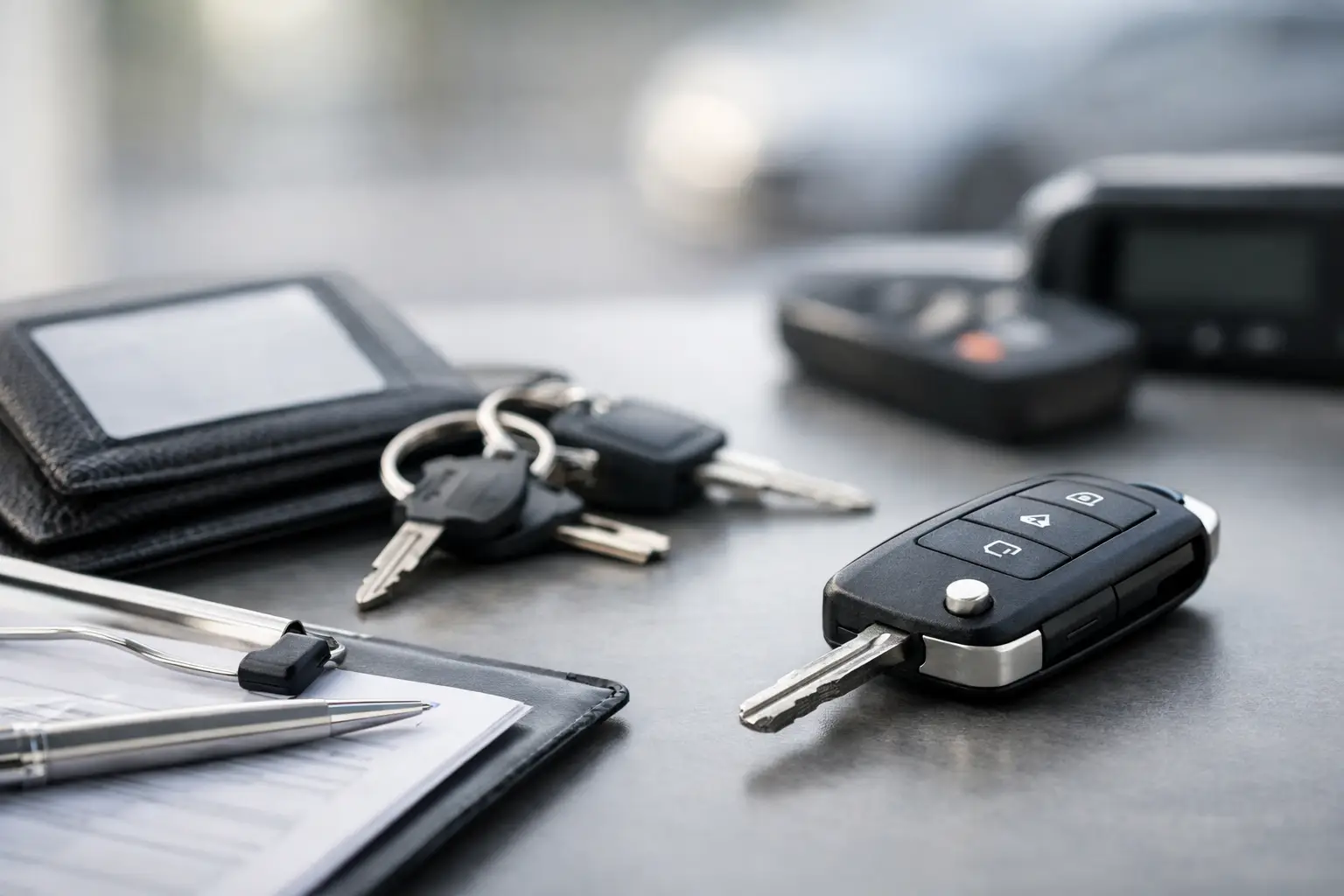
Not every car key is a simple metal key. Tell the locksmith what you had, if you know it: a traditional ignition key, a chip key, a remote-head key, a key fob, a smart proximity key, or a push-to-start remote.
A photo of the old key or fob can help if you still have one. So can a photo from a previous listing, service record, or spare key. Buttons, key shape, logo placement, and FCC ID numbers can help identify the correct remote. Still, a photo is helpful information, not a substitute for confirming compatibility with the vehicle.
If your key was damaged rather than lost, bring the damaged pieces if possible. Even a broken fob shell, worn key blade, or dead remote may provide useful part numbers and programming clues.
Proof You Can Authorize a Replacement Key
A legitimate locksmith should verify that you own the vehicle or are authorized to use it before making a key. This is not a delay tactic. It is a basic safeguard against someone getting a key to a car that is not theirs.
In most cases, have a government-issued photo ID and vehicle registration ready. The name on your ID should match the registration whenever possible. If the car is leased, rented, owned by a business, or registered to a family member, the situation may require additional documentation or authorization.
For a company vehicle, a fleet manager, owner, or authorized representative may need to confirm the request. For a rental car, contact the rental company first. They may have a required process, roadside service, or restrictions on who can create a replacement key.
If your registration is locked inside the vehicle, explain that upfront. A mobile locksmith can advise what verification is needed and whether an unlock service can be completed before key replacement. Do not assume that a VIN alone proves ownership. It identifies the vehicle, but it does not show who has permission to order a key.
Information That Helps You Get an Honest Quote
The fastest way to avoid surprises is to explain the job clearly before anyone is dispatched. Say whether you are locked out, whether all keys are lost, whether the key turns but will not start the car, or whether the fob stopped working after getting wet or being dropped.
Give your exact location, including garage level, cross streets, apartment gate instructions, or whether the vehicle is parked at home, work, or a shopping center. A locksmith needs to know whether the car is accessible and whether there are practical limits, such as low garage clearance or a vehicle blocked into a tight space.
Ask what the quote includes. For car key replacement, costs can involve the service call, key blank or fob, cutting, transponder programming, remote programming, and any additional key. The right price depends on the vehicle and key technology. A basic older metal key may be quick and inexpensive, while a late-model smart key can cost more because the part and programming are more involved.
Be cautious with an unusually low phone quote that does not ask for your vehicle year, model, or key type. No one can price a smart-key replacement accurately without knowing what vehicle they are working on. A fair locksmith explains the expected charge, what could change, and why before starting the work.
When a Key Code or Existing Key Makes a Difference
Some vehicles can be keyed using a manufacturer key code, while others may require decoding a lock or using vehicle data to determine the correct cuts. You may have a key code listed in old paperwork, but do not worry if you do not. Most drivers do not keep it, and it is not always necessary.
If you have a working spare key, bring it to the vehicle. It can confirm that the replacement starts the car, operates the doors, and has the correct remote functions. It may also help when the vehicle needs programming for a new chip key or fob.
For certain vehicles, all keys being lost can require security procedures that take longer than adding a duplicate key. That is normal, particularly on newer cars with immobilizers or proximity systems. The technician should explain the process in plain language rather than burying you in jargon.
A Quick Checklist Before You Call
Have these details ready if you can:
- Vehicle year, make, model, trim, and VIN
- Your location and whether the vehicle is accessible
- Whether any working key or fob is still available
- A description or photo of the lost, broken, or damaged key
- Photo ID and vehicle registration or other proof of authorization
- The problem you are experiencing, such as lost key, lockout, broken key, or fob that will not start the car
You do not need to solve the key problem before calling. You just need to give enough accurate information for the right technician, equipment, and key type to be sent.
When to Replace More Than One Key
If you have lost the only key, consider having a second key made at the same visit. It is usually easier to create a spare while the technician is already at the vehicle and the programming equipment is set up. A spare can turn a future lockout from an emergency into a minor inconvenience.
There is a security side to this as well. If a key was stolen, not merely misplaced, ask whether the missing key can be removed from the vehicle’s memory. On many vehicles, that can prevent the old key or fob from starting the car after new keys are programmed. Whether this is possible and what it costs depends on the vehicle’s system.
For Orange County drivers dealing with a lost key in a parking lot, at work, or outside their home, speed matters. So does knowing what you are paying for. FAST & FAIR LOCKSMITH focuses on getting the right information first, then providing straightforward on-site help without turning a stressful situation into a pricing surprise.
Keep a photo of your VIN, registration, and spare-key information somewhere secure before trouble starts. When a key disappears, those few details can save time, support a fair quote, and get you moving again sooner.