
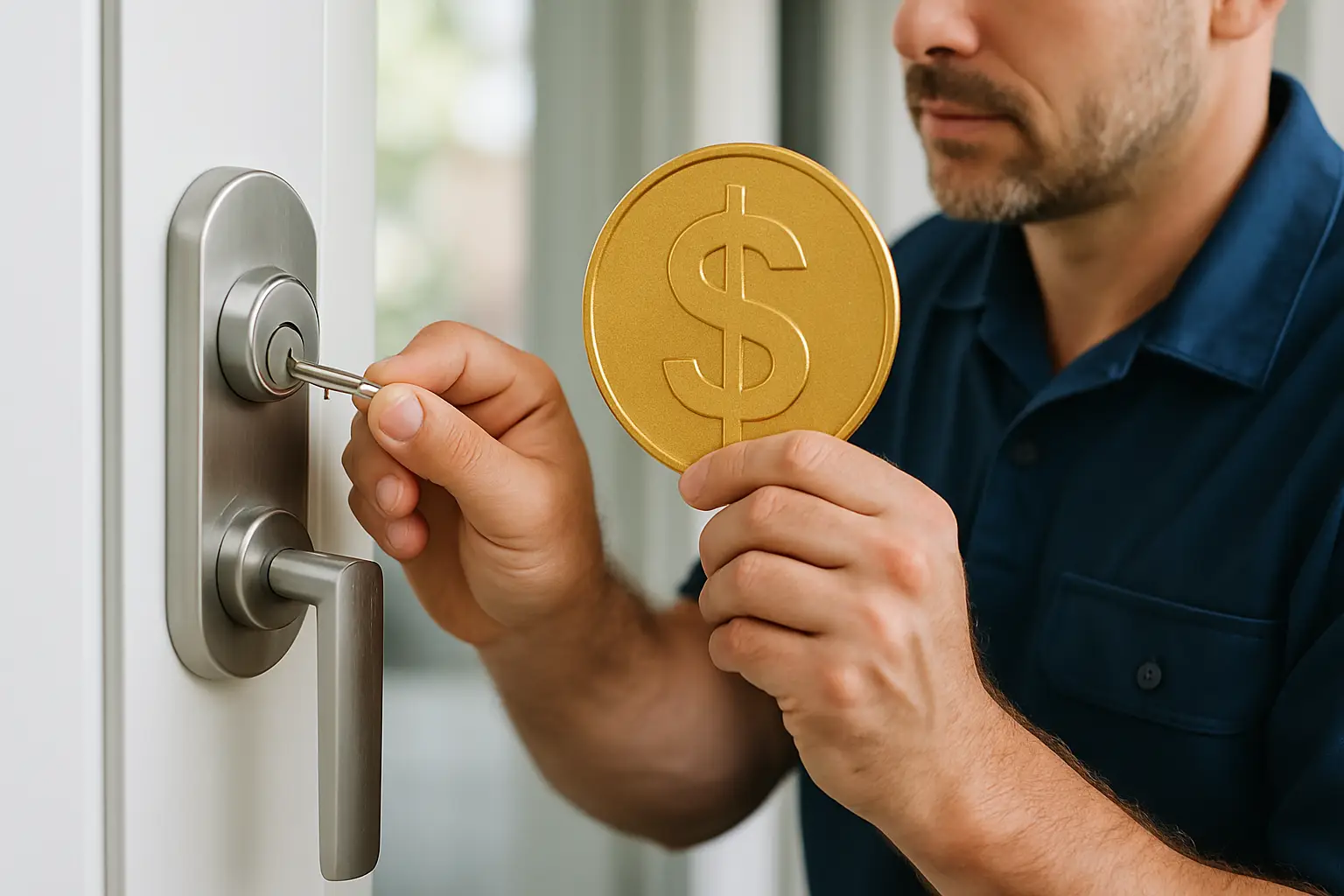
You only think about locksmith pricing when you are stuck - locked out of your car at midnight, staring at a broken key, or taking over a new place and realizing you have no clue who still has copies.
The hard part is not that locksmith service is mysterious. The hard part is that some companies make it feel mysterious on purpose. Real pricing has a few moving parts, and once you know what they are, it is easier to spot a fair quote and avoid the classic bait-and-switch.
What does a locksmith cost (typical US ranges)
Locksmith work is usually priced as a service call plus labor, with parts added when needed. The exact number varies by city, time of day, and the type of lock, but most customers land within predictable ranges.
A basic home lockout is commonly in the low-to-mid hundreds. If it is daytime, the door is straightforward, and the tech can pick it cleanly, you are typically paying for travel, skill, and time - not replacing hardware.
Car lockouts tend to be similar or slightly higher depending on the vehicle. If the car has a simple key and the door can be opened without special programming, the bill is often in that same general band. If it is a newer car with higher security or tricky access, the price can climb.
Rekeying (changing the key that works your existing locks) is often one of the best values. You are paying for labor and pins, not entirely new locks. Most homeowners rekey multiple locks at once, and the per-lock price usually gets better when the tech can do several in one visit.
Replacing a lock costs more because you are buying hardware and paying for installation. The final price depends heavily on what you choose: a basic deadbolt is very different from a high-security cylinder or a commercial-grade lever.
Car key replacement can range from reasonable to expensive fast. A standard metal key is one thing. A transponder key, remote head key, or push-to-start fob can be a bigger job because programming and specialized equipment are involved.
If you want one number that covers most everyday calls, think in ranges rather than a single price. Locksmith service is not a flat-rate commodity - it is a dispatch service with real variables.
Why locksmith prices vary so much
Two people can describe the “same” problem and get different quotes because the details matter. Here is what actually changes the cost.
Time and urgency
After-hours, weekends, and holidays cost more for a simple reason: you are asking a trained technician to drop what they are doing and get to you now. The work might be identical to a daytime job, but the availability is not.
If you can wait until regular hours, you can often save money. If you cannot wait, the key is making sure the after-hours fee is disclosed up front, not added later as a surprise.
Location and travel
Locksmiths are mobile. Travel time, fuel, and dispatch logistics are part of the service. Dense urban areas may have higher base pricing. Rural calls may have additional travel charges.
A fair company will tell you if there is a trip charge before they roll a truck. If the person on the phone refuses to talk about travel fees at all, that is a problem.
The lock type and door condition
A standard residential knob and deadbolt is usually straightforward. High-security cylinders, older “sticky” locks, misaligned doors, or damaged hardware can add time.
There is also a big difference between “locked out” and “locked out plus the lock is broken.” If the cylinder is seized or the key snapped inside and the lock is damaged, you may be looking at repair or replacement, not just entry.
Clean entry vs drilling
Most customers want to know one thing: “Are you going to drill my lock?”
A skilled locksmith will try non-destructive entry first when it makes sense. Drilling is sometimes necessary - especially with certain lock failures or when the lock is already compromised - but drilling turns a lockout into a lock replacement. That means parts plus labor.
If you are quoted a cheap number for a lockout and then told drilling is the only option the moment the tech arrives, ask why. Sometimes it is true. Sometimes it is a sales tactic.
Parts, hardware quality, and upgrades
Hardware costs are a huge swing factor. Basic residential locks are affordable. Grade 1 commercial hardware, smart locks, restricted keyways, and high-security options cost more.
There is nothing wrong with upgrading - especially after a break-in or tenant turnover - but you should be able to say yes or no without pressure. “Your lock is unsafe” should come with a clear explanation and a clear price.
Vehicle complexity
Automotive pricing varies the most because cars vary the most.
A 2008 sedan with a standard transponder key is a different job than a 2023 push-to-start system with encrypted programming and a high-cost fob. Add all-keys-lost situations, and you may need programming plus key cutting, plus extra time verifying ownership.
When you call, have your year, make, model, and whether you have any working key available. That one detail - “I have one key” vs “I have zero keys” - can change the quote significantly.
Common locksmith services and what you are really paying for
Locksmith pricing makes more sense when you understand what the technician is providing.
For a lockout, you are paying for rapid response, trained technique, and the ability to get in without damage. It is less about the minutes on the clock and more about the years of experience behind those minutes.
For rekeying, you are paying for control. You are making old keys useless without replacing your doors. This is the go-to move after moving, ending a relationship, losing keys, or managing rentals.
For lock replacement, you are paying for security changes and new hardware. Sometimes it is optional. Sometimes it is required because the lock is worn out, broken, or was drilled.
For car keys, you are paying for specialized equipment and the ability to match your vehicle’s security system. Programming is not a “nice to have.” On many vehicles, it is the whole job.
The fee surprises to watch for
If you have ever felt burned by a locksmith quote, it is usually one of these.
A super-low phone quote that does not include the service call is the most common. Another is quoting “starting at” pricing without giving any real boundaries.
Also watch for vague add-ons like “security fee,” “labor fee” that doubles on site, or inflated hardware prices that appear only after the door is open and you are stressed.
A fair quote does not have to be perfect to the dollar before the tech arrives. Sometimes the locksmith cannot see the lock condition until they are there. But a fair quote does have to be honest about the range and the reasons the price might change.
How to get a fair locksmith quote fast
When you are calling from a parking lot or a dark hallway, you do not have time for a long interview. Ask a few direct questions and listen to how they answer.
Ask for the total price range for your exact service, including the service call and any after-hours fee. If they will not give a range, you are being set up.
Ask what would make the price go up. A legitimate answer sounds like: lock has to be drilled, hardware is damaged, high-security cylinder, key programming required, long-distance travel. A sketchy answer sounds like: “We will see when we get there.”
Ask if they are dispatching their own technician or “sending someone.” You want to know who is showing up and who is accountable for the quote.
If you are dealing with a vehicle, confirm they can handle your year and key type. If you are dealing with a commercial door, confirm they work on that hardware category.
If you want a local, no-nonsense option that focuses on speed and transparent pricing, FAST & FAIR LOCKSMITH is built for exactly that - rapid response, clear communication, and pricing you can trust: https://Fastandfairlocksmith.com.
When paying more is actually the right call
Cheapest is not the same as fair.
If you are choosing between a bargain lock replacement and a better-grade lock installed correctly, paying more can buy fewer future problems - fewer jams, fewer rekeys, fewer emergency calls.
If the situation is security-sensitive, like after a break-in or when keys were stolen with identifying info, speed matters. Waiting days to save money can be the expensive choice if it leaves you exposed.
For property managers, rekeying with a consistent keying plan can save money over time even if the initial visit costs a bit more. A clean system beats a pile of random keys.
A realistic way to think about the total cost
If you are trying to budget, think in three layers.
First is the response cost: getting a trained pro to you, especially if it is urgent.
Second is the labor: the actual work, which depends on complexity and condition.
Third is the parts: sometimes zero, sometimes the biggest line item.
When you hear a quote, mentally place it into those layers. If the price is high, ask which layer is driving it. A fair company will tell you plainly.
The best closing thought we can offer is simple: when you need a locksmith, do not chase the lowest number - chase the clearest one. Clear pricing and clear accountability are what keep a bad day from getting worse.