
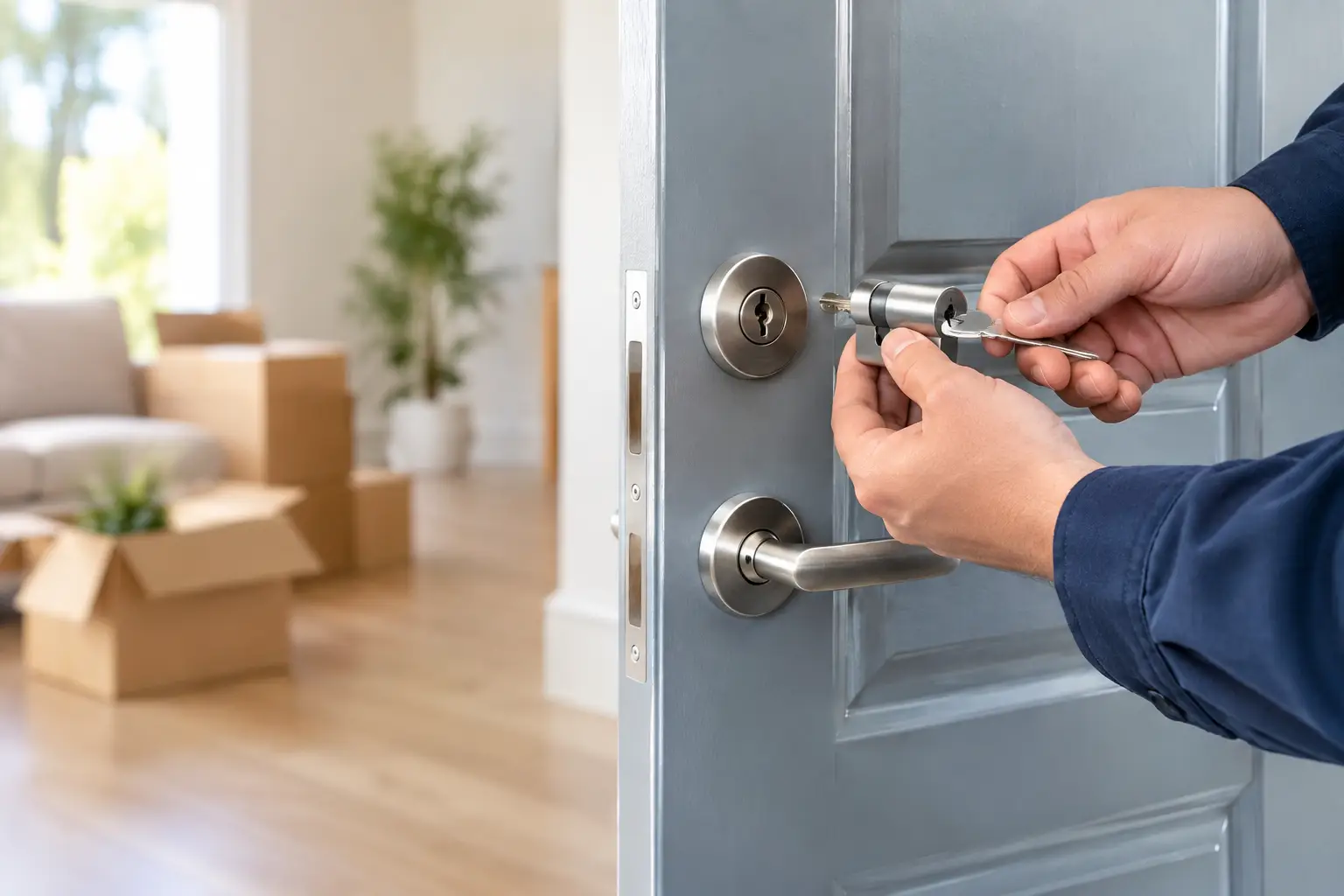
A tenant returns the keys, the unit looks ready, and the next showing is on the calendar. But until access is updated, the turnover is not finished. A tenant move out lock update closes the gap between one resident leaving and the next person safely taking possession.
For Orange County property owners and managers, this is not the place to guess, reuse old keys, or wait until move-in day. Handle the lock decision promptly, document who is authorized to order the work, and get a clear price before the technician starts.
Tenant Move Out Lock Update: Rekey or Replace?
Most move-outs call for one of two solutions: rekeying existing locks or replacing the hardware. The right choice depends on the condition of the lock, the property’s access plan, and the level of security you need.
Rekeying changes the lock’s internal pins so old keys no longer work. The outside hardware stays in place, but the lock operates with a new key. It is usually the practical choice when the deadbolt and knob or lever are in good shape, the lock is from a serviceable brand, and you want a fast reset between tenants.
Replacing the lock means installing new hardware. That makes sense when a lock sticks, has visible damage, uses a worn-out keyway, has missing parts, or no longer matches the building’s needs. It can also be the better call when you are upgrading from basic hardware to a stronger deadbolt, a code-compliant option, or a system that fits your property’s master-key plan.
Do not replace a working lock just because a tenant moved out. But do not rekey a lock that is already failing just to save a little upfront. A lock that jams during the next resident’s first week creates a bigger service problem than a properly planned replacement.
Start With Authorization and Access Control
Before scheduling work, confirm who can approve the change. For a rental home, that may be the owner or the property manager. In a multi-unit building, it may also involve a maintenance lead or a management company with established key-control procedures.
This matters because a locksmith should not make changes based only on a caller’s request. Clear authorization protects the property owner, the outgoing tenant, the incoming tenant, and the technician. Have a contact person ready who can verify the job and make decisions if the lock condition changes the scope of work.
Then account for every access point that matters. The front door is obvious, but it may not be the only lock tied to the unit. Check patio doors, side gates, storage rooms, detached garages, utility closets, mailbox locks, and any shared entry system assigned to the unit. Not every item needs to be changed, but each one should be intentionally addressed.
A clean turnover also means collecting and tracking keys. Ask the departing tenant to return all issued keys, fobs, remotes, garage clickers, and access cards. Returned keys are not a reason to skip the update. Copies can exist, and a key may have been shared with roommates, family members, contractors, or previous occupants.
Timing Matters More Than Most Owners Think
The best time to arrange lock work is after possession has officially ended and before the next resident receives access. That gives the technician room to inspect the hardware and gives you time to solve surprises without delaying move-in.
If the unit is vacant and being cleaned or repaired, decide who needs temporary access. A cleaner, painter, flooring crew, or maintenance worker may need a key before the new tenant moves in. You can use a controlled temporary key process, or schedule the final rekey after vendor work is complete. Which approach is best depends on how many people will enter the property and how tightly you can manage keys.
For a quick turnover, rekeying often keeps the schedule moving. A professional locksmith can usually evaluate the lock on site, explain whether it can be rekeyed, and complete the needed work without turning a routine move-out into a multi-day project.
Avoid the Cheap Fix That Creates a Security Gap
A common mistake is handing the incoming tenant a spare key while planning to deal with the locks later. Another is leaving a key in a lockbox that has been used by several vendors over time. Both choices make it harder to know who still has access.
The goal is not to create unnecessary work. It is to create a clear handoff. When the lock update is done, old keys should no longer operate the unit, current keys should be accounted for, and the person managing the property should know exactly who has them.
Be cautious with hardware-store key copies as a long-term management strategy. Duplicating a key is convenient, but it does not reset access. If a former tenant or unknown third party has a copy, another copy in your drawer does not solve the problem.
Smart locks can help in some rentals, especially where access codes are managed carefully. They are not automatically the right answer for every property. Batteries, app access, Wi-Fi reliability, tenant preferences, emergency entry procedures, and physical key backup all need a plan. A quality mechanical deadbolt with a fresh keyway can be the simpler, more dependable option for many units.
What a Fair Locksmith Visit Should Look Like
A move-out lock service should be straightforward. Describe the property type, the number of locks, whether you need rekeying or replacement, and any special hardware such as mortise locks, keypad locks, commercial doors, or restricted key systems. Photos can help a technician prepare, but an on-site inspection may still be necessary.
Ask for pricing that separates the service call, labor, hardware, and any additional keys. If the technician finds a damaged lock or incompatible cylinder, you should hear the options before extra work begins. A fair locksmith does not use urgency as an excuse for vague pricing or surprise charges.
FAST & FAIR LOCKSMITH focuses on the part property managers need most during turnover: a prompt on-site response and clear, reasonable pricing. Whether the job is one apartment deadbolt or a small group of rental units, the work should be explained in plain language before the keys change hands.
Build a Repeatable Turnover Process
If you manage more than one rental, consistency saves time and prevents missed details. Your process does not need to be complicated. It needs to establish who approves lock work, when it is scheduled, where keys are stored, and how completion is recorded.
For each turnover, keep a brief record of the date, unit, locks serviced, keys issued, and any hardware that needs future attention. If you use a master-key system, make sure the rekey supports that system rather than creating a one-off key that causes headaches later.
A practical turnover check should cover these five items:
- Confirm the former tenant has surrendered possession under the lease process.
- Collect keys, remotes, fobs, and access cards.
- Inspect every relevant lock and decide whether to rekey or replace it.
- Update access before the new resident receives keys or codes.
- Record who received the new keys and where spares are secured.
Local and state rules can affect rental access, notice requirements, habitability, and the handling of abandoned property. When a situation is disputed, unusual, or involves an early departure, follow your lease terms and seek appropriate legal guidance before changing access. A locksmith can secure hardware, but should not be asked to decide a possession dispute.
Give the Next Resident a Clean Start
The final step is simple: test every new key before you leave the property. Check that the deadbolt extends and retracts smoothly, the latch closes properly, and the door is not rubbing or misaligned. If the lock works only when the door is pulled hard or lifted, the issue may be the strike plate or door alignment, not the key itself.
A tenant move out lock update is a small part of a rental turnover, but it carries real weight. Done promptly and documented clearly, it protects the property, gives the next resident confidence, and keeps a preventable access problem from becoming an after-hours emergency.