
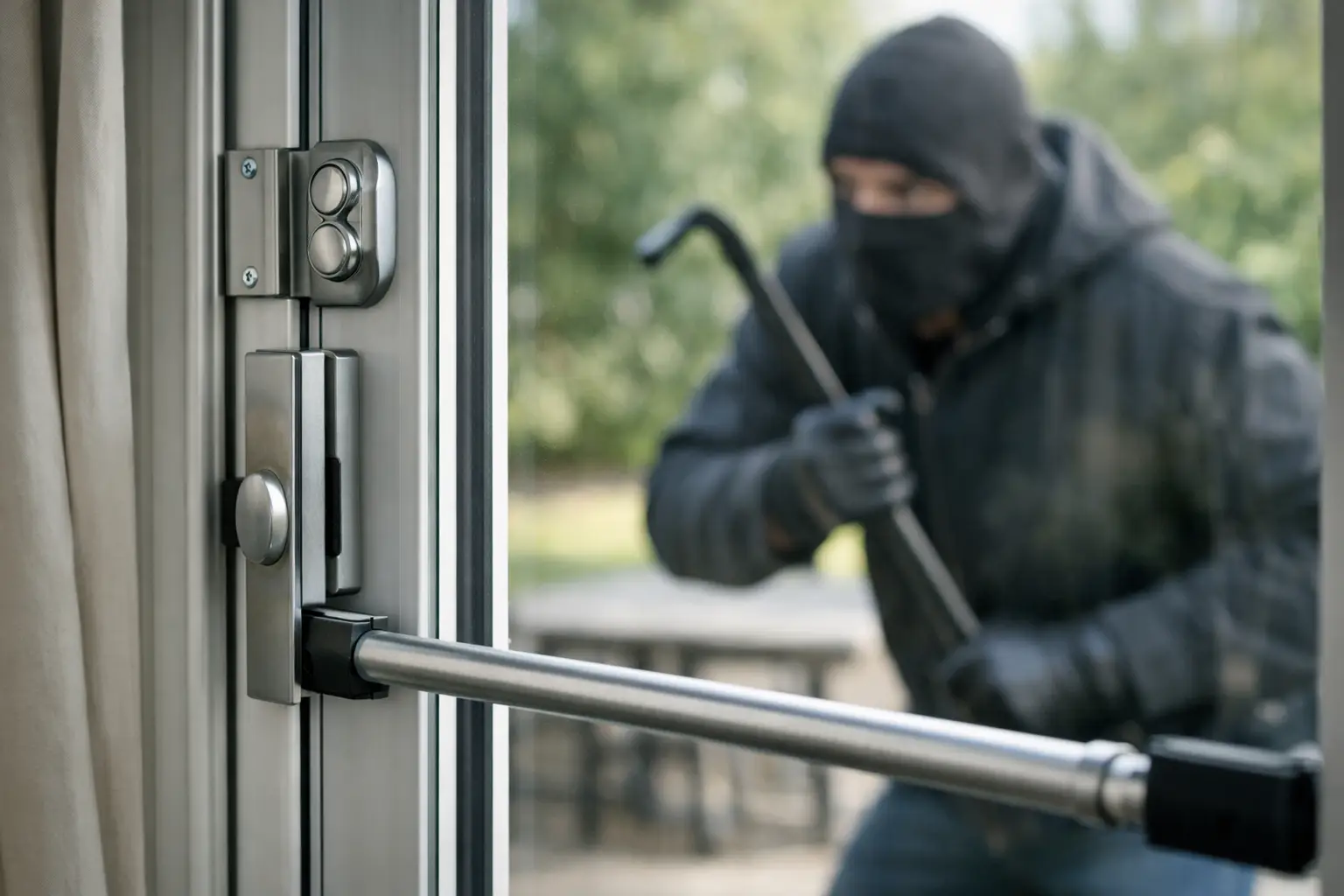
A sliding patio door can bring in great light and give you an easy path to the yard. It can also become the weak point in an otherwise secure home. Good sliding door security is not about buying the most expensive gadget. It is about stopping the simple methods that work on loose locks, liftable panels, weak frames, and exposed glass.
For Orange County homeowners, renters, and property managers, the right fix depends on the door you have and who needs to use it every day. A child safety device, for example, is not always a strong security lock. A basic track bar may help, but it should not be the only thing standing between your home and an intruder.
Where Sliding Doors Usually Fail
Most sliding glass doors have a latch built into the handle. That latch is convenient, but it may not provide much resistance if the door is old, misaligned, or installed in a lightweight frame. A door that wiggles when locked is sending a clear message: the lock is not doing its job.
The second issue is lift-out risk. Some sliding panels can be raised high enough in their tracks to clear the lower channel and be pulled inward. This is more common on older doors, doors with worn rollers, and doors that were never adjusted correctly.
Then there is the glass itself. A strong lock does not stop someone from breaking a nearby pane and reaching the handle. That does not mean every home needs a full door replacement. It means the lock, track, frame, and glass should be considered together.
Start With the Door’s Basic Condition
Before adding hardware, check whether the door closes squarely. Slide it shut and look at the gap around the edges. The panel should meet the frame evenly, without needing to be lifted, shoved, or slammed into place.
Test the existing lock with the door fully closed. If it does not latch firmly, if the handle feels loose, or if the locked panel can still move noticeably, have it repaired or replaced. A better lock cannot perform properly when the rollers are worn or the strike area no longer lines up.
Clean debris from the bottom track and inspect the rollers. Dirt, pet hair, and corrosion can make a door hard to operate, which leads people to force it and slowly knock it out of alignment. A smoother door is easier to secure because it closes where it is supposed to close.
This is one place where a quick, cheap fix can cost more later. Forcing a damaged latch or adding a device over a misaligned door may hide the problem for a while, but it does not correct it.
Add a Real Secondary Lock
A secondary lock gives your sliding door another point of resistance beyond the factory latch. The best choice depends on the door design, the frame material, and whether you need the door to open easily from inside during an emergency.
A security bar or dowel placed in the lower track is a common option. It blocks the panel from sliding open. It is inexpensive and useful, especially when the door is closed for the night or when a property is vacant. The trade-off is convenience. Everyone in the home must know to remove it before using the door, and it should be cut or fitted so it cannot shift easily.
A track-mounted lock can be a stronger everyday option because it attaches directly to the door system and restricts movement at a chosen point. Some models allow partial opening for ventilation while still preventing the door from opening wide enough for entry. Installation matters here. Screws need to anchor into solid material, not just a thin trim piece.
Foot-operated locks are another choice for certain doors. They can be practical because they are easy to engage without bending down, but they must be positioned carefully so they do not create a tripping hazard or interfere with the door’s movement.
Avoid relying on a flimsy tension rod or a loose piece of wood that can be kicked out of place. A track bar is only as good as its fit.
Stop the Door From Being Lifted Out
Anti-lift protection addresses a problem many people never check. If the sliding panel can be raised out of the lower track, a locked handle and a track bar may not be enough in every situation.
A locksmith or qualified door professional can assess the clearance at the top and bottom of the panel. Depending on the door, anti-lift blocks, properly placed screws, or adjustments to the rollers and frame can limit upward movement. The goal is simple: the panel should not have enough vertical play to leave its track.
Do not drive screws into the frame at random. Incorrect placement can damage the door, interfere with its operation, or affect weather sealing. This is especially true with vinyl and aluminum patio doors, where hardware placement needs to account for hollow sections and internal components.
Think About Glass, Not Just Locks
Sliding doors are large glass surfaces. That is part of their appeal, but it also changes the security plan. If breaking the glass gives direct access to the latch, a secondary lock that cannot be released from outside adds valuable protection.
Security window film can help hold shattered glass together and slow forced entry. It is not the same as impact-rated glass, and it will not make a door indestructible. Its value is time and resistance. That extra delay can be enough to discourage an intruder, trigger attention, or give an alarm system time to respond.
Privacy treatments can also reduce how easily someone can see valuables inside, particularly at night. Keep the area near the door clear of obvious targets such as wallets, laptops, car keys, and expensive electronics. Security hardware works better when there is less incentive to test it.
If the glass, frame, or lock area is damaged after an attempted break-in, deal with it promptly. A cracked panel, bent track, or broken latch should not wait until the weekend. Secure the opening first, then choose the proper repair.
Use Lighting and Habits That Support Security
Sliding door security is strongest when the door is not treated as an afterthought. Lock it every time you leave, even for a short errand. A surprising number of entries happen through unlocked rear or side doors because homeowners focus on the front entrance.
Motion-activated exterior lighting can make a patio or side yard less attractive for someone trying to work unnoticed. Cameras and alarms may add another layer, but they do not replace physical security. A camera can record a break-in. A properly secured door is meant to make that break-in harder in the first place.
For rental properties, make sliding-door checks part of the turnover process. Test the latch, inspect the track, verify that any secondary lock is present and works, and rekey exterior locks when access control has changed. Property managers should also make sure residents understand how any installed device operates, especially if it affects emergency exit use.
When a Locksmith Should Inspect It
Call for professional help when the lock will not engage, the door has been forced, the panel is loose in its track, or you have lost keys to an integrated keyed patio-door lock. It is also worth getting an inspection after a move-in, a tenant change, or a break-in nearby.
A good service visit should start with a clear look at the actual problem, not a pressure pitch for hardware you do not need. Sometimes a lock repair and door adjustment are enough. Other times the honest answer is a replacement lock, anti-lift protection, or a better secondary lock. The right recommendation should match the condition of your door and your budget.
Fast & Fair Locksmith focuses on the practical fix: get the door secured, explain the options plainly, and keep pricing straightforward before work begins.
Tonight, take two minutes to close your sliding door, lock it, and try to move the panel. If it shifts, lifts, or leaves you unsure, trust that signal. A small repair now is far easier than dealing with a damaged door and a shaken sense of safety later.