
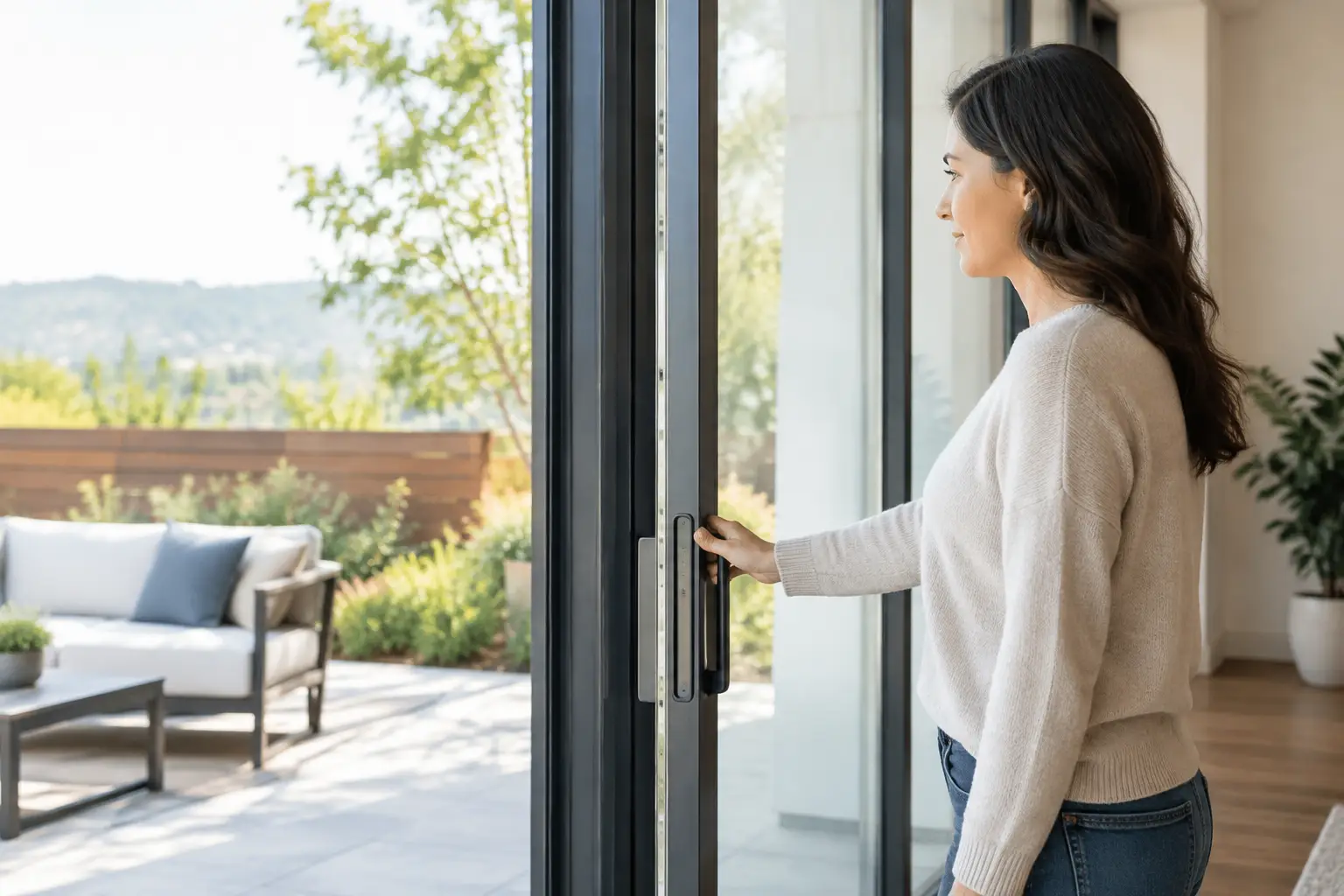
A sliding patio door can be the biggest sheet of glass in your home and one of its easiest entry points if the hardware is worn, loose, or badly installed. A secure sliding patio door is not just about buying a stronger lock. It is a system: the door must lock correctly, stay on its track, resist lifting, and fit tightly enough that a quick shove does not create an opening.
For Orange County homeowners and renters, patio doors often lead to yards, balconies, pools, and side passages that are less visible from the street. That makes the details matter. A door that looks closed is not always a door that is truly secured.
Start With the Door You Already Have
Before replacing anything, check what is actually failing. Slide the door shut and engage the lock. Does the latch catch firmly, or do you have to lift the panel, push it hard, or jiggle the handle to make it work? A lock that only catches when the door is positioned just right is not reliable security.
Look at the gap between the sliding panel and the frame. Excessive movement, damaged weatherstripping, bent tracks, and worn rollers can all keep the lock from lining up with its strike plate. In that situation, installing a new lock alone may not solve the problem. The door needs adjustment or repair first.
Also check whether the moving panel can be lifted upward in its frame. Many older sliding doors have enough play for a determined person to lift the panel off the bottom track. That is a mechanical problem, not something a standard handle lock is designed to prevent.
What Makes a Secure Sliding Patio Door
The best setup depends on the door style, its age, and whether you own or rent. Still, the strongest patio-door security generally combines a functioning primary lock with physical reinforcement.
A lock that fully engages
Most sliding doors use a hook-style or mortise lock at the handle. When it is in good condition and aligned with a solid strike plate, it prevents normal opening from the outside. But a thin, loose strike plate or a latch that barely reaches the frame is a weak point.
A locksmith can inspect the latch, handle, strike, and frame alignment together. Replacing a broken handle with another basic handle may restore convenience, but it does not automatically improve protection. The right repair is the one that makes the locking point engage deeply and consistently.
An anti-lift device
An anti-lift device limits upward movement of the sliding panel. It may be installed at the top of the frame or adjusted as part of the door hardware. This matters because the main lock holds the door sideways, while an anti-lift measure addresses a different way someone may try to defeat the door.
The trade-off is simple: too much clearance makes the panel vulnerable, while too little can make it drag or bind. The door should slide normally but not have enough vertical play to come out of the track.
A secondary lock or security bar
A security bar placed in the lower track is a straightforward backup. With the bar properly fitted, the panel cannot slide open even if the primary lock is bypassed or fails. It is especially useful for ground-floor doors, rental homes, and doors that are left secured for long periods.
Avoid relying on a loose stick, broom handle, or poorly sized dowel. Those can shift, split, or be removed from outside if the door is forced far enough. A purpose-built bar with secure fittings is the better choice.
Secondary locks are also available in foot-operated, pin-style, and frame-mounted designs. The right option depends on who uses the door. A device that is difficult for an older adult, child, or frequent pet owner to operate may be left disengaged. Security only works when it is used every day.
A solid frame and sound glass
The door frame and glass deserve as much attention as the handle. Loose frame screws, rotted wood, damaged aluminum, or cracked glass can undermine otherwise good locks. If the glass is old or vulnerable, a security film may help hold broken glass together, though it does not make the door impenetrable.
For a major replacement, consider tempered or laminated safety glass and a quality frame system. That is a bigger investment than a lock repair, so it makes the most sense when the door is already drafty, damaged, hard to operate, or near the end of its service life.
Don’t Ignore Rollers, Tracks, and Alignment
A patio door that sticks is often treated as a nuisance. It can also be a security warning. When rollers wear out, the panel sags. Once it sags, the latch misses the strike or engages only partially. Homeowners may start slamming the door or lifting it into place, which further damages the hardware.
Clean debris from the track, but do not assume dirt is the only issue. Bent tracks, flat-spotted rollers, and misadjusted panels need a proper repair. Lubricant can make a worn door feel better temporarily, but it will not correct a panel that no longer sits square in the frame.
If the lock suddenly stopped lining up after years of normal use, address it promptly. That is often the moment when a simple adjustment can prevent a larger repair later.
Secure the Door Without Blocking Your Exit
Patio-door security has to work with daily life and emergency escape. Never install a solution that traps occupants inside or requires a key to exit from the interior when the door may be needed as an egress route. This is particularly important in bedrooms, apartments, and homes with children.
Keep the primary interior release easy to operate. If you add a security bar or secondary lock, make sure every adult in the home knows how it works and can remove it quickly. Test it after installation rather than assuming it is intuitive.
For families with young children, door alarms and high-mounted secondary devices can add another layer. They are useful for alerting you when the door opens, but they are not a substitute for a correctly working lock. Think of alarms as notice, not physical resistance.
When a Locksmith Is the Right Call
Call for professional help when the lock is broken, the panel will not align, the handle turns without engaging, the door can be lifted excessively, or you have moved into a property with unknown key control. Those are not problems to put off just because the door can still be forced shut.
A qualified locksmith can repair or replace compatible patio-door hardware, improve lock alignment, and explain the cost before work begins. Ask what is being repaired, what part is being installed, and whether the recommended upgrade addresses your actual weak point. Clear answers are part of fair service.
FAST & FAIR LOCKSMITH focuses on the practical fix: get the door secured, explain the work plainly, and avoid surprise pricing when you need help at your Orange County home.
A Quick Security Check for Tonight
Close the patio door, lock it, and try to move the panel without forcing it. Check for visible gaps, loose handles, missing screws, cracked glass, and a track that lets the panel lift. Then confirm that any secondary bar or lock is in place and that everyone who needs to use the door can release it safely from inside.
If something feels loose, unreliable, or improvised, trust that instinct. A patio door should close smoothly, lock firmly, and give you no reason to wonder whether it will hold overnight.