
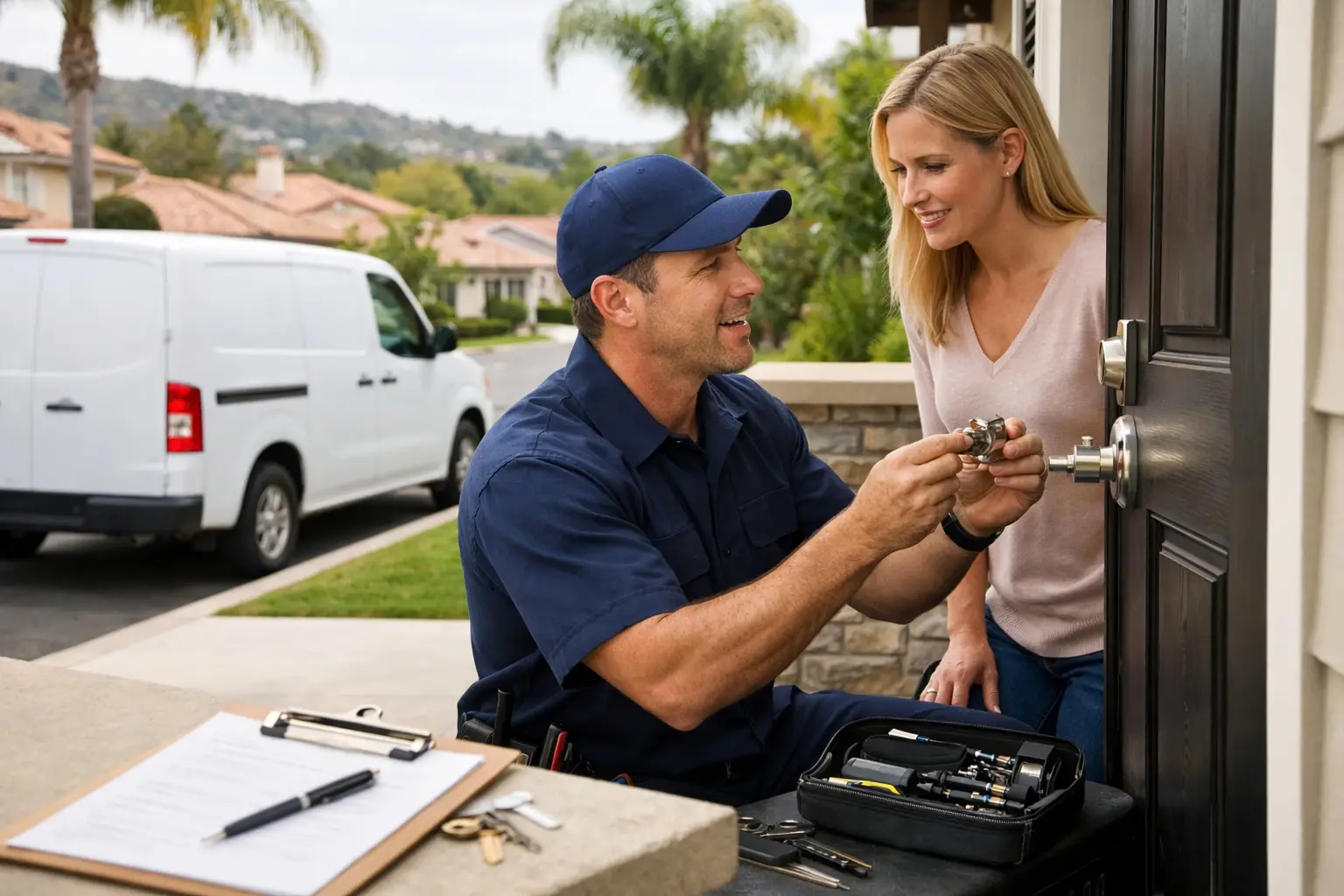
A lost house key is not just an inconvenience. If that key was tied to your address, a former roommate, contractor, pet sitter, or anyone else could still have a way in. A San Diego residential lock rekey service changes who can use your existing locks without automatically replacing every piece of hardware on your doors.
That is often the smart move after a move, a breakup, a tenant turnover, or a missing key. But rekeying is not the answer to every lock problem. Knowing the difference can keep your home secure and keep you from paying for work you do not need.
What Rekeying Actually Changes
Rekeying changes the small internal pins inside a lock cylinder. Your current key stops working, and the locksmith creates a new key pattern for that lock. The exterior lock hardware can stay on the door if it is in good shape.
This is different from changing a lock. A lock change removes the existing hardware and installs a new lock. That may be necessary when a lock is damaged, worn out, incompatible with other doors, or simply too weak for the level of security you want.
For a homeowner, rekeying is usually the efficient choice when the lock works properly but control of the keys is the concern. You get a fresh start with new keys and avoid replacing solid hardware just because the old keys are no longer trusted.
When a San Diego Residential Lock Rekey Service Makes Sense
Rekey as soon as you take possession of a home. Even if the seller hands over keys, there is no reliable way to know how many copies exist. Real estate agents, cleaners, neighbors, family members, and past contractors may have had access at some point. Rekeying puts the key control back in your hands on day one.
It also makes sense after keys are lost or stolen. If the lost key can be connected to your home, do not wait for proof that someone will use it. The cost and inconvenience of rekeying are generally far less than dealing with a break-in or the stress of wondering who has access.
Other common situations include a roommate moving out, a divorce or separation, an employee leaving a home-based business, or a key that was loaned out and never returned. These are not accusations against anyone. They are basic access-control decisions. A home should only be accessible to people you currently authorize.
Rekeying can also simplify your key ring. If several exterior doors use different keys and the locks are compatible, a locksmith may be able to key them alike. One key for the front, side, and back door is more convenient. The trade-off is simple: one lost key affects more entry points, so keep your keys controlled and make copies only when needed.
When Replacement Is the Better Call
A working lock can be rekeyed. A failing lock should be repaired or replaced first.
If the key sticks, the deadbolt does not extend smoothly, the latch is loose, or the lock has visible damage, rekeying alone will not fix the underlying issue. The same is true after a break-in attempt that bent the strike plate, damaged the door frame, or compromised the hardware. Security depends on the complete door setup, not just the key cylinder.
Replacement may also be the right option when your current locks are low-grade, badly corroded, or no longer meet your needs. A qualified locksmith should explain why replacement is recommended and show you the condition of the existing hardware. “You need all new locks” without a clear reason is not a good enough answer.
What Affects the Price of Rekeying
A fair rekey quote starts with clear details. The number of locks matters, as does the type of lock, whether the locks can be keyed alike, and whether any hardware needs repair. A standard keyed deadbolt is usually more straightforward than specialty, high-security, antique, or electronic hardware.
The timing and location can matter too. Emergency after-hours dispatch, a locked gate, or a home that requires immediate entry can involve different service conditions than a scheduled daytime appointment. That does not mean pricing should be vague. It means the technician or dispatcher should explain the expected service charge and the per-lock work before the job starts.
Ask what the quote includes: arrival or service fee, rekey labor, new keys, and any potential hardware cost. If a lock cannot be rekeyed or is damaged, ask for the replacement price before authorizing it. Straight answers upfront protect you from the bait-and-switch tactics that give locksmith services a bad name.
How to Hire Without Getting Surprised
You do not need a long interrogation, but you should get a few basics before dispatch. Confirm that the company performs residential rekeying, ask for the expected arrival window, and request a clear explanation of the pricing structure. Be cautious if the answer is only a very low starting price with no discussion of service fees or lock count.
When the technician arrives, they should identify themselves, inspect the locks, and explain the work. Before rekeying, they should verify that you have the right to authorize access to the property. That protects homeowners, tenants, and property managers alike.
After the work is complete, test every new key in every rekeyed lock while the technician is still there. Check the deadbolt from both sides and make sure the door closes and locks without forcing it. Good service solves the access problem completely, not halfway.
A Note on Service Area
A search result is not proof that a locksmith serves your address. Fast & Fair Locksmith dispatches in Orange County, so a homeowner in San Diego should confirm a provider’s actual coverage before scheduling. A direct answer is better than a vague promise followed by a long wait or an unexpected travel charge.
That same rule applies anywhere: choose a provider that can clearly state when they can arrive, what they can do on-site, and how the price will be handled.
Rekeying After an Emergency Lockout
If you are locked out but your keys are safely inside, you may only need entry service. Rekeying is optional in that situation. If the key was lost, stolen, or left somewhere that connects it to your home, rekeying should be part of the plan after you regain access.
Do not make a rushed decision to replace every lock just because you are standing outside your door. First, get inside safely. Then assess whether the hardware is sound and whether the real issue is lost key control or a damaged lock. A professional should be able to explain the practical option, not pressure you into the most expensive one.
Keep Control of Your New Keys
Once your locks are rekeyed, treat the new keys like a security reset. Give copies only to people who need routine access. Avoid hiding a key in the usual places near the door, and keep track of who has a copy. If you use a property manager, cleaner, or contractor regularly, decide whether they need a permanent key or scheduled access another way.
A rekey is a simple job with a serious purpose: it gives you confidence that yesterday’s keys no longer control tomorrow’s access. When the hardware is still sound, it is one of the fastest, fairest ways to protect your home without paying to replace what already works.