
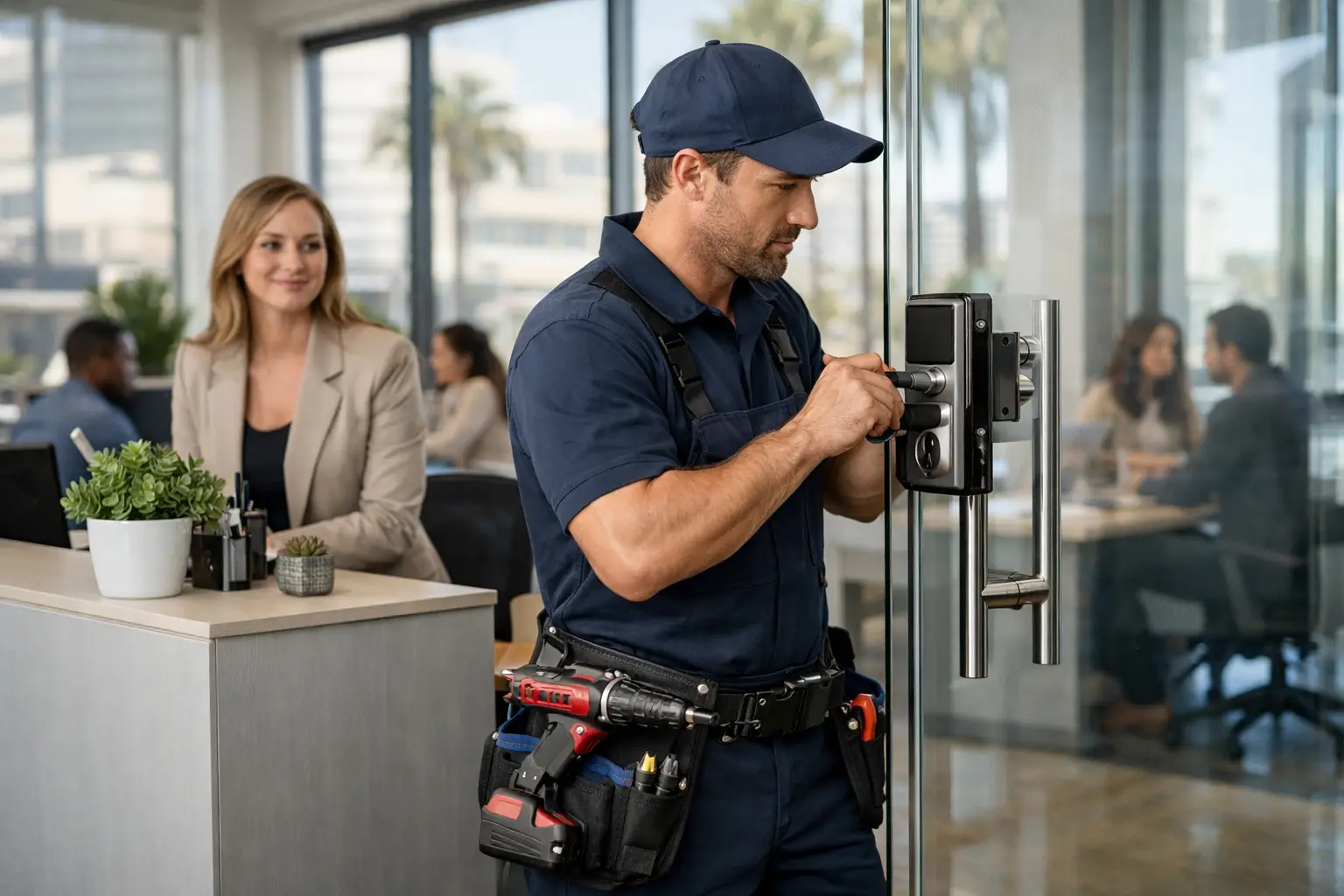
A stuck office lock at 8:05 a.m. can throw off the whole day. If you're looking for a san diego commercial locksmith for offices, you're usually not shopping for fun - you're trying to get staff in, keep the building secure, and avoid wasting hours on callbacks, vague pricing, or a technician who shows up unprepared.
That is why office locksmith work is different from a basic house call. An office has employees, vendors, clients, suites, storage rooms, server closets, file cabinets, exit devices, and a real need to control who gets in and who does not. Speed matters, but so does getting the job done right the first time.
What a San Diego commercial locksmith for offices should actually handle
Office lock service is not one single job. Sometimes it is an urgent lockout. Sometimes it is a planned security update after turnover, a break-in, or a move into a new suite. A commercial locksmith should be able to handle common office needs onsite without turning a simple call into a drawn-out project.
That usually includes office lockouts, lock repair, lock replacement, rekeying, key duplication, door hardware service, and help with access points that stop working when you need them most. For many offices, the real value is not just opening one door. It is restoring control fast so business can keep moving.
A good technician should also know the difference between the front entry, interior office doors, restricted areas, and shared access points. Not every door needs the same solution. Rekeying every lock in a suite may be smart after employee turnover, while replacing only one damaged storefront cylinder may be enough after a failed break-in attempt. The right answer depends on risk, budget, and how the office actually operates.
Fast matters, but office security decisions still need judgment
When a business calls a locksmith, urgency is usually high. Someone is locked out, a key snapped in the cylinder, the office manager cannot secure the suite, or an employee who should not have access still has a working key. In those moments, fast service is not a luxury. It is the whole point.
Still, moving fast should not mean rushing into the wrong fix. Replacing hardware that could have been repaired is a waste of money. Rekeying only one lock when multiple doors share the same lost key can leave a gap. On the other hand, replacing every lock in an office when a rekey would solve the problem is the kind of upsell business owners learn to avoid.
That is where experience and straight answers matter. A commercial locksmith should tell you what needs attention now, what can wait, and what will give you the most security for the money.
When rekeying makes more sense than changing locks
A lot of office customers assume a lost key means every lock has to be replaced. That is not always true. In many cases, rekeying is the smarter move.
Rekeying changes the internal pins of the lock so old keys no longer work. You keep the existing hardware if it is still in good shape, and you get a new key setup. For offices, that can be a strong option after staff turnover, vendor changes, misplaced keys, or moving into a previously occupied suite.
Lock replacement makes more sense when the hardware is worn out, damaged, low quality, or no longer fits how the office needs to function. If your locks stick, fail inconsistently, or do not match current key control needs, replacement may save trouble later.
This is one of those areas where fair pricing matters. A trustworthy locksmith will not automatically push the more expensive route. They will look at the condition of the lock, the level of risk, and whether the existing hardware is worth keeping.
Office lockouts are not just an inconvenience
A lockout at a residence is frustrating. A lockout at an office can stop payroll, delay appointments, interrupt shipping, and leave employees standing outside waiting. If the issue affects a private office, supply room, or records area, it can also block access to things the team needs immediately.
A commercial lockout call should be handled with urgency and care. The goal is to restore entry with as little disruption as possible and without causing unnecessary damage to the door or hardware. That sounds obvious, but not every locksmith approaches the job that way.
For office managers and small business owners, it helps to work with a locksmith who understands the cost of downtime. You do not just need a door opened. You need normal operations back.
The office hardware people forget about until it fails
Most businesses think about the key and the lock cylinder first. But office security problems often involve the rest of the hardware. Panic bars, levers, closers, latch alignment, strike plates, and door fit all affect whether a door locks properly.
Sometimes the issue is not the key at all. A door that drags, a closer that slams, or a latch that does not fully catch can create security problems and daily frustration. A commercial locksmith should be able to spot whether the problem is in the cylinder, the mechanism, or the door alignment itself.
That matters because the wrong diagnosis wastes time and money. If a lock keeps failing because the door is out of alignment, swapping cylinders alone may not fix the issue for long.
Pricing should be clear before the work starts
Commercial customers are often less worried about paying for service than they are about being trapped in a vague bill. That concern is fair. Locksmith pricing gets a bad reputation when quotes are unrealistically low on the phone and then climb once the technician is onsite.
For office service, straightforward pricing is part of the job. You should know what the service call covers, what the labor involves, and whether parts are likely to change the total. If the situation changes after inspection, the explanation should be simple and direct.
That is one reason businesses across the area call Fast & Fair Locksmith. The promise is right in the name - fast response and fair treatment. For office managers, property managers, and business owners, that is not marketing fluff. It is the difference between solving the problem and creating a new one.
Planning ahead saves more than emergency service does
A lot of office locksmith calls happen after something has already gone wrong. That is normal. But planned service is usually cheaper and less disruptive than waiting for a failure.
If you just hired new staff, ended access for a former employee, moved into a new office, or realized too many copies of the same key are floating around, it is worth handling that before it becomes urgent. The same goes for locks that are getting harder to turn or doors that need an extra shove to latch.
Small issues become big ones at the worst times - first thing in the morning, after everyone leaves, or right before an important meeting. A quick inspection and a practical fix now can prevent the kind of lock problem that shuts down the front door later.
Choosing the right locksmith for an office call
Not every locksmith is the right fit for commercial work. For offices, you want someone who respects business time, explains the options clearly, and does not treat every call like a chance to sell a full hardware overhaul.
Look for a locksmith who can handle urgent lockouts and routine rekeys, who understands common commercial door setups, and who gives you a direct answer about what needs to be done. If they are vague about pricing, slow to communicate, or quick to recommend replacing everything, that is usually a sign to be careful.
A solid commercial locksmith brings a practical mindset. Fix what can be fixed. Replace what should be replaced. Restore security fast. Keep the cost fair.
If your office needs help now, or you are trying to get ahead of the next lock problem, the best call is the one that gets the door secure without wasting your day. Fast response is good. Fast response with honest pricing is better.