
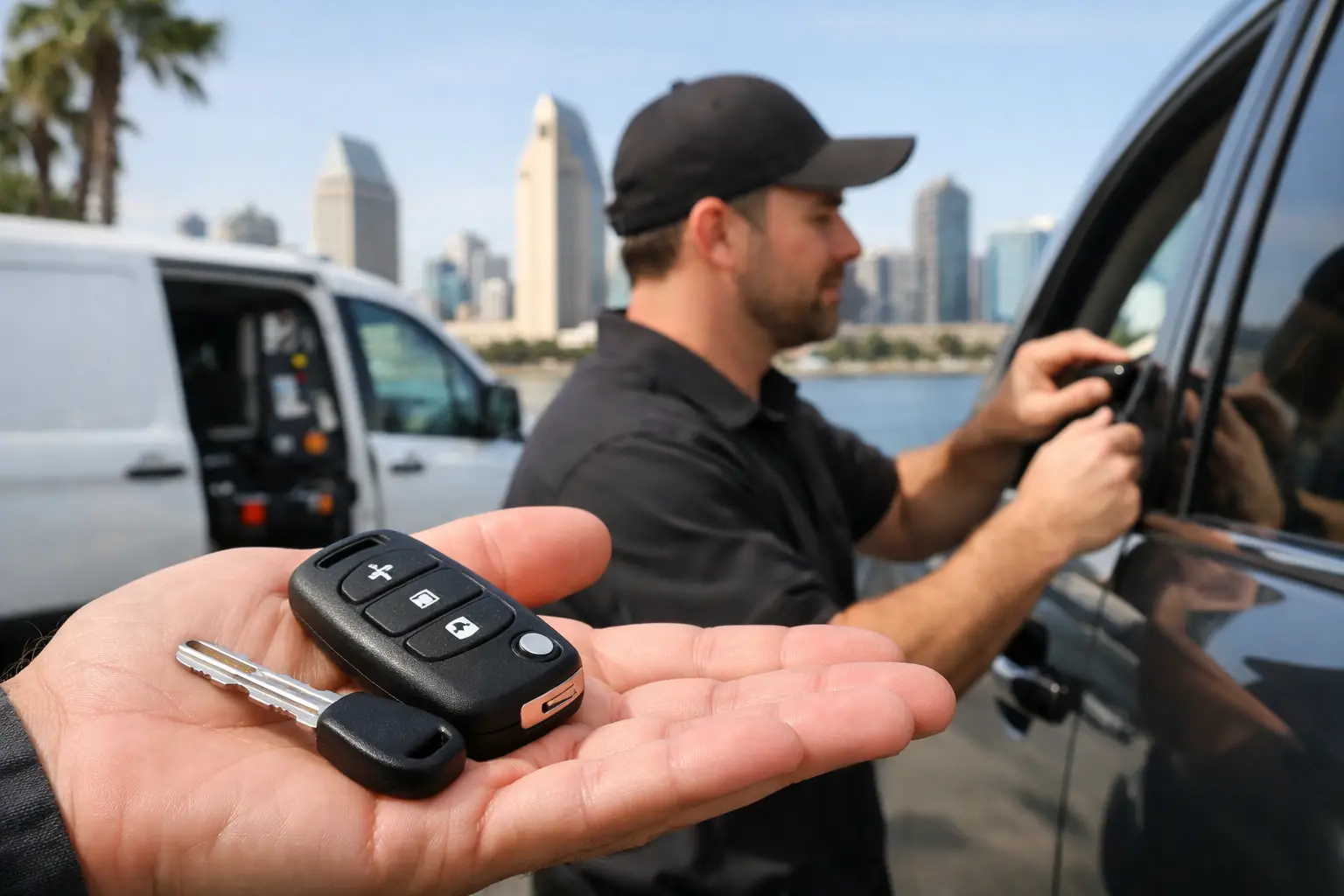
A lost key in a grocery store parking lot, a fob that stops working before work, or a key snapped in the ignition can turn an ordinary day into a standstill. When you search for san diego car key replacement mobile service, you need more than a listing. You need a qualified technician who can come to the vehicle, explain the work clearly, and give you a real price before the job starts.
Mobile car key service is built for exactly that situation. Instead of arranging a tow or waiting at a dealership, a properly equipped locksmith can often cut, program, or replace the key where the car is parked. The right solution depends on the vehicle, the type of key, and whether you still have a working key available.
What Mobile Car Key Replacement Can Handle
A mobile automotive locksmith brings key-cutting and programming equipment to the vehicle. For many makes and models, that means a replacement can be made on-site without moving the car. This is especially useful when the vehicle cannot start because the only key is missing, damaged, or locked inside.
The simplest jobs involve standard metal keys. A locksmith can usually cut a duplicate quickly when a usable key is present. Newer vehicles are different. Most use a transponder chip, remote-head key, smart key, or push-button-start fob. These keys must communicate with the vehicle's immobilizer system. Cutting the blade is only one part of the work. The replacement also has to be programmed correctly before the car will start.
Mobile service can also help with broken key extraction, ignition-related key problems, remote programming, and replacement fobs. It does not mean every vehicle has the same answer or the same cost. Luxury brands, late-model vehicles, and keys with advanced proximity features often require more time, specialized tools, or a key ordered for the specific vehicle.
Start With the Facts That Affect the Job
Before calling for San Diego car key replacement mobile service, gather a few details. They help the locksmith identify the right key and avoid wasted time. Have the year, make, model, and vehicle identification number ready if possible. The VIN is commonly visible through the lower corner of the windshield or on registration and insurance documents.
Also be clear about what happened. Did you lose every key? Do you have a key that turns in the door but will not start the car? Is the fob physically damaged, or did the battery simply die? A dead fob battery and a failed programmed key are not the same problem, and neither should automatically lead to paying for a full replacement.
If you still have one working key, say so. Making a spare while one key works is usually simpler than originating a key after all keys are lost. It can also reduce the risk of being stuck later at a much worse time.
A Fair Quote Should Not Be a Mystery
Price matters most when you are stranded, which is also when vague pricing causes the most damage. Be cautious with ads that promise an unusually low price but refuse to explain what it covers. A low service-call number may not include the key, programming, after-hours work, or the actual labor required to make the vehicle start.
Ask for an itemized estimate before dispatch whenever the vehicle details are known. A straightforward quote should address the service call, key or fob type, cutting, programming, and any applicable after-hours charge. If the technician finds a condition that changes the scope of work, they should explain it before adding costs.
The final price can vary for legitimate reasons. An all-keys-lost job generally costs more than duplicating an existing key. Smart keys cost more than basic transponder keys. Some vehicles require security access procedures that take additional time. Fair pricing does not always mean the lowest number. It means the number is explained, appropriate to the work, and not inflated after you are already waiting.
Verify the Locksmith Before You Share Vehicle Access
A vehicle key is not just a convenience item. It controls access to your car, so choose the provider with the same care you would use for a home lock. Look for a business that answers directly, provides a business name, and can tell you whether it works on your vehicle type.
A legitimate technician should verify that you own or are authorized to access the vehicle. Expect to show a photo ID and registration, title, insurance card, or another ownership document. That check protects you and should not be treated as an inconvenience.
There are warning signs worth taking seriously: a dispatcher who will not provide a pricing range, a quote that changes without an explanation, pressure to approve work immediately, or a technician arriving in an unmarked vehicle with no clear identification. If something feels off, pause before authorizing the job. A fast response is valuable, but it should never require giving up basic price transparency or security.
Mobile Service Versus the Dealership
A dealership may be the right choice for certain keys, especially when a specific brand requires proprietary parts or programming that an independent locksmith cannot perform. But dealership service often means towing a non-running vehicle, booking an appointment, and waiting for parts or service availability.
A mobile locksmith is usually the more practical option when the priority is getting back into the car or back on the road where it sits. The technician comes to the location, which can eliminate a tow and shorten the disruption. For common makes and many modern keys, the on-site solution is often faster.
It depends on the vehicle. Ask whether the locksmith can originate and program the exact key before agreeing to service. An honest provider will tell you if the job needs a dealer, a special-order key, or additional diagnosis. That answer may not be what you want to hear, but it is better than paying for a visit that cannot solve the problem.
When the Car Will Not Start After a New Key
If a newly cut key opens the door but will not start the vehicle, the mechanical cut may be correct while programming is incomplete. With chip keys and smart fobs, the car needs to recognize the key electronically. A worn ignition, weak vehicle battery, damaged antenna ring, or existing immobilizer issue can also create symptoms that look like a bad key.
Do not force the key in the ignition or repeatedly press the start button for long stretches. That can drain the battery and complicate diagnosis. Tell the technician exactly what the vehicle does: whether dashboard lights come on, whether the remote locks work, whether a security light flashes, and whether the engine cranks. Specific symptoms help separate a key issue from an ignition or electrical problem.
Avoid the Next Emergency
Once the replacement is done, consider making a second working key before you leave the scene. Keep it somewhere secure, not hidden in or under the vehicle. For households with shared vehicles, label keys clearly and test the spare occasionally. A spare that has been sitting for years may have a weak fob battery or need reprogramming.
For push-button-start vehicles, replace fob batteries before they fail completely and keep the emergency mechanical key accessible. That small preparation can prevent a minor battery issue from becoming a parking-lot emergency.
The best mobile key service does not make a stressful problem more confusing. It confirms the vehicle, arrives prepared, protects ownership, explains the options, and gives you a clear price before the work begins. When your car key fails at the worst possible moment, that is the standard worth expecting.