
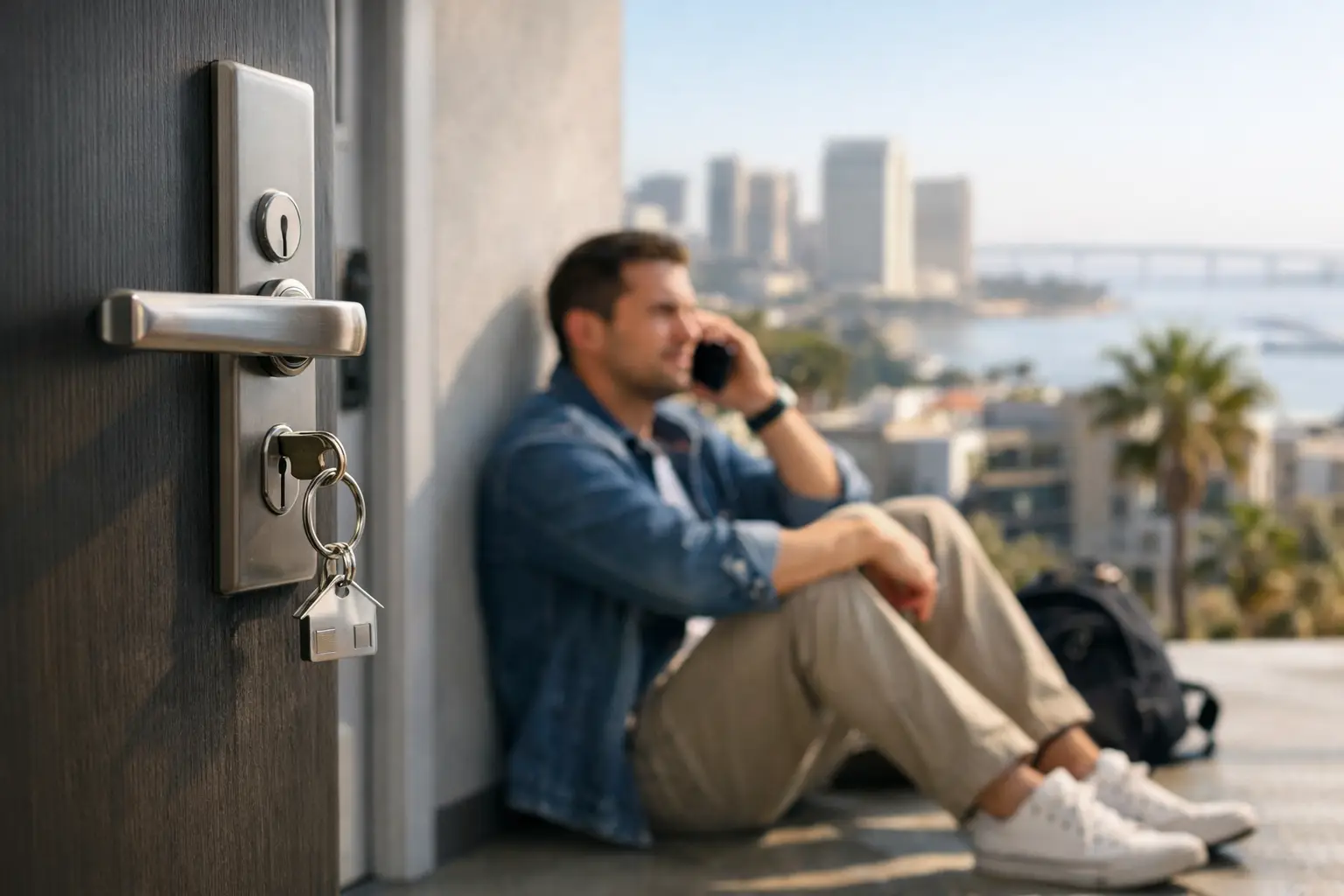
You step out to grab a delivery, take the trash down, or check the mail. The apartment door closes behind you, and your keys are on the other side. That is when you need san diego apartment lockout help that is fast, straightforward, and priced fairly - not a runaround, a mystery fee, or a damaged door.
Apartment lockouts are stressful because the problem is immediate. You may be standing in a hallway in slippers, late for work, managing a child, or trying to get inside after a long shift. The right next move is not panic. It is protecting your safety, your lease, and your wallet while getting back inside as quickly as possible.
San Diego Apartment Lockout Help Starts With Safety
First, take a breath and check the simple possibilities. Is a roommate, spouse, neighbor, or nearby friend holding a spare key? Is your building office open? Do you have a building access app, concierge, or after-hours maintenance number? A quick call may solve the issue without a service visit.
If you are locked out late at night, wait in a safe, well-lit place. Do not sit alone in an isolated parking structure or try to climb balconies, enter through windows, or force a patio door. Those choices can lead to injury, damage, and lease violations. They also turn a basic lockout into a more expensive repair.
If a child, vulnerable adult, or pet is inside and there is an immediate health or safety risk, call 911. A locksmith can handle access problems, but emergency responders are the right choice when a life may be at risk.
Call Your Property Manager Before Making a Big Move
Many apartment communities have policies for lockouts. Some lease agreements require tenants to contact management or maintenance first. Others allow a locksmith but ask for proof that you live in the unit before any work begins. If the office is open, calling can save time and clarify exactly what is allowed.
After-hours help depends on the building. A large managed complex may have an on-call maintenance worker with a master key. A smaller property may direct tenants to a locksmith. If your property manager cannot respond promptly, ask whether there are restrictions on drilling, changing locks, or rekeying the unit.
This matters because apartment locks are often part of a master-key system. Replacing the wrong hardware without management approval can create a bigger issue for you and the property. For a standard lockout, a qualified locksmith will normally focus on non-destructive entry whenever the lock condition allows it.
Have your identification ready. A photo ID with the apartment address is ideal, but it is not always practical when your wallet is inside. A lease document, resident portal record, utility bill, or confirmation from property management may help verify occupancy. A legitimate locksmith should care about this step. It protects tenants, owners, and the security of the building.
Do Not Turn a Lockout Into a Lock Replacement
A locked door can make improvised solutions look tempting. Credit cards, wire hangers, screwdrivers, and online tricks are not reliable answers for modern apartment locks. They can bend the latch, damage the strike plate, crack trim, or trigger a repair charge from management.
Forcing a lock also creates a security problem. A door that closes but no longer latches correctly is not secure, even if you manage to get inside. You should not have to choose between waiting outside and gambling with your door hardware.
A professional locksmith assesses the lock, the door, and the authorization situation before recommending a method. Sometimes entry is quick and non-destructive. Sometimes a failed or damaged lock needs repair. The honest answer depends on the hardware in front of the technician, not on a one-size-fits-all sales pitch.
What Fair Apartment Lockout Service Looks Like
Price is a major concern during an emergency, and it should be. Some locksmith ads lead with an unusually low number, then add dispatch fees, service fees, after-hours charges, or unnecessary hardware costs after the technician arrives. You deserve clear information before work starts.
When you call for help, describe the situation accurately: your neighborhood, apartment floor or building access details, whether the key is inside, the type of lock if you know it, and whether the property manager has authorized service. Ask for the expected arrival window and the total anticipated price range, including any service call or after-hours charge.
A fair provider should explain what can affect the final cost. Time of day, distance, restricted building access, damaged hardware, and the need for replacement parts can matter. But those factors should be discussed plainly. If the price changes after arrival, ask why and request approval before additional work is performed.
Fast & Fair Locksmith is built around that basic standard: show up quickly, explain the work, and avoid surprise pricing. A lockout is already inconvenient. The bill should not create a second problem.
Bring These Details to the Call
The fastest dispatches happen when the technician has enough information to plan the visit. Before calling, gather these details if you can:
- Your exact address, unit number, and the best entrance or gate instructions.
- A callback number, especially if your phone battery is low or reception is poor.
- Whether building management has been contacted and what they authorized.
- The kind of door and lock involved, such as a deadbolt, electronic keypad, or smart lock.
- Any proof of residence you can show once access is restored or management arrives.
You do not need to diagnose the lock. Clear basics are enough. If you have a smart lock, mention whether the battery may be dead, the keypad is unresponsive, or the app is not connecting. That information can change the approach.
After You Are Back Inside
Once the immediate problem is solved, take two minutes to check the door. Make sure the latch catches correctly, the deadbolt turns smoothly, and the frame has not been damaged. If the key was lost rather than left inside, notify management and ask whether rekeying is appropriate. A lost key is different from a simple lockout because someone else may be able to identify where it belongs.
For renters, do not install a new lock or change the key without checking the lease and getting required approval. Some properties allow tenant-installed hardware with conditions. Others require management to handle every change. The trade-off is simple: added convenience is not worth a lease dispute or a lock that interferes with building access protocols.
A spare-key plan can prevent the next lockout. Keep one with a trusted local person, use a secure key storage option only if your lease permits it, or ask management whether they offer a resident key program. Do not hide a key under a mat, planter, or fake rock. Those are the first places someone will look.
The Right Help Is Fast, Verified, and Clear
A San Diego apartment lockout does not need to become an all-night ordeal or a costly repair. Start with management when appropriate, stay somewhere safe, verify your residency, and choose a locksmith who explains the price before the work begins.
The best outcome is simple: you get back inside, your door stays intact, and you know exactly what you paid for. Keep your property manager's after-hours number saved now. It is one small step that can make a bad moment much easier to handle.