You get home, reach for your keys, and feel that empty-pocket panic hit all at once. Maybe the key is inside on the kitchen counter. Maybe the deadbolt jammed. Maybe the door shut behind you while the stove was still on. In that moment, safe lockout service for homeowners is not just about getting back in fast. It is about protecting your home from damage, avoiding inflated pricing, and making sure the fix does not create a bigger problem.
A lot of people think a lockout is simple. Just open the door and move on. Sometimes it is that simple. Sometimes it is not. The problem is that rushed, careless entry can damage the lock, bend the hardware, split the frame, or leave your home less secure than it was before. The right service gets you back inside without turning one bad moment into a repair bill.
What safe lockout service for homeowners really means
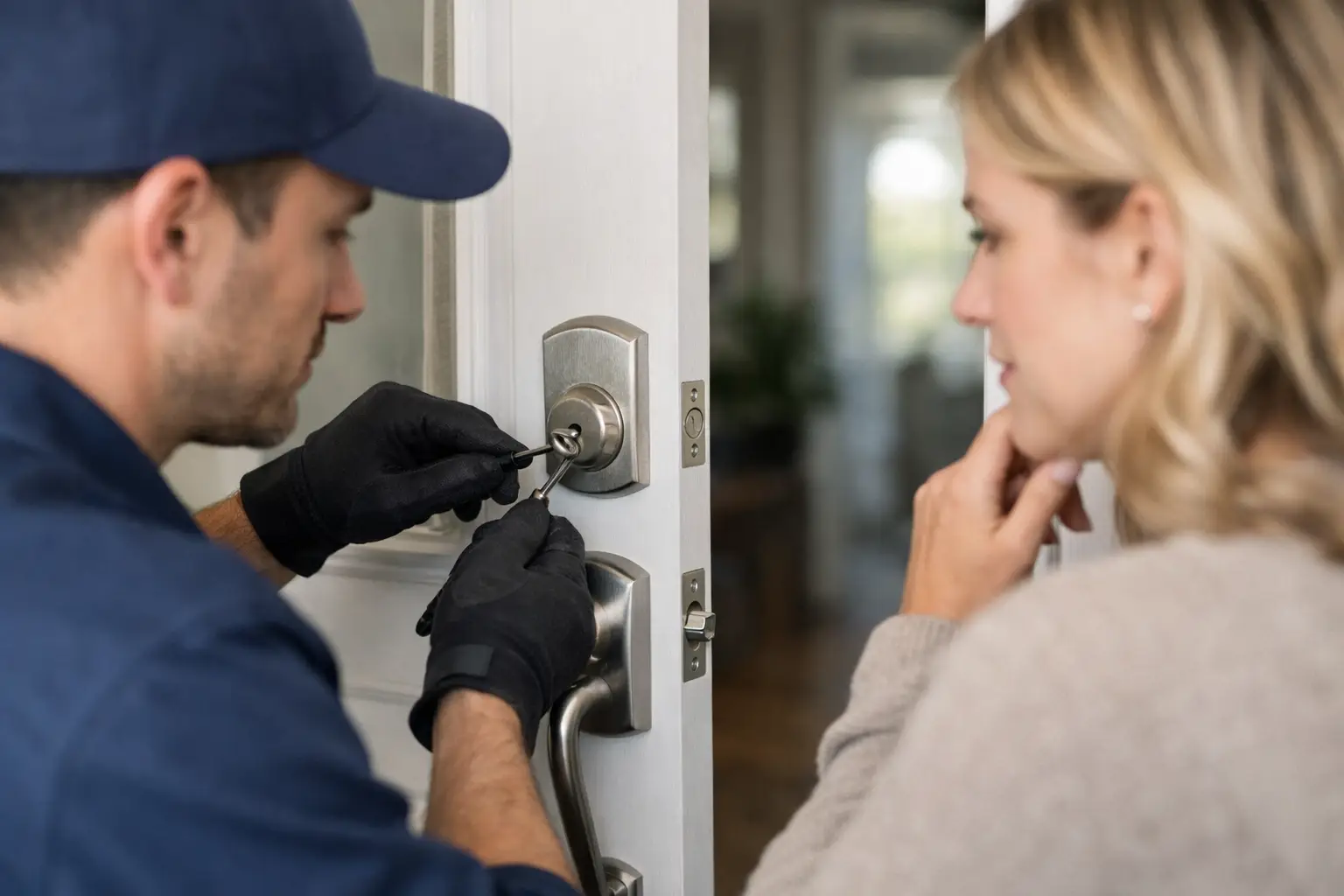
Safe service starts with the method, not the sales pitch. A real residential lockout call should begin with identifying the lock type, checking whether the door is actually locked or just latched, and choosing the least destructive option first. That sounds basic, but it matters. A technician who goes straight to drilling before assessing the hardware is not protecting your property.
For most homeowners, safe entry means preserving the lock whenever possible. Many standard knob locks, deadbolts, smart locks, and keyed handles can be opened with non-destructive methods when handled by someone who knows residential hardware. That is especially important if your door has newer finish hardware, reinforced strike plates, or a smart lock system that would be expensive to replace.
Safe also means verifying who has the right to access the property. That protects homeowners, renters, landlords, and everyone else tied to the address. If a locksmith is willing to open any residential door with no questions asked, that should concern you. Basic proof of residency or authorization is part of professional service, not a hassle.
Then there is the pricing side. A lockout is already stressful. It gets worse when the number quoted over the phone suddenly jumps on site. Fair, safe service includes clear pricing before work begins, along with a straightforward explanation if the job changes because the hardware or condition is different than described.
Fast is good. Careless is expensive.
When people are locked out, speed matters. If a child is inside, a pet is in distress, or there is a safety issue in the home, every minute feels long. But there is a difference between quick response and sloppy work. Homeowners need both speed and judgment.
A solid locksmith does not waste time, but also does not force the door, pry the frame, or treat every lock like disposable hardware. Residential doors are part of your security system. Damage to the latch, strike, jamb, or cylinder can leave you with a door that closes badly, locks poorly, or needs more repair later.
This is where experience shows. An older wood door may need a different touch than a newer metal-clad entry door. A high-security deadbolt is not the same as a basic hardware-store lock. A smart lock with a dead battery might call for one approach, while a misaligned latch on a swollen door calls for another. Good service is fast because the technician knows what to check first.
Signs you need a safe lockout service, not a brute-force fix
Homeowners do not always call for the same reason. Sometimes the keys are lost. Sometimes the lock turns halfway and sticks. Sometimes the key broke off. Sometimes the electronic keypad stopped responding after a battery failure. The cause changes the safest solution.
If the lock is working fine and the key is simply inside, the goal is usually non-destructive entry. If the lock is damaged, corroded, or badly worn, entry may be only part of the job. You may also need repair, rekeying, or replacement before the house is secure again.
That is why the cheapest answer is not always the fairest one, and the fastest answer is not always the safest one. A rock-bottom phone quote can turn into a bigger bill if the person who arrives is not prepared for residential hardware or starts pushing replacements you do not need. On the other hand, a careful lockout that preserves the door and lock can save money even if the initial service call is not the absolute lowest number you hear.
How to spot a fair residential locksmith during a lockout
When you are stressed, it is easy to say yes to the first person who answers the phone. A few simple questions can save you from a bad service call.
Ask whether the quoted price includes the service call and entry labor. Ask whether there could be added charges for after-hours service, high-security hardware, drilling, or replacement parts. Ask what the technician will try first. You are not looking for a long speech. You are looking for direct answers.
A fair company should be comfortable explaining the basics. They should not dodge pricing questions, and they should not promise one low number only to leave everything vague. If they cannot explain how charges work before dispatch, that is a bad sign.
It also helps to pay attention to the attitude. A homeowner in a lockout situation does not need pressure or scare tactics. You need a clear plan. Fast & Fair Locksmith built its name around that idea for a reason - fast response is only half the job if the pricing is not handled honestly.
When drilling is necessary and when it is not
Homeowners often hear the word drilling and assume they are being scammed. That is not always true. Sometimes drilling is the correct option. The issue is whether it is truly necessary.
If a lock has failed internally, if a key broke in a way that prevents normal manipulation, or if the hardware is already compromised, drilling may be the safest route to entry and restoration. In those cases, forcing non-destructive methods for too long can waste time and still end with replacement.
But necessary drilling should come with a clear explanation. You should know why it is needed, what parts will need replacement, and what the cost will be before work starts. No surprises. No vague language. No pressure.
That balance matters a lot in residential service. Homeowners need entry, but they also need security right after entry. If a lock is drilled, the job is not done until the door can be secured again.
Safe lockout service for homeowners with smart locks
Smart locks add convenience, but they do not eliminate lockouts. Batteries die. Wi-Fi drops. Apps fail. Keypads stop responding. In some homes, the issue is not the electronics at all. It is a warped door or misaligned bolt putting stress on the lock body.
Safe service with smart locks means understanding both the mechanical and electronic side. A rushed technician can damage the trim, scratch the finish, or disable a unit that could have been reset or opened cleanly. Sometimes the right answer is emergency entry and a battery change. Sometimes it is recalibration. Sometimes the hardware needs replacement because the failure is in the lock body itself.
For homeowners, the practical takeaway is simple: do not assume every smart lock issue needs a brand-new device. And do not assume every locksmith is equally comfortable working with one.
After you get back inside, check the real problem
The lockout may be the symptom, not the whole issue. If your key was hard to turn for weeks, if the deadbolt has been sticking, or if the door has needed a shoulder bump to latch, those are warning signs. Getting inside solves the urgent problem, but it does not fix what caused it.
A good locksmith should tell you what they found in plain English. Maybe the lock is worn out. Maybe the strike is misaligned. Maybe the door is settling with weather changes. Maybe the key is too worn down to work reliably. These are not upsells when they are real. They are the difference between one service call and another lockout next month.
This is especially relevant for homeowners with older doors, rental properties, or recent move-ins. Rekeying after a lockout can make sense if key control is uncertain. Repair can make sense if the hardware is decent but the alignment is off. Replacement can make sense if the lock is failing and no longer worth saving. It depends on the condition of the hardware, not on a one-size-fits-all script.
The safest choice is the one that protects your home and your wallet
A residential lockout feels urgent because it is urgent. But urgency should not cost you your door, your lock, or your peace of mind. Safe service means quick arrival, careful entry, proof-of-access checks, and pricing that stays grounded in reality.
If you ever need help getting back into your home, look for the company that treats the job like more than a quick pop-open. The right locksmith gets you inside fast, protects the hardware when possible, and tells you the truth about what the lock needs next. That is the kind of help worth calling when standing on the wrong side of your own front door.