
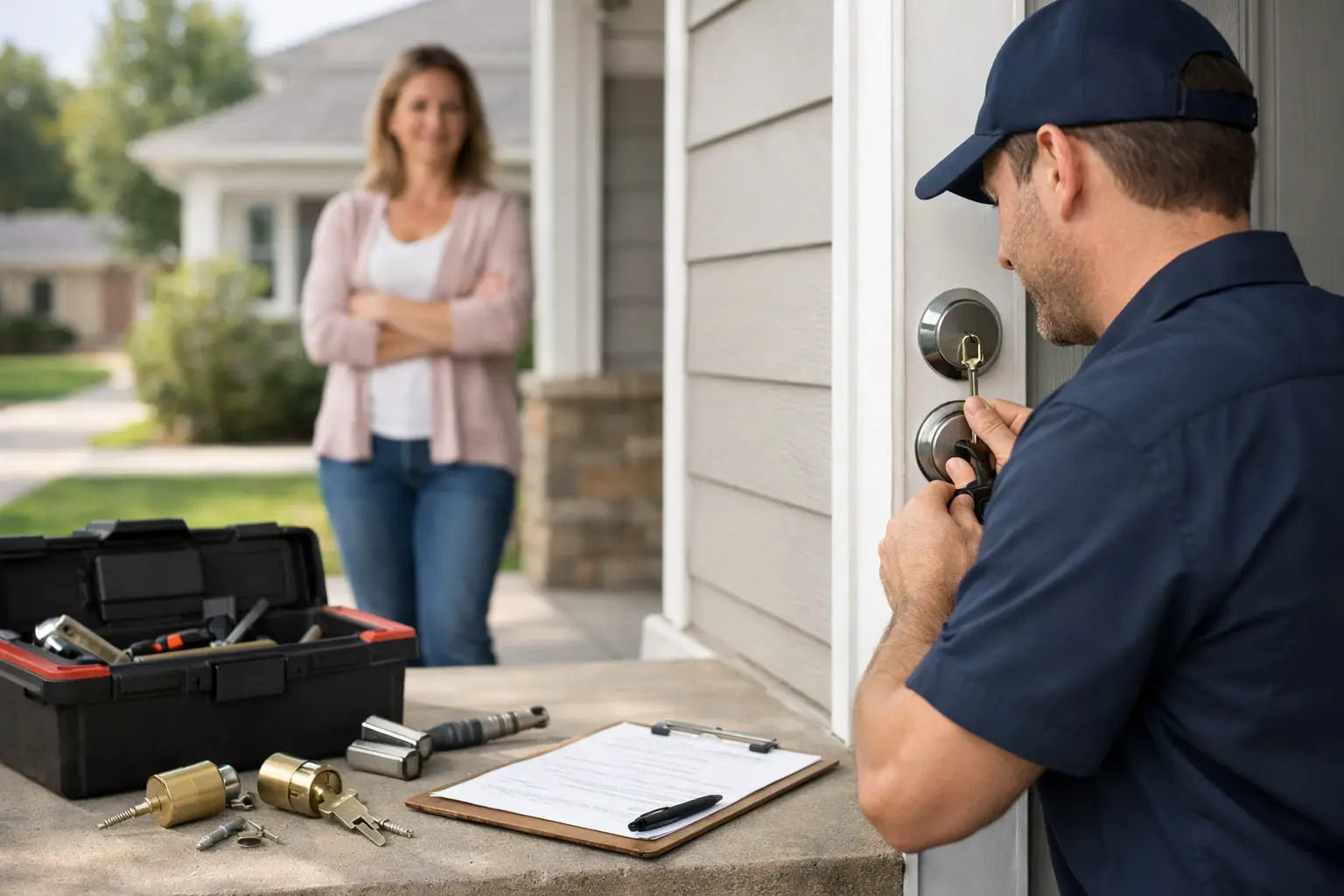
You usually do not think about your locks until something feels off. Maybe you moved in and have no idea who still has a key. Maybe a tenant left, a roommate situation went bad, or the front deadbolt has started sticking at the worst time. A good residential lock change guide helps you make the right call fast, without paying for work you do not need.
That matters because lock service is one of those jobs where people often get rushed into the wrong fix. Some situations call for a full lock change. Others are better handled with a rekey. If you know the difference, you protect your home and your budget.
When a lock change is the right move
A full lock change means removing the existing lock hardware and installing a new one. That is often the best choice when the lock is damaged, outdated, or no longer fits how you use the door.
If your lock is loose, corroded, misaligned, or hard to turn even with the correct key, replacement may be smarter than trying to stretch a failing part. The same goes for doors that still have basic builder-grade hardware after years of wear. If the lock body itself is weak, rekeying does not fix that.
A lock change also makes sense when you want a different type of hardware. Many homeowners replace standard keyed knobs with a deadbolt, upgrade to higher-security cylinders, or switch to smart locks for easier access control. If your goal is better function, not just a new key, changing the lock is usually the cleaner path.
When rekeying is the better option
A lot of people ask for a lock change when rekeying would do the job faster and at a lower cost. Rekeying keeps the existing lock but changes the internal pins so old keys no longer work.
That is usually the better answer after moving into a home, losing track of spare keys, ending a roommate arrangement, or turning over a rental unit when the hardware is still in good shape. You get control over access again without paying for brand-new locks.
The catch is simple. Rekeying only works if the current lock is worth keeping. If it is worn out, poor quality, or already giving you trouble, rekeying can save money today but create a service call later.
Residential lock change guide: first questions to ask
Before you schedule service, ask what problem you are actually trying to solve. Do you need to stop old keys from working? Improve security? Fix a damaged lock? Match multiple doors to one key? Add convenience for family, guests, or tenants?
Those answers shape the job. If the only issue is key control, rekeying may be enough. If you are dealing with forced entry damage, a failing deadbolt, or mismatched hardware across several entry points, a full lock change may be the better long-term move.
It also helps to think about how many doors matter. Most homes need attention at the front door first, but side doors, garage entry doors, patio doors, and gates can matter just as much. Security gets weak fast when one forgotten entry point still uses an old key.
What type of lock should you choose?
Not every door needs the same hardware. Front entry doors usually need the strongest setup, often a quality deadbolt paired with a solid strike plate and proper installation. Interior locks serve a different purpose and usually focus more on privacy than forced-entry resistance.
For most exterior residential doors, the main choice is between standard deadbolts, keypad locks, and smart locks. A traditional deadbolt is simple, dependable, and often the most budget-friendly. A keypad lock removes the need to hand out physical spare keys. A smart lock adds app control, temporary codes, and activity tracking, but it also adds batteries, setup, and more parts that can fail.
That does not make smart locks bad. It just means they are not automatically the best choice for every home. If you want simple and durable, mechanical hardware often wins. If you manage guests, cleaners, dog walkers, or multiple occupants, digital access can make life much easier.
Security is not just about the lock
A new lock on a weak door only solves part of the problem. Good locksmiths look beyond the cylinder.
If the door frame is split, the strike plate is short-screwed into trim, or the door does not close squarely, the best lock in the world will not perform the way it should. Sometimes the real fix is reinforcement, alignment, or hardware adjustment. That is why the cheapest quote is not always the fairest quote. If someone skips the condition of the door and talks only about swapping parts, you may be paying for half a repair.
This comes up a lot after attempted break-ins. Homeowners often focus on the lock because that is what they see first. But the bigger issue may be the frame, latch alignment, or damage around the jamb. A proper service call should address the whole entry point.
What a fair lock change service should include
A residential lock change guide is not just about hardware. It should also help you avoid the pricing games that give this industry a bad name.
A fair locksmith should be clear about what is being changed, what is being rekeyed, and what the labor covers. You should know whether the quote includes the lock hardware, the number of cylinders serviced, key copies, and any extra work caused by door damage or misalignment.
If the price sounds vague over the phone, ask direct questions. Is that the total before tax? Are there after-hours charges? Is there a service call fee on top of labor? What changes if the existing lock is damaged beyond normal wear? Straight answers matter.
Fast response matters too, especially if your home security is compromised. But speed should not be used as an excuse for surprise fees. Quick service and honest pricing can exist together. They should.
DIY or call a locksmith?
Some lock changes are simple enough for a confident DIY homeowner. If you are replacing a basic lockset with the same size and style on a properly aligned door, the job may be manageable with common tools.
But there are a few reasons people end up calling for help anyway. The new lock may not match the door prep. The latch may bind. The deadbolt may not extend cleanly. Smart lock setup may get messy. And if the door already has alignment issues, swapping hardware without fixing the fit can leave you with a brand-new lock that still works badly.
There is also the issue of keying. If you want multiple exterior doors to work on one key, or you need a mix of lock change and rekey service across the same property, professional help usually saves time and frustration.
For landlords, property managers, and homeowners dealing with turnover, speed matters as much as installation. Waiting days with uncertain key control is not a great plan.
Residential lock change guide for moves, break-ins, and rentals
The right answer depends on the moment.
After moving in, rekeying is often enough if the locks are modern and in good condition. If the hardware is cheap, worn, or inconsistent across doors, replacement makes more sense.
After a break-in or attempted break-in, lock changes are more common because damage often goes beyond the keyway. You may need new hardware, frame repair, and reinforcement at the same time.
For rentals, it depends on the lock quality and turnover frequency. Rekeying between tenants is often the most efficient move. But if the property has aging hardware that keeps generating maintenance calls, replacing it can reduce problems over time.
And if you have one door that constantly sticks, do not ignore it just because it still technically locks. Exterior door problems tend to get worse, not better, and they often fail when you are in a hurry.
How to make the decision without overpaying
Start with the condition of the current lock. If it is solid and you only need old keys disabled, rekey first. If it is damaged, outdated, or not meeting your needs, replace it.
Then think about convenience. If key control is a constant headache, a keypad or smart option may be worth it. If you prefer fewer moving parts and lower cost, a quality mechanical deadbolt is hard to beat.
Finally, choose service that respects both urgency and common sense. If you are in San Diego and need a technician on-site fast, that does not mean you should accept fuzzy pricing or unnecessary upsells. Good locksmith work is straightforward. The problem gets identified, the options get explained, and the job gets done right.
Your locks do not need to be fancy. They need to work, fit the door, and give you real control over who gets in. That is the standard to hold onto when the pressure is on.