
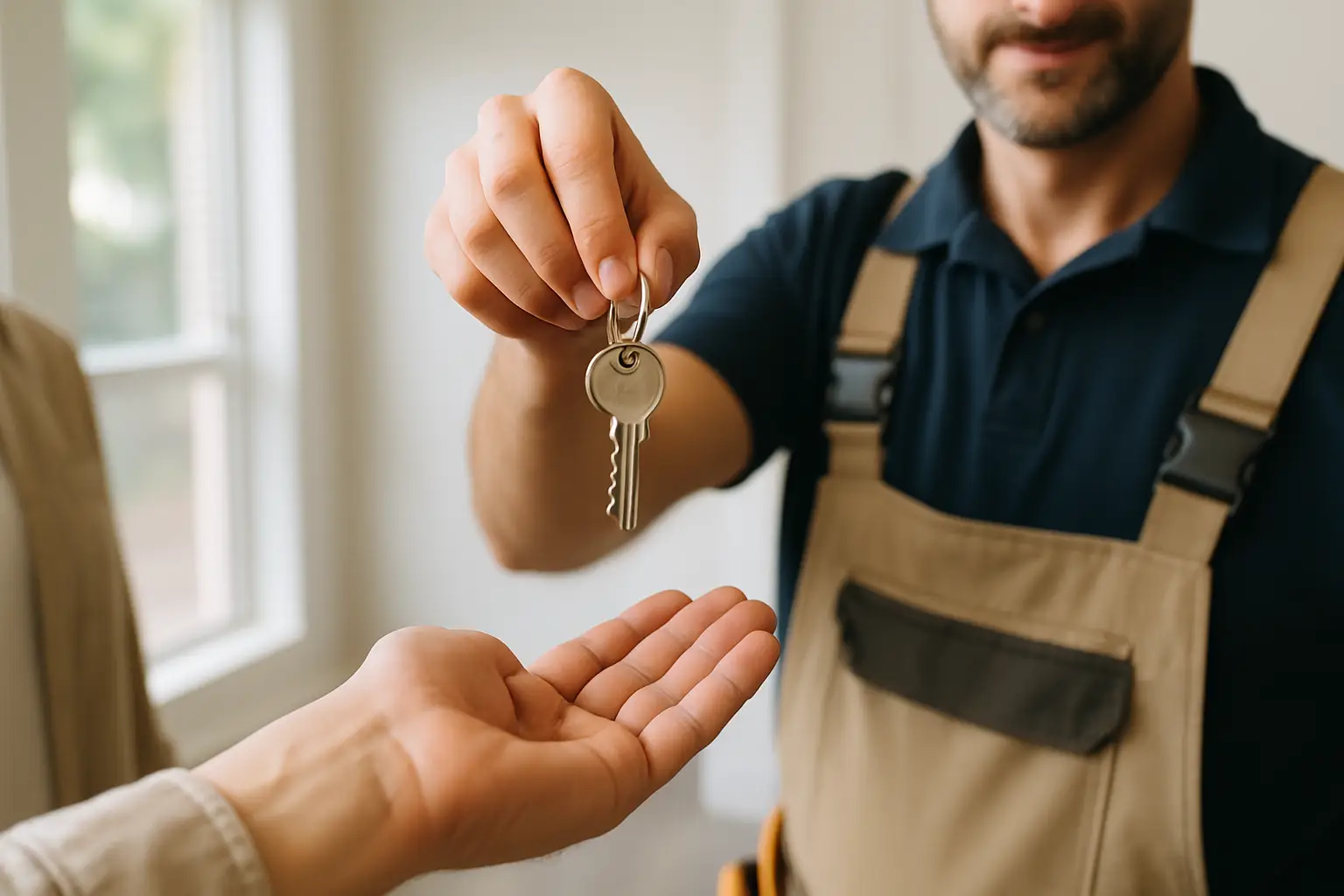
You hand a new tenant the keys, they smile, and the very first night someone tries an old copy in the front door. That is the nightmare scenario - and it happens more often than most landlords admit. If you manage apartments, the safest habit you can build is simple: rekey apartment after tenant turnover unless you have a specific, documented reason not to.
This is not about being paranoid. It is about controlling access in a world where keys get copied, lent out, lost in couches, left with dog walkers, and handed to contractors who were "only there once." Move-out day is when you reset the board.
Why rekeying after a tenant matters
Rekeying is the cleanest way to reestablish control of who can enter a unit. When a tenant leaves, you usually do not know how many copies of the key exist, who has them, or where they ended up. Even good tenants misplace keys. Even careful tenants share keys. And if the last tenant had a breakup, a roommate dispute, or a falling-out with a neighbor, the risk is higher than people want to say out loud.
The other side is liability. If something happens and you cannot show a reasonable effort to secure the property between occupants, you are handing a plaintiff an easy argument. Rekeying is not the only thing that matters, but it is one of the most defensible moves you can make because it is straightforward and measurable.
Rekey vs. replace: what you are actually deciding
When people say "change the locks," they often mean two different things. Replacing means you remove the lock hardware and install new hardware. Rekeying means the lock stays, but the internal pins are changed so old keys no longer work.
Rekeying is usually the faster, cheaper choice when the existing lock is in decent shape and the hardware is something you want to keep. It is also the best move when you want consistency across a property - same style, same finish, same fit, less chance of mismatched parts.
Replacement makes sense when the lock is failing, the cylinder is worn, the hardware is low-quality, the door has been kicked or pried, or you are upgrading security. If you have a tenant who jammed the key repeatedly, snapped a key off inside, or the deadbolt is sticky even after lubrication, replacing can save you repeat calls later.
It depends on the unit, the lock grade, and the condition of the door. But if your goal is access control after move-out, rekeying is often the clean, no-drama answer.
When you should rekey apartment after tenant move-out
Some owners treat rekeying as optional. That is a gamble. Here is the practical rule: if the tenant had keys in their possession, assume copies exist.
You should strongly consider rekeying every turnover, and you should treat it as non-negotiable when any of these are true: the tenant reported a lost key at any point, keys were never returned, there were roommates or subtenants, maintenance access was frequent, or the move-out involved conflict. If the unit is in San Diego and you are turning it quickly for a new lease start, rekeying is also the easiest way to avoid a last-minute scramble if a new tenant calls you from the parking lot saying, "This key does not work" - or worse, "Someone else has a key."
There are a few scenarios where rekeying might not be necessary, like a lock that is part of a controlled master key system with strict key tracking and restricted key blanks. Even then, many property managers still rekey as policy because policy is what keeps you from making a different decision every week.
What rekeying does - and does not - secure
Rekeying changes the key that operates the lock cylinder. That is it, and that clarity matters.
If a unit has multiple points of entry, you need to think beyond the front door. A smart approach considers the deadbolt, knob/lever lock, garage door side entry, patio slider auxiliary locks, storage units, and any interior doors that grant access to shared areas. Rekeying one cylinder while ignoring another is how you end up with a weak link.
Also, rekeying does not fix a misaligned door, a loose strike plate, or a warped jamb. If the deadbolt barely throws into the strike, you can still have security problems even with a brand-new key. A good turnover plan pairs rekeying with a quick door and frame check.
Cost expectations and what drives the price
Most people want a number. Fair. Rekey pricing depends on how many cylinders you are rekeying, the hardware type, and how much keying you want done.
If you want one key to work for the deadbolt and the knob, that is "keyed alike" and it is common in apartments. If you have multiple doors you want on the same key, that can still be done, as long as the locks are compatible.
What increases cost is complexity: high-security or restricted keyways, older hardware with worn parts, damaged cylinders, and situations where you want a master key system. Master keying can be a smart move for multi-unit properties, but it needs to be planned. Done right, it gives staff access while limiting tenant keys. Done wrong, it creates headaches and security gaps.
The real cost driver most landlords forget is time. Turnovers are time-sensitive. A rekey scheduled in advance is usually smoother than a rekey requested at 6 pm when the new tenant is waiting.
How to set up rekeying so it is fast, not chaotic
If you manage more than one unit, the best thing you can do is standardize.
Pick lock brands and models you use across the property when possible. Consistent hardware makes rekeys faster, reduces surprises, and helps you keep fewer spare parts on hand. If every unit has a different lock, every turnover becomes a mini investigation.
Next, decide your key policy. Are tenants allowed to make copies? Are keys stamped "Do Not Duplicate"? Are you using restricted keys? You cannot control everything, but you can tighten the process. Collect keys at move-out, document what was returned, and stop treating "they said they gave all copies back" as proof.
Finally, time the rekey between possession and re-rent. The cleanest window is after the old tenant returns keys and before cleaners, painters, and vendors start coming in. If vendors need access before rekeying, you are back to uncontrolled key distribution.
What about smart locks, keypad locks, and access codes?
Keypads and smart locks can be great for turnovers because you can change a code without changing hardware. But you still need a plan.
If the lock has a physical key override, you still have a key that could be out in the wild. That means rekeying can still be relevant even if you are changing codes. Also, not every "smart" lock is built for heavy rental use. Batteries die, tenants forget to report low-battery warnings, and some models do not hold up well to constant turnover.
If you are using electronic access, treat code management like key management. Codes should be unique per tenant, removed immediately at move-out, and never reused in a predictable pattern. If your maintenance staff has a permanent code, protect it and change it on a schedule.
A hybrid approach is common: mechanical deadbolt rekeyed at turnover, plus a keypad for convenience. It depends on your risk tolerance and how much you want to rely on electronics.
Master key systems: helpful or risky?
For apartment buildings, a master key system can reduce lockouts, speed maintenance, and simplify emergencies. It can also multiply damage if the master key is lost or mishandled.
If you are considering master keying, do it intentionally. Track who has master keys, log issuance and returns, and set rules for storage. If you have frequent staff turnover or lots of third-party vendors, the human risk can outweigh the convenience.
Many property managers choose a middle ground: limited master keys for core staff, strict controls, and rekeying units at turnover regardless. That way, tenant keys still change even if the building has master access.
Common mistakes that create avoidable risk
The biggest mistake is waiting until something happens. Rekeying after an incident is always more expensive - in money, stress, and tenant trust.
Another mistake is rekeying only the deadbolt and forgetting the knob lock, or ignoring a side door. If a door has a key cylinder, treat it as an entry point.
A third mistake is leaving "spare" keys hidden on-site. Under a mat, in a lockbox with a code that has not changed in two years, or inside a utility closet that multiple vendors access. Spare keys are fine. Uncontrolled spare keys are not.
Finally, do not assume your lock is rekeyable. Most standard cylinders are, but some cheaper integrated locks are not worth rekeying, and some worn cylinders will not take a clean rekey without replacing parts.
What to ask a locksmith before you schedule
You are trying to avoid surprises, so ask direct questions.
Confirm whether the quote includes labor, the number of cylinders, and the number of keys you will receive. Ask what happens if a cylinder is damaged and cannot be rekeyed. Ask whether the new keys can be keyed alike across the unit. If you want a master key plan, say so upfront - it is not something you tack on at the end.
If you are in the San Diego area and you want rekeying handled with straightforward pricing and fast dispatch, FAST & FAIR LOCKSMITH is built for exactly that kind of turnover work.
A simple turnover security mindset that pays off
Rekeying is not about assuming the worst about the last tenant. It is about protecting the next one and protecting yourself. When you rekey apartment after tenant move-out as a standard step, you stop making emotional decisions and you start running a clean process.
The best part is the calm it creates. No awkward "Do you think anyone else has a key?" conversations. No last-minute panic when keys go missing. Just a clear handoff: new tenant, new key, clean start.