
A rear exit that will not open during a rush, a delivery door that will not latch, or a storefront door with the wrong hardware is not a minor maintenance issue. It can put people at risk, disrupt business, and create a code problem. The conversation around panic bars versus exit devices gets confusing because people often use the terms interchangeably. Sometimes that is harmless. Sometimes it leads to buying or installing hardware that does not belong on the door.
The short version: a panic bar is a type of exit device, but not every exit device is accurately described as a panic bar. The door’s use, fire rating, occupancy, local code requirements, and security needs determine what belongs there.
What Is a Panic Bar?
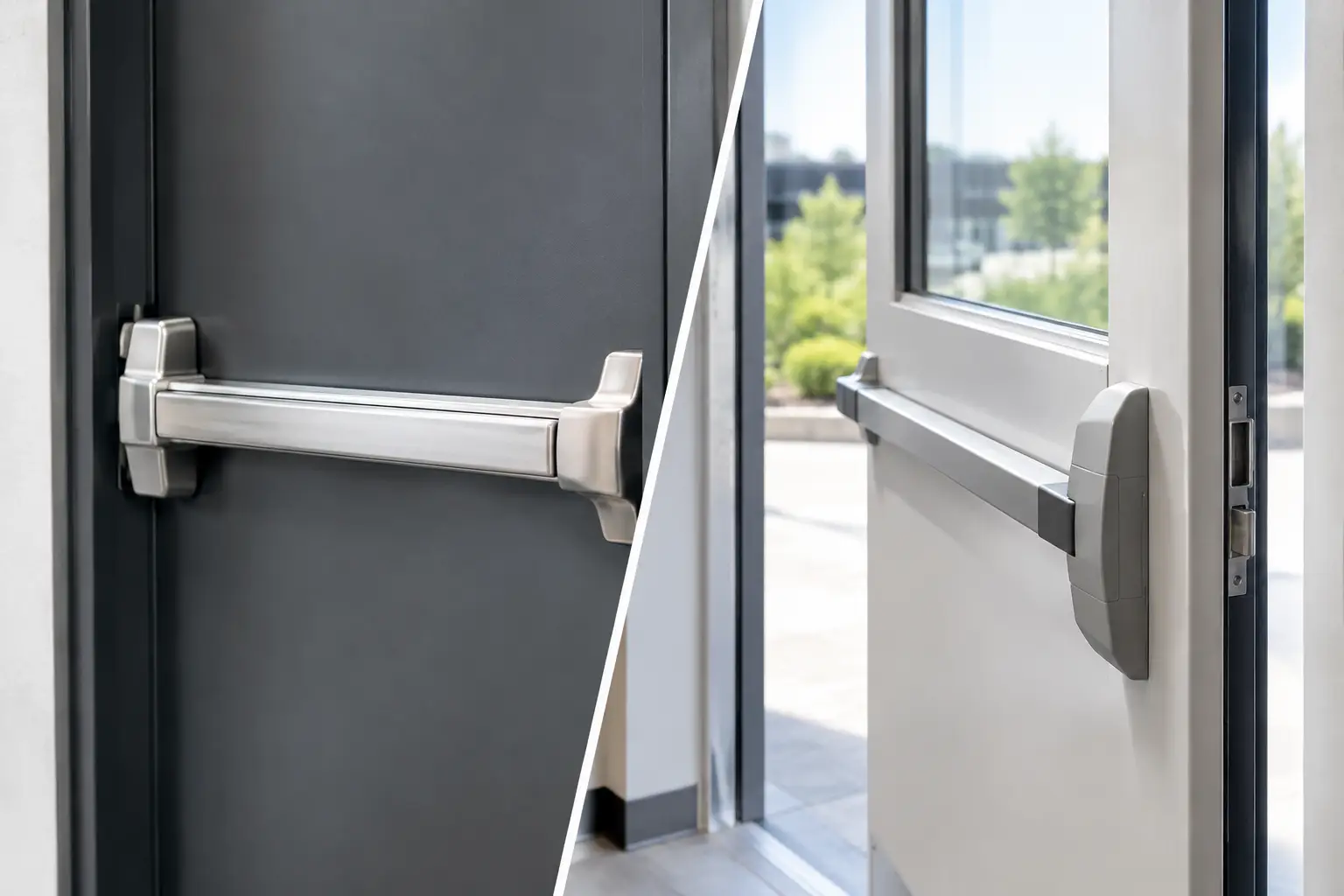
A panic bar is the familiar horizontal bar mounted across the inside of an exit door. Push the bar and the latch releases, allowing the door to open quickly in the direction of egress. It was designed for a simple reason: people should be able to leave a building without finding, turning, or manipulating a small handle when they are stressed.
The technical term is often panic hardware. It is intended for doors where occupants may need to exit quickly, including many assembly spaces, schools, retail locations, offices, warehouses, and public-facing commercial buildings. Modern panic hardware does not always look like the old-style metal crossbar. It may use a wide push pad that projects less from the door while still releasing the latch with pressure.
A panic bar is not just a security accessory. It is life-safety hardware. That distinction matters when a business owner is tempted to replace a damaged device with a cheaper latch, deadbolt, or residential-grade handle. Those substitutions can prevent fast exit and may violate applicable building or fire requirements.
Exit Devices Are the Larger Category
An exit device is the broader term for door hardware designed to release a latch and permit exit. Panic hardware falls under this category, along with fire exit hardware and different device styles such as rim, mortise, vertical rod, and surface vertical rod devices.
In everyday conversation, a property manager may call all of these a panic bar. A locksmith, hardware supplier, fire inspector, or door technician may use more specific language because the differences affect installation and compliance.
Panic hardware versus fire exit hardware
This is the distinction that causes the most expensive mistakes. Panic hardware is generally used on a non-fire-rated exit door where code requires panic egress. Fire exit hardware is designed and listed for use on a fire-rated door assembly.
A fire door must positively latch when it closes so it can help contain smoke and fire. Fire exit hardware provides the fast release needed for exit while also working with the door’s required latching system. It must be installed as part of a compatible rated assembly, with the correct closer, frame, latch, and labels intact.
You cannot assume that a device which looks right is approved for a fire-rated door. Drilling extra holes, adding an unapproved deadbolt, removing a closer, or installing incompatible trim can compromise the assembly. If the door has a fire label on its edge or frame, treat the hardware choice as a fire-door question first, not simply a panic-bar replacement.
Common Types of Exit Devices
The right device depends on how the door is built and how people use it. A single rear steel door often uses a rim exit device, where the latch engages the frame surface. This is a common, durable setup for storefronts, offices, and back-of-house exits.
A mortise exit device has its latch mechanism installed inside the door. It can offer a clean appearance and strong function, but replacement work may be more involved because the door is prepared for a specific lock body.
Pairs of doors may use vertical rod devices. These secure the inactive or both door leaves at the top and bottom of the opening. Concealed vertical rods hide much of the mechanism inside the door, while surface vertical rods are visible. Either may be appropriate, but alignment is critical. A door that sags, binds, or has an out-of-position strike will keep even quality hardware from latching correctly.
Alarmed exit devices add another layer. They permit emergency egress but sound an alarm when the bar is pushed. These can be useful at employee-only exits, stockroom doors, or locations where unauthorized use is a concern. They are not a substitute for good access control planning, and they still must allow free exit.
When Is Panic Hardware Required?
Requirements vary by occupancy, occupant load, location, and the code adopted by the local authority having jurisdiction. Some commercial doors are required to have panic or fire exit hardware, while others may legally use different listed locking hardware.
Buildings with public gatherings, educational use, high occupant loads, and certain hazardous areas are common examples where panic hardware may be required. A small private office may have different requirements than a restaurant, church, retail store, nightclub, or warehouse with public access.
That is why “the old door had a push bar” is not enough information to make a replacement decision. The old hardware may have been correct, incorrectly installed, altered over time, or no longer suitable after a tenant improvement. The door may also serve as an exit route for more people than the current owner realizes.
For Orange County businesses, permit work, renovations, and occupancy changes can bring these details under closer review. When in doubt, confirm requirements with the relevant building or fire authority and have the door evaluated by a qualified commercial locksmith or door hardware professional.
Security Does Not Mean Blocking the Exit
Business owners understandably want to stop theft, unauthorized entry, and after-hours access. The wrong fix is adding a keyed deadbolt or chain that traps people inside. A required egress door must allow occupants to leave without a key, special knowledge, or multiple actions.
The better approach depends on the risk. Exterior trim can allow controlled entry from outside while maintaining free exit from inside. Access control can limit entry by credential, schedule, or remote release. An alarmed device can discourage misuse. Door closers, hinges, frames, and strike alignment can be repaired so the exit device latches reliably after every use.
Security and safe egress are not competing goals when the system is planned correctly. Problems start when a quick workaround is installed without considering how the full opening operates.
How to Tell What Your Door Needs
Start with the door itself. Check whether it has a fire label, whether it is a single door or a pair, whether it opens in the direction people exit, and whether the current hardware latches every time. Look for evidence of binding, loose mounting screws, missing strikes, damaged push pads, or a closer that slams or fails to close the door.
Then consider who uses the exit. Is it a public exit, an employee-only rear door, a delivery entrance, or a door that serves a large room? Does it need outside key access, keypad access, an alarm, or integration with an existing access system? Those answers matter more than whether you prefer the appearance of a bar or push pad.
Finally, do not judge the job by device price alone. A fair quote should account for the condition of the door, frame, latch preparation, replacement parts, any fire-rating limitations, and labor needed to make the opening operate correctly. A low hardware price can become costly if the new device does not fit, fails inspection, or leaves the door unsecured.
Repair or Replace?
A panic or exit device does not always need full replacement. Loose trim, worn dogging components, failed latches, damaged strikes, misaligned rods, and weak door closers can often be repaired. If the device is discontinued, severely corroded, repeatedly failing, or no longer compatible with the door’s rating and security needs, replacement is usually the smarter call.
The key is to diagnose the entire opening. Many “broken panic bar” calls are actually door alignment or closer problems. Replacing the device without correcting the door can leave you with the same failure and a larger bill.
Fast & Fair Locksmith approaches commercial exit hardware the practical way: identify what is failing, explain the workable options, and avoid surprise add-ons. If a door is an emergency exit, do not wait for it to fail during a busy shift. Have the hardware checked while you can make a clear, safe decision instead of an expensive rushed one.