A stuck exit device is not a small problem. When a panic bar drags, jams, or fails to latch, people notice it at the worst possible time - during a rush, a delivery, a closing shift, or an emergency. That is why panic bar repair for exit doors needs quick attention. It is not just about convenience. It is about safe exits, secure lockup, and avoiding the bigger cost of a failed door.
What goes wrong with a panic bar
Panic bars take abuse every day. They get pushed hard, slammed shut, hit by carts, leaned on, and used by people who are in a hurry. Over time, that wear adds up. The hardware can loosen, the latch can fall out of alignment, the dogging feature can stop working, or the door closer can pull the whole system out of sync.
A lot of customers assume the panic bar itself is the only issue. Sometimes it is. But exit hardware works as a system. The bar, latch, strikes, hinges, closer, frame, and door alignment all affect each other. If the door is sagging even slightly, the panic device may start acting like it is broken when the real cause is poor alignment.
That is why a good repair call should start with diagnosis, not guessing. Replacing parts blindly costs more and does not always fix the problem.
Signs you need panic bar repair for exit doors
Some failures are obvious. The push bar does not retract the latch. The door will not open from the inside. The latch will not catch when the door closes. Those are urgent problems.
Other signs are easier to miss but still matter. If the bar feels loose, the door only latches when slammed, the handle action is stiff, or the device sticks after pressing, the hardware is warning you. So is a door that sometimes locks up and sometimes works fine. Intermittent problems tend to get worse fast.
For businesses, there is another issue - liability. If employees or customers struggle to exit, or if the door cannot secure properly after hours, the problem is already bigger than a hardware annoyance.
The most common causes
Wear and tear is the obvious one, but it is not the only reason panic hardware fails. Heavy traffic shortens the life of springs, latches, and internal mechanisms. Poor installation can also create problems early, especially if the strike was set wrong or the device was mounted on a door that was already misaligned.
Weather plays a part too. Exterior exit doors expand, contract, and shift. In coastal air, corrosion can affect moving parts and fasteners. In busy commercial spaces, dirt and debris build up inside the latch area. And sometimes the issue starts with another piece of hardware, like a failing closer that causes the door to slam and damages the panic device over time.
There is also the human factor. Doors get propped open. Bars get forced. Staff may use the hardware in ways it was not designed for. That does not mean anyone did something reckless. It just means commercial doors live a hard life.
Repair or replace? It depends
Not every panic bar needs full replacement. If the problem is loose mounting screws, strike adjustment, dogging repair, minor part failure, or door alignment, repair is often the smart move. It is faster, less expensive, and gets the door back in service without changing the whole setup.
But there are times when replacement makes more sense. If the device is heavily worn, obsolete, badly rusted, or missing internal parts that are difficult to source, a repair can turn into throwing money at old hardware. The same is true if the existing panic bar is the wrong type for the door or occupancy use.
A fair service call should tell you the difference clearly. If a repair is enough, you should hear that. If replacement is the better long-term answer, you should hear that too. No scare tactics. No padded parts list. Just the real condition of the hardware and the most practical fix.
Why exit door problems should not wait
A failing panic bar creates two risks at the same time. The first is life safety. People need to get out quickly if there is smoke, fire, panic, or crowd pressure. The second is security. Many failing exit devices also cause doors not to latch correctly, which can leave the building exposed after hours.
That is a bad combination for retail stores, offices, apartment common areas, schools, churches, and back-of-house service entries. You can end up with a door that is hard to open when occupied and easy to compromise when closed.
There is also a code side to this. Exact requirements vary by building type and occupancy, so there is no one-size-fits-all answer. But if an exit door does not function as intended, you may have a compliance issue on top of the repair issue. For property managers and business owners, that alone is a reason to move fast.
What professional panic bar repair should include
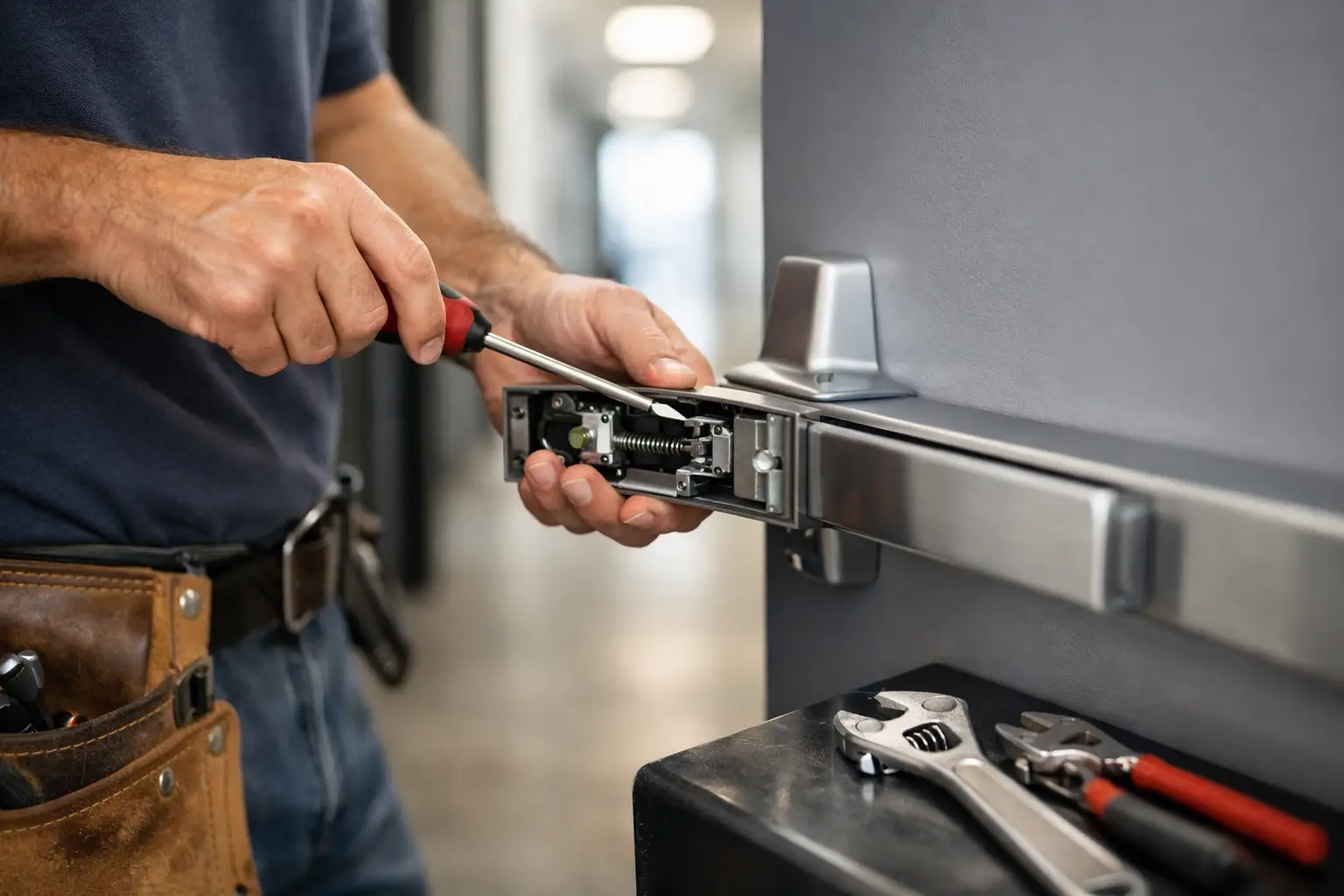
Good service is not just tightening a few screws and calling it done. A proper repair visit should check how the door closes, how the latch meets the strike, whether the bar retracts smoothly, whether the device secures consistently, and whether the surrounding hardware is contributing to the failure.
In many cases, the repair may involve realigning the strike, adjusting the door closer, replacing worn internal parts, correcting hinge-related sag, or securing loose mounting points in the door. On fire-rated or specialty doors, the approach may need extra care because the wrong field modification can create bigger issues.
The best result is simple: the door opens easily from the inside, closes properly, latches securely, and works the same way every time.
DIY is tempting, but risky
People look at a panic bar and think it is just basic hardware. Sometimes the fix is basic. Often it is not. Exit devices have internal moving parts, brand-specific components, and installation details that matter more than they seem to.
A quick do-it-yourself adjustment can turn into a door that no longer latches, binds on the frame, or has mismatched parts. On commercial properties, that can mean lost time, repeat problems, and a bigger bill later. If the door serves as a required means of egress, trial-and-error is not a great plan.
For maintenance teams, there is a middle ground. If a screw is visibly loose, tightening it may help temporarily. But if the device is sticking, misaligned, or failing under normal use, it is usually time for a locksmith or door hardware pro to handle it.
When speed matters most
Some calls can wait until regular business hours. Others should not. If the panic bar will not release, the door will not latch, the business cannot secure the building, or staff have to shoulder-check the door to get out, that is an urgent repair.
This is especially true for customer-facing businesses and multi-tenant properties. One bad exit door can affect safety, operations, and tenant confidence all at once. In the San Diego area, where many commercial buildings rely on exterior exit doors exposed to salt air and frequent use, hardware issues can creep up faster than expected.
Fast service matters here, but fair service matters just as much. Emergency pricing should still be clear. The problem may be urgent, but that does not give anyone a free pass to inflate the bill.
How to avoid repeat failures
Once the repair is done, the goal is keeping it that way. High-traffic doors benefit from routine checks, especially if staff have noticed slamming, sticking, or doors being propped open. Small alignment issues are much cheaper to correct before they damage the device.
It also helps to look at the whole opening. If the closer is failing, if the hinges are worn, or if the frame has shifted, the panic bar will keep taking the hit. Solving only the symptom usually means the same service call comes back later.
If you manage a property, keep a simple rule: when an exit door starts acting different, do not wait for a full failure. Early repair is usually the fastest, fairest way to protect the building and the people using it.
A panic bar should work every single time without drama. If it does not, treat it like the safety issue it is and get it handled before the next push on that door is the one that counts.