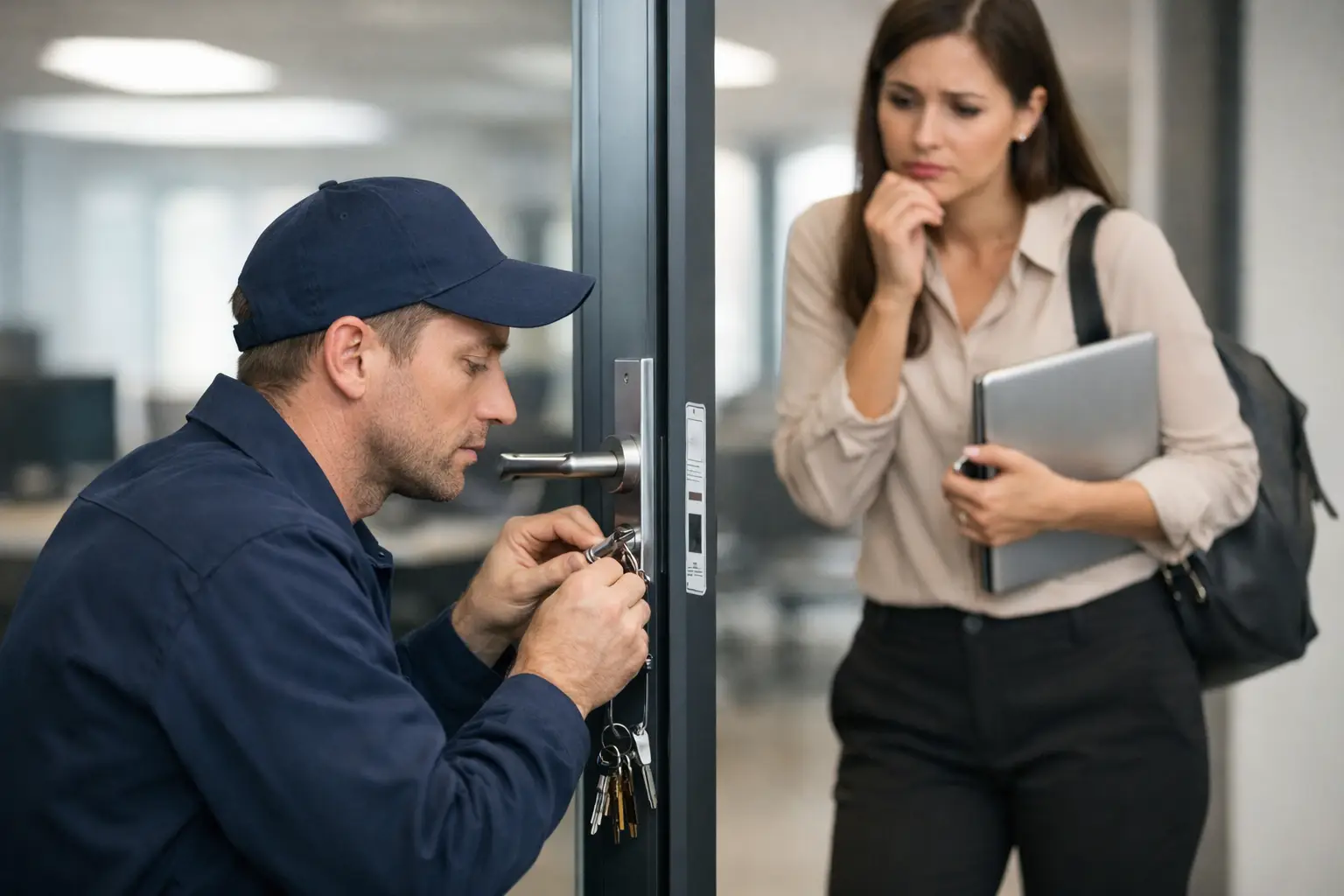
Monday starts, coffee in hand, team ready to work - and one employee is standing outside the office door with no badge, no key, and no way in. That is when office lockout service for employees stops being a small inconvenience and turns into a payroll, security, and productivity problem.
A locked-out employee can delay opening, stall deliveries, interrupt client meetings, and create avoidable stress for everyone on site. If the wrong fix is attempted, like forcing a door or calling someone who quotes one price and charges another, the problem gets more expensive fast. The right response is simple: restore access quickly, protect the property, and keep the cost clear from the start.
When an employee lockout is more than a minor delay
Not every office lockout carries the same risk. A staff member locked out of a shared front entrance at 8:55 a.m. is different from an employee unable to access an interior office that holds cash, records, medication, or equipment. Timing matters, but so does what sits behind the door.
For small businesses, one lockout can affect the whole day. If the first employee on site cannot open up, nobody clocks in on time. If a manager is locked out of a back office, sales may continue, but payroll files, keys, or inventory controls may be out of reach. In professional settings, even a short delay can look sloppy to clients and visitors.
That is why a real office lockout response is not just about opening a door. It is about doing it without damaging the lock, weakening security, or creating a bigger issue for the business after entry is restored.
What office lockout service for employees should actually include
Good service starts with speed, but speed alone is not enough. If a locksmith arrives quickly and then turns a straightforward job into a pricey replacement you did not need, that is not a solution. It is a headache with an invoice attached.
A proper office lockout service for employees should begin with basic verification. The locksmith needs to confirm the person requesting entry is authorized or that a manager, owner, or designated contact approves access. That protects the business, the employee, and the locksmith. In a commercial setting, that step matters.
From there, the best outcome is non-destructive entry whenever possible. Many office doors can be opened without drilling or replacing hardware, depending on the lock type, condition, and whether the door is deadlatched or simply locked. Sometimes the fastest fix is also the least invasive. Sometimes it is not.
That is where honesty matters. If a lock is damaged, jammed, or part of a higher-security system, the answer may be repair, rekeying, or replacement after the door is opened. A straight answer on what is necessary and what is optional saves everyone time.
Not every office door is the same
Commercial locks vary more than most people expect. A basic lever lock on an interior office is one thing. A storefront mortise lock, panic bar, electronic keypad, restricted key system, or access-controlled entry is something else entirely.
That affects both the method and the price. The fair approach is to explain that up front. A simple employee office lockout may take a short visit and no parts. A failed lock body or damaged cylinder may require more labor and hardware. The key is transparency before extra work starts, not surprise charges after the fact.
The biggest mistake businesses make during an employee lockout
Panic creates bad decisions. Someone grabs a screwdriver. Someone else tries to pry the door. A well-meaning coworker searches online and calls the first number that promises a low price. Then the technician shows up, claims the quote did not include this or that, and the bill jumps.
That pattern is common because lockouts feel urgent. Businesses want the problem gone immediately. But urgency does not mean you should accept vague pricing or unnecessary damage.
If you need help, ask direct questions before dispatch. Is the quoted price for the actual service call? Does it include labor? What could change the cost? Will the technician try non-destructive entry first? Those questions do not slow things down. They protect you from getting rushed into a bad deal.
What employees should do before calling for help
An employee should not assume they have authority to bypass the normal chain of approval. In many workplaces, the right move is to notify a manager, office administrator, property manager, or owner first. That keeps access control clean and avoids internal confusion.
If there is a verified spare key, credential reset option, or access app managed by the company, use that route first. It may solve the problem faster than an on-site visit. But if the issue is a failed lock, broken key, jammed cylinder, or inaccessible office with no backup access, waiting around can waste more time than it saves.
When calling a locksmith, be ready with the business name, exact location, type of door if known, and the name of the person authorizing service. That helps avoid delays on arrival.
When a lockout points to a bigger office security problem
Sometimes an employee gets locked out because somebody forgot a key. Other times, the lockout is a warning sign that the office access setup is weak.
If keys are constantly missing, copied loosely, or passed between former staff and current staff, the problem is not the one locked door. The problem is poor key control. If the lock sticks every week or employees struggle with entry during normal use, the hardware may be worn out. If staff turnover is high and no rekeying has been done, you may be relying on yesterday's security for today's business.
That is where a lockout call can become useful. Once entry is restored, it makes sense to ask whether the current setup is still doing its job. Rekeying may be enough. In other cases, replacing old commercial hardware or tightening access procedures is the smarter long-term move.
Rekey or replace?
This depends on the condition of the hardware and the level of control you need. Rekeying is often the better value when the lock is in good shape and you simply want old keys to stop working. Replacement makes more sense when the hardware is damaged, outdated, or no longer fits how the office operates.
There is no one-size-fits-all answer. The fair answer is the one that solves the problem without selling more than the job requires.
Why fair pricing matters as much as fast arrival
Businesses rarely budget for lockouts. They happen in the middle of real work, and the pressure to restore access quickly can make overpaying feel unavoidable. It is not.
A fair locksmith explains the service, confirms the likely cost range, and tells you if something on site changes the scope. That is how trust is built. Not with gimmicks, not with bait pricing, and not with a van-side surprise after the door is opened.
For office managers and small business owners, that clarity matters beyond one invoice. If you find a locksmith who handles employee lockouts quickly and charges fairly, you now have a reliable contact for rekeys, repairs, lock changes, and future access issues. That relationship is worth more than chasing the cheapest number online and hoping the final bill matches.
After-hours office lockouts need a different mindset
A late-night employee lockout can be more sensitive than a daytime one. Fewer people are around to verify access. The area may be less secure. The employee may be alone, and the business may not want doors opened without direct approval.
That is why after-hours service should be handled with extra care. Clear authorization, a known contact person, and a locksmith willing to verify before entry all matter. Fast service still matters, especially if an employee is stranded outside in an unsafe situation, but not at the expense of basic security judgment.
In the San Diego area, this is especially relevant for offices that stay open early, late, or around the clock, including medical, retail, and service businesses with rotating shifts.
Choosing the right locksmith for employee office lockouts
You do not need a long sales pitch. You need a technician who shows up, opens the door the right way, and charges what makes sense for the work.
Look for plain communication. Look for someone who understands commercial locks, not just house lockouts. Look for pricing that is explained before tools come out. And look for a service mindset that treats your time like it matters, because it does.
Fast & Fair Locksmith stands out for exactly that reason: quick response, straightforward service, and pricing that does not change shape once you are already stuck.
An office lockout does not have to wreck the day. Handle it quickly, verify access the right way, and fix the root issue if the lockout is telling you something bigger. The best locksmith call is the one that gets your employee back inside without leaving your business with a second problem to solve.