
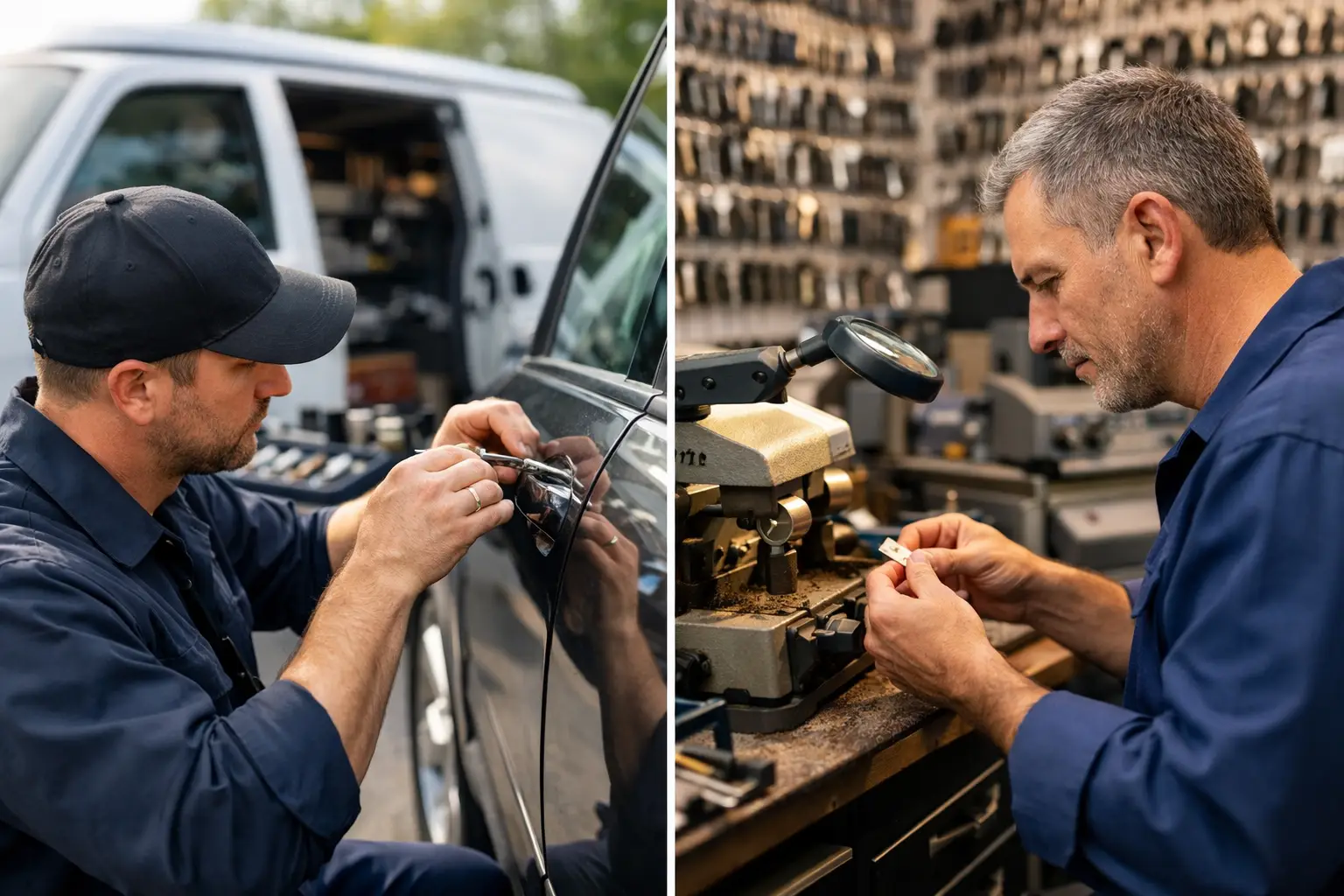
Locked out at night, standing next to your car, is not the moment to figure out the difference between a mobile locksmith vs shop. You need the right help, fast, and you need to know what you’re paying for. That choice matters because speed, equipment, and pricing can look very different depending on how the locksmith works.
Mobile locksmith vs shop: the real difference
A mobile locksmith comes to you. A shop-based locksmith usually works from a physical location where customers bring locks, keys, or hardware in for service. That sounds simple, but the difference changes almost everything about the job.
If you’re locked out of your house, car, or office, a shop is rarely the practical answer. You can’t exactly bring your front door or ignition to the counter. A mobile locksmith is built for that kind of problem. They dispatch to your location, assess the issue on-site, and handle the work where the problem actually is.
A shop can still be useful in certain situations. If you want duplicate house keys made, want to browse hardware in person, or have an old lock removed and brought in for inspection, a storefront may make sense. But for most urgent service calls, mobile wins on convenience because there’s no extra step between the problem and the fix.
When a mobile locksmith makes more sense
Most people call a locksmith because something has already gone wrong. The key snapped. The lock stopped turning. The tenant moved out. The car key disappeared. In those moments, waiting around or arranging transport is its own headache.
A mobile locksmith is usually the better option for lockouts, rekeying at the property, lock repair on installed doors, and vehicle key issues. The main reason is obvious - the technician brings tools, machines, and replacement parts to the scene. That cuts out the back-and-forth.
For drivers, this matters even more. If your transponder key fails in a parking lot, a shop may be able to help only if you tow the car there. A mobile locksmith can often cut and program a replacement on-site. That saves time, towing costs, and a lot of frustration.
Property managers and business owners often prefer mobile service for the same reason. If several units need rekeying, or a storefront lock needs to be changed after a security issue, on-site work keeps the day moving. Nobody wants to remove locks from multiple doors and haul them across town unless there’s a very specific reason.
When a locksmith shop may be the better call
A storefront is not outdated. It just fits a different kind of job.
If your need is low urgency and highly specific, a shop can be a good choice. Some shops carry a wider display of hardware, safes, specialty key blanks, or older lock parts. If you want to compare products in person and you have time, that setting can help.
A shop may also work well for straightforward duplicates if you’re already nearby. Bring in the key, wait a few minutes, and leave. For non-emergency jobs, that can be perfectly reasonable.
There are also rare cases where bench work is better done in a controlled workspace. Certain antique locks, unusual commercial hardware, or deep restorations may benefit from being examined in the shop rather than serviced quickly on-site. That said, those jobs are not what most locksmith customers are dealing with on a normal day.
Speed is usually the deciding factor
For most customers, the biggest difference in mobile locksmith vs shop is response time in a real-world situation.
If you are locked out, speed is not a nice extra. It is the service. A mobile locksmith is structured around dispatch and arrival. A shop is structured around you coming to them. That single difference tells you a lot about which model fits an emergency.
Even outside emergencies, mobile service can still be faster overall. Think about a house rekey after a move. With a shop, you may need to remove hardware, drive it over, wait for service, then reinstall everything. With mobile service, the locksmith shows up and handles the job in place. Fewer steps usually means less downtime.
This is especially true across busy parts of San Diego, where traffic alone can turn a simple errand into half a day. On-site service keeps the problem contained.
Pricing is not always apples to apples
People often assume a shop will always be cheaper. Sometimes that’s true. Sometimes it isn’t.
A simple in-store key copy may cost less than a service call, because there is no dispatch involved. But once the job becomes more complex, price depends less on the business model and more on the honesty of the company, the skill required, and what equipment is needed.
That is where customers get burned. Some locksmiths advertise a very low number to get the call, then pile on charges after arrival. Others keep pricing vague until the work is underway. That can happen with mobile operators, and it can happen with shops that dispatch techs too.
The better question is not just mobile locksmith vs shop. It is whether the company gives clear pricing, explains the job, and sticks to reasonable rates. Fair pricing should not feel like a mystery.
If you’re calling for mobile service, ask what the service call covers, what could change the final price, and whether labor and parts are separate. If the answers are slippery, move on. Fast help is good. Fast and honest is better.
Equipment and capability matter more than location
A lot of customers picture a mobile locksmith as somebody with a van and basic hand tools. That’s outdated. A well-equipped mobile locksmith can handle a wide range of residential, commercial, and automotive jobs on-site, including rekeying, lock replacement, key extraction, smart key issues, and many car key programming tasks.
The quality gap is not really about van versus storefront. It’s about whether the technician arrives prepared.
A good mobile setup can be impressively complete. A bad one can waste your time. The same goes for a shop. A storefront may look established, but that doesn’t automatically mean better skill, better tools, or better pricing.
What matters is whether the locksmith can solve your problem without unnecessary delays, damage, or upselling.
Safety and trust matter more during mobile service
When someone is coming to your home, business, or stranded vehicle, trust becomes a bigger issue. You are not walking into a public store. You are letting a stranger work on access points that protect your property.
That means verification matters. Ask for identification. Ask for a clear explanation of the work. Make sure the company name matches the vehicle or the dispatch details you were given. If something feels off, stop the job.
This is one reason many customers prefer companies that lead with straightforward communication. In a field where bait-and-switch pricing and vague arrival windows are common complaints, clarity matters.
Fast & Fair Locksmith built its reputation around exactly that concern - getting there quickly and keeping the price conversation straight.
Which one should you choose?
If you need help where the problem is happening, choose a mobile locksmith. That includes lockouts, rekeys, broken locks on installed doors, and almost any vehicle key emergency. It is usually faster, more convenient, and better suited to urgent situations.
If you have a basic, non-urgent need and can easily bring the item in, a shop may be fine. Duplicate keys, hardware browsing, and certain specialty bench jobs can fit that model well.
For a lot of people, the answer comes down to this: if moving the problem to a store is harder than fixing it where it sits, mobile service is the smarter call.
The better question to ask before you hire
Instead of asking only whether a mobile locksmith or shop is better, ask how the company handles urgency, pricing, and communication.
Do they answer clearly? Do they explain what they can do on-site? Do they quote in a way that sounds real instead of suspiciously cheap? Do they treat your time like it matters?
That tells you more than the business model alone.
A locksmith should solve a problem, not add a second one. When the situation is urgent, the best choice is usually the one that gets to you quickly, does the work right, and charges fairly without games. That is the kind of help worth calling for.