
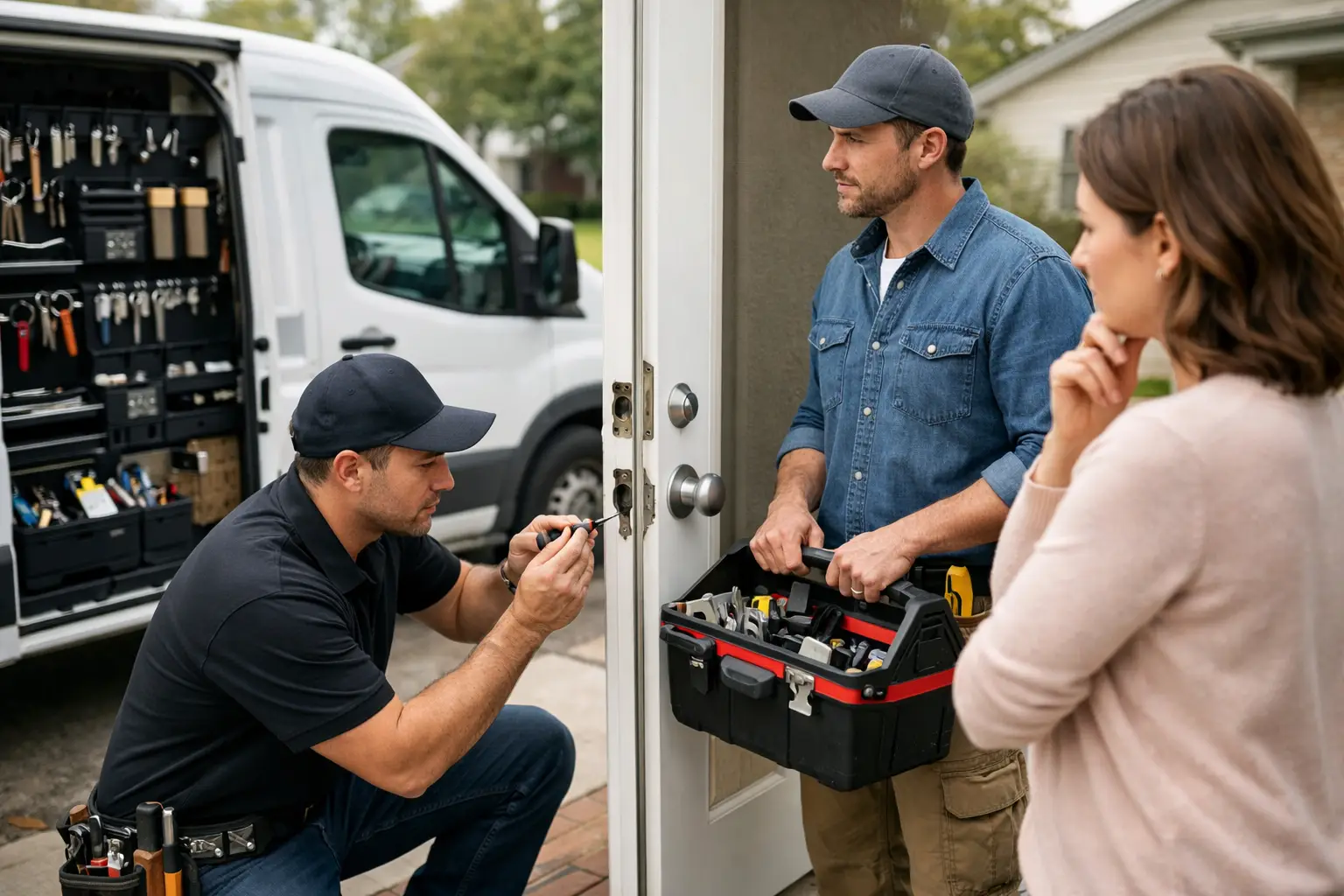
A deadbolt that sticks, a key that turns without opening the door, or a lock damaged after a break-in is not a small inconvenience. It is a security decision. When weighing locksmith vs handyman for lock repair, the right call depends on what failed, how secure the door needs to be, and whether the repair can wait.
A handyman may be a practical choice for basic door and hardware work. A locksmith is the better fit when the lock itself is failing, access is urgent, or the job affects the security of your home, business, or vehicle. The goal is not to pay for more service than you need. It is to get the repair done correctly the first time, without surprise charges or a weakened lock left behind.
Locksmith vs Handyman for Lock Repair: The Real Difference
A handyman is generally skilled at broad property repairs. They may fix a loose doorknob, tighten hinges, replace a damaged strike plate, adjust a door that rubs the frame, or install a new lockset you already purchased. Those are useful services, especially when the issue is clearly related to the door, trim, or mounting hardware.
A locksmith works specifically with locks, keys, cylinders, latches, deadbolts, security hardware, and access systems. That specialization matters when a lock binds internally, a key breaks in the cylinder, a deadbolt will not extend fully, or the lock needs to be rekeyed after a move, employee turnover, lost key, or security concern.
The difference is not just the tool bag. It is diagnosis. A lock can appear broken when the real problem is door alignment. A door can appear misaligned when the actual issue is a worn latch, failed cylinder, incorrect key, or damaged internal lock component. A qualified locksmith can identify the cause and recommend the least invasive repair that restores secure operation.
When a Handyman Can Make Sense
A handyman can be a sensible, cost-conscious option when the lock itself works normally and the repair is mainly carpentry or general maintenance. For example, the door may sag and cause the latch to miss the strike plate. The strike plate may be loose. The door frame may need reinforcement after normal wear. Or you may simply want a new passage knob, privacy lock, or standard deadbolt installed during a larger home repair project.
This route works best when there is no urgent lockout, no compromised security, and no uncertainty about the condition of the locking mechanism. If you have the replacement hardware on hand and it is a straightforward installation, a capable handyman may complete the job efficiently.
There is a trade-off. Installing a lock is not always the same as repairing it. If the new hardware does not fit the existing door prep, backset, door thickness, or strike alignment, the job can quickly become more involved. An incorrect fit may leave the bolt barely catching the frame, which creates a security problem even if the door appears to lock.
Call a Locksmith When the Lock Is the Problem
If the issue involves keys, internal lock components, access control, or an immediate security concern, call a locksmith. This is especially true when you are locked out, the key will not turn, the lock is damaged, or the door cannot be secured.
A locksmith is usually the right choice for situations such as a deadbolt that spins freely, a key broken inside the lock, a lock that was forced or drilled, or a cylinder that needs replacement. Rekeying is also locksmith work. Rekeying changes the pins inside the lock so old keys stop working while the existing hardware stays in place. It is often a smart option after moving into a home, losing keys, ending a tenant occupancy, or changing staff access at a small business.
For commercial properties, the stakes can be higher. Storefront locks, panic hardware, lever sets, restricted key systems, master-keyed doors, and keypad locks need the right parts and setup. A quick hardware swap may get a door closing, but it can also interfere with fire egress, employee access, or the building's security plan. When a business cannot lock up properly, the problem needs a fast, precise fix.
Automotive lock and key issues also belong with a locksmith. Modern vehicle keys often include transponder chips, remotes, fobs, and programming requirements. A handyman may handle many property repairs well, but vehicle entry and replacement-key work require specialized equipment and training.
Security Repairs Should Not Be Guesswork
After a break-in attempt, a damaged lock is only part of the problem. The strike plate, screws, door frame, latch, hinges, and surrounding wood or metal may all need attention. A handyman may be helpful with frame repair, but a locksmith should assess the lock and hardware before the door is put back into service.
The same applies to a lock that suddenly feels loose or unreliable. Do not keep forcing the key or slamming the door until it catches. That can turn a repairable issue into an emergency lockout or a full replacement. If the lock protects an exterior door, office, rental unit, or storage area, treat a change in operation as an early warning.
A good locksmith should explain whether repair, rekeying, or replacement is the practical option. Replacement is not automatically better. If the lock body is in good condition and the concern is who has keys, rekeying can save money. If the cylinder or internal components are worn or damaged, repairing or replacing the affected hardware may be the more reliable move.
Compare the Total Cost, Not Just the First Price
The cheapest quote is not always the fair price. A low initial number can leave out the service call, labor, hardware, emergency fee, or required parts. That is how a simple lock repair turns into an unpleasant surprise at the door.
Before approving work, ask for a clear explanation of the service charge, labor, parts, and any after-hours fee. You should also know whether the price is for repair, rekeying, or full replacement. If a technician cannot explain what failed and why a particular fix is needed, pause before agreeing to more work.
For Orange County customers facing an urgent lock problem, Fast & Fair Locksmith focuses on the part that matters most in the moment: getting help out quickly and keeping the pricing straightforward. You deserve an answer about cost before the work begins, not after the lock has been taken apart.
Make the Call Based on the Risk
Choose a handyman when the door or mounting hardware needs routine adjustment and the lock is known to be working correctly. Choose a locksmith when the lock, key, cylinder, deadbolt, latch, access system, or security of the property is in question.
If you are unsure, use this simple test: Can you confidently lock the door, unlock it with the correct key, and trust that the bolt fully engages the frame? If the answer is no, the job is no longer just a minor home repair.
Before anyone starts work, confirm the scope in plain language. Ask what is wrong, what can be repaired, what must be replaced, and what the full price will be. Those few questions protect your budget and your security.
A lock is supposed to give you certainty every time you leave, arrive, open up, or lock down. If it cannot do that, get the right person on site and get it fixed before a small issue becomes a costly one.