
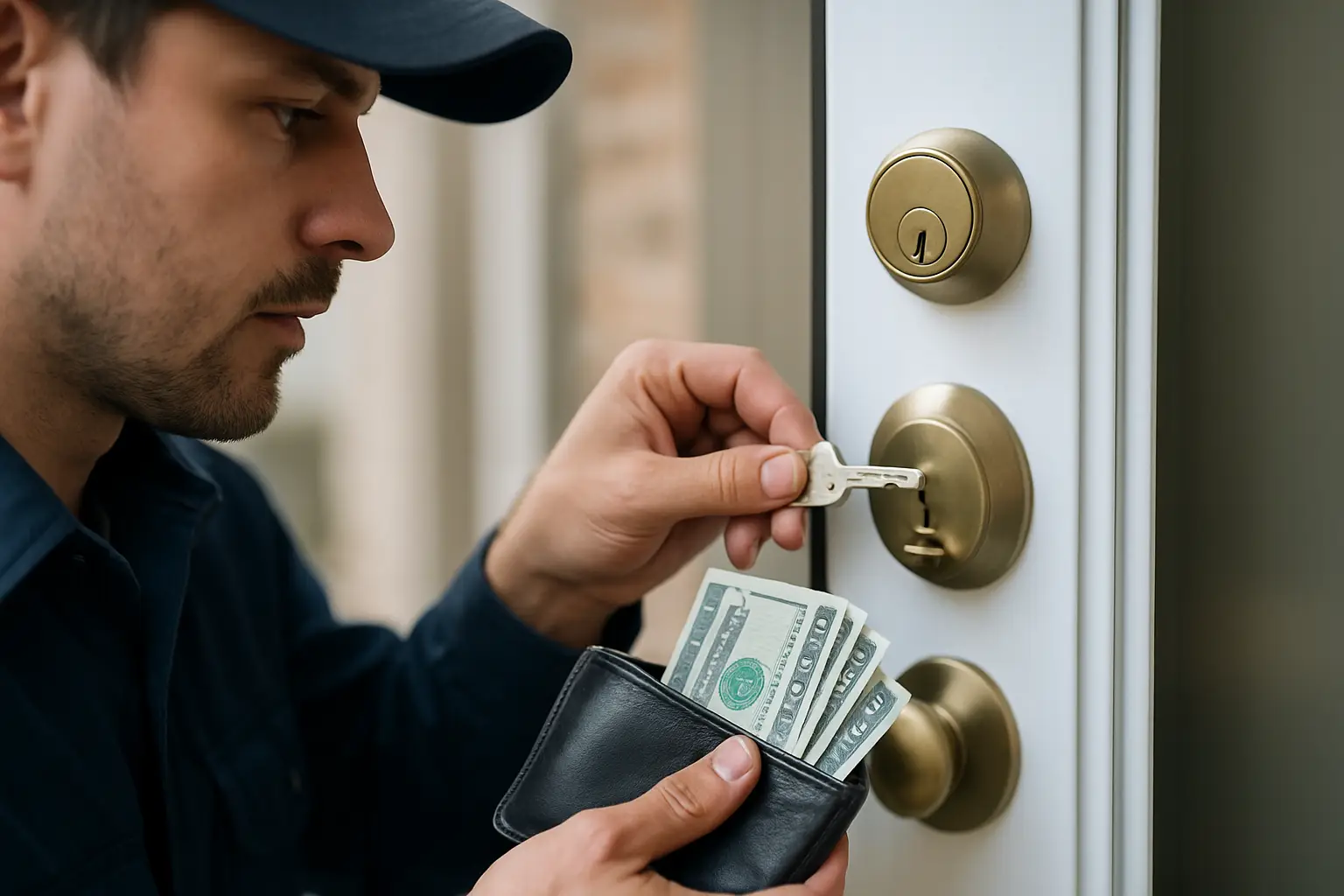
You call for a locksmith. You are locked out, it is late, and you want the door open fast.
The quote on the phone sounds fine. Then a tech shows up and the price doubles, triples, or gets padded with “mandatory” add-ons you never agreed to. That is the problem behind locksmith bait and switch fees, and it hits people when they have the least time and leverage.
This article is built for real situations - apartment lockouts, car keys, storefront doors, after-hours calls. No lecture. Just how the scam works, what fair pricing looks like, and how to protect yourself before a truck rolls.
What “locksmith bait and switch fees” really look like
Bait and switch usually starts with a quote designed to win the call, not reflect the job. The low number is the bait. The switch is what happens when the technician arrives and suddenly the price is “different for your type of lock” or “higher because it’s after hours” or “not possible to do it the way we discussed.”
Sometimes the person on the phone is not even the locksmith. It is a call center that collects your info, dispatches whoever is available, and hands you off to a contractor who did not make the original quote. That contractor may feel zero obligation to honor it.
The hard part is that some price changes are legitimate. Not every higher bill is a scam. If you said “house lockout” and it turns out you need a lock replacement after a break-in, that is a different job. The line gets crossed when the change is vague, pressured, or presented as unavoidable without explaining the options.
The most common ways the price “changes” on-site
The too-good-to-be-true base price
If you are quoted something like $19, $29, or $39 for an emergency lockout, that number is almost always just a hook. By the time you add service call, labor, and “parts,” it is nowhere close.
A realistic lockout price depends on time, location, and difficulty. But the quote should still mean something. “$29” with no context is not pricing - it is advertising.
The “you have a high-security lock” claim
A tech may take one look at a normal deadbolt and call it “high-security.” That word becomes a permission slip to raise the price.
Yes, there are legitimately high-security cylinders and restricted keyways. But most residential locks are standard. If a tech cannot name the brand/model and explain what makes it high-security in plain English, be cautious.
After-hours and emergency add-ons that were never disclosed
It is fair for after-hours service to cost more. What is not fair is quoting a daytime price, then adding an emergency fee, night fee, weekend fee, and “dispatch fee” after arrival.
A fair company says the after-hours rate up front and repeats it before dispatch.
Drilling as the first option
Drilling can be necessary in some situations, but it is often pushed because it turns a simple lockout into a bigger ticket - new hardware, new labor, more time.
If you are locked out and the lock is functioning normally, non-destructive entry is often possible. “We have to drill” should come with a clear reason and an explanation of alternatives.
Parts pricing that does not match reality
Another classic switch is the mystery part charge. A basic cylinder, latch, or deadbolt gets priced like premium commercial hardware. You do not need to be a locksmith to spot the issue: if the tech cannot show you the packaging, brand, and grade, the number is just a number.
Sometimes customers get hit with a “rekey kit,” “pins,” “special screws,” or other small items priced like major components. Small parts exist. Inflated parts pricing is the problem.
What fair pricing should sound like on the phone
You do not need a perfect number over the phone. You need a price structure that holds up when the van arrives.
A fair dispatcher can tell you (1) the service call or trip charge, (2) the labor range for the specific service, and (3) what would cause it to go higher. If they will not say those things, or they dodge with “the tech will tell you,” that is how people end up trapped by locksmith bait and switch fees.
A strong quote sounds like: “For a standard residential lockout in your area, it is usually between X and Y, including the service call. If the lock is damaged or you request a replacement, we will price that separately before we do it.”
That last part matters: price it before we do it.
Questions that stop surprises before dispatch
When you are stressed, it is easy to skip questions. Ask anyway. Two minutes on the phone can save you a few hundred dollars.
Ask for the total expected range for your exact issue, not just a starting price. Confirm whether the quote includes the service call. Ask about after-hours pricing if it is nights, weekends, or holidays.
Also ask one key question that shuts down a lot of games: “Will the technician honor this quote range when they arrive, as long as the situation matches what I described?” If the answer is not a clear yes, consider calling someone else.
If you manage properties or you call locksmiths often, add one more: “Are you dispatching your own techs or a third party?” There is nothing wrong with subcontracting, but you deserve to know who is coming and whether the quote is binding.
What to do when the tech arrives and the price jumps
If the price changes on-site, slow everything down. Pressure is the tool.
First, restate what you requested and what you were quoted. Then ask what exactly changed. Not “it’s harder.” Not “your lock is special.” Ask what changed, in plain terms, and what the new total will be.
Second, require a clear yes-or-no choice before work begins. “If I do not approve this price, will you leave without doing any work, and what do I owe you for coming out?” A fair company can answer that cleanly.
Third, if the tech starts drilling, replacing parts, or disassembling hardware before you approve the price, stop them. Once the lock is damaged, you are stuck paying to put things back together.
It can feel awkward. Do it anyway. You are not being difficult. You are preventing a forced sale.
Real-world “it depends” scenarios (when higher cost is legitimate)
Some calls genuinely cost more. The difference is transparency and consent.
If the lock is broken, seized, or previously damaged, opening it may require extra labor or a destructive method. If you lost keys to a restricted system, you may be limited in what can be duplicated or rekeyed. If it is a commercial storefront with specific hardware, parts can cost more than residential.
The fair approach is simple: identify the issue, present options, and give a price for each option before doing anything irreversible.
Red flags you can spot fast
Bait-and-switch operations tend to share patterns.
If the phone rep refuses to name the company clearly, will not give a physical service area, or answers with a generic script, treat that as a warning. If the quote is unbelievably low, it is not a deal - it is the setup.
On-site, watch for refusal to provide a written estimate, refusal to explain what is being replaced and why, and aggressive urgency like “sign now or I leave.” A fair locksmith does not need to corner you.
How FAST & FAIR handles pricing (the standard we think you deserve)
A locksmith should show up fast and price the job like a professional, not like an ambush. At FAST & FAIR LOCKSMITH, the goal is simple: get there quickly, confirm the situation, and give a straightforward price before work starts - no mystery fees, no games, no surprise “required” upgrades.
If you call any company, hold them to that standard.
If you already got hit with bait-and-switch fees
If it already happened, you still have options, depending on what occurred and how you paid.
Start by writing down the timeline while it is fresh: the phone quote, arrival time, what was said, and what was done. Save texts, call logs, invoices, and any photos of the lock or parts. If you paid by card and the charge does not match what you agreed to, you may be able to dispute it with your card issuer. If the invoice is vague or misleading, that documentation matters.
If you feel unsafe during the incident, prioritize getting to a safe place first. A door can be replaced later. Your safety cannot.
A fast, fair way to think about the call
Here is the test that works in the real world: if the company cannot tell you the likely total range and the reasons it could change, they are not quoting - they are fishing.
You deserve a locksmith who treats urgency like a service commitment, not a chance to inflate the bill. Next time you are staring at a locked door, ask the questions, demand the price before work, and remember this: the fastest fix is the one that does not come with a fight after the door opens.