
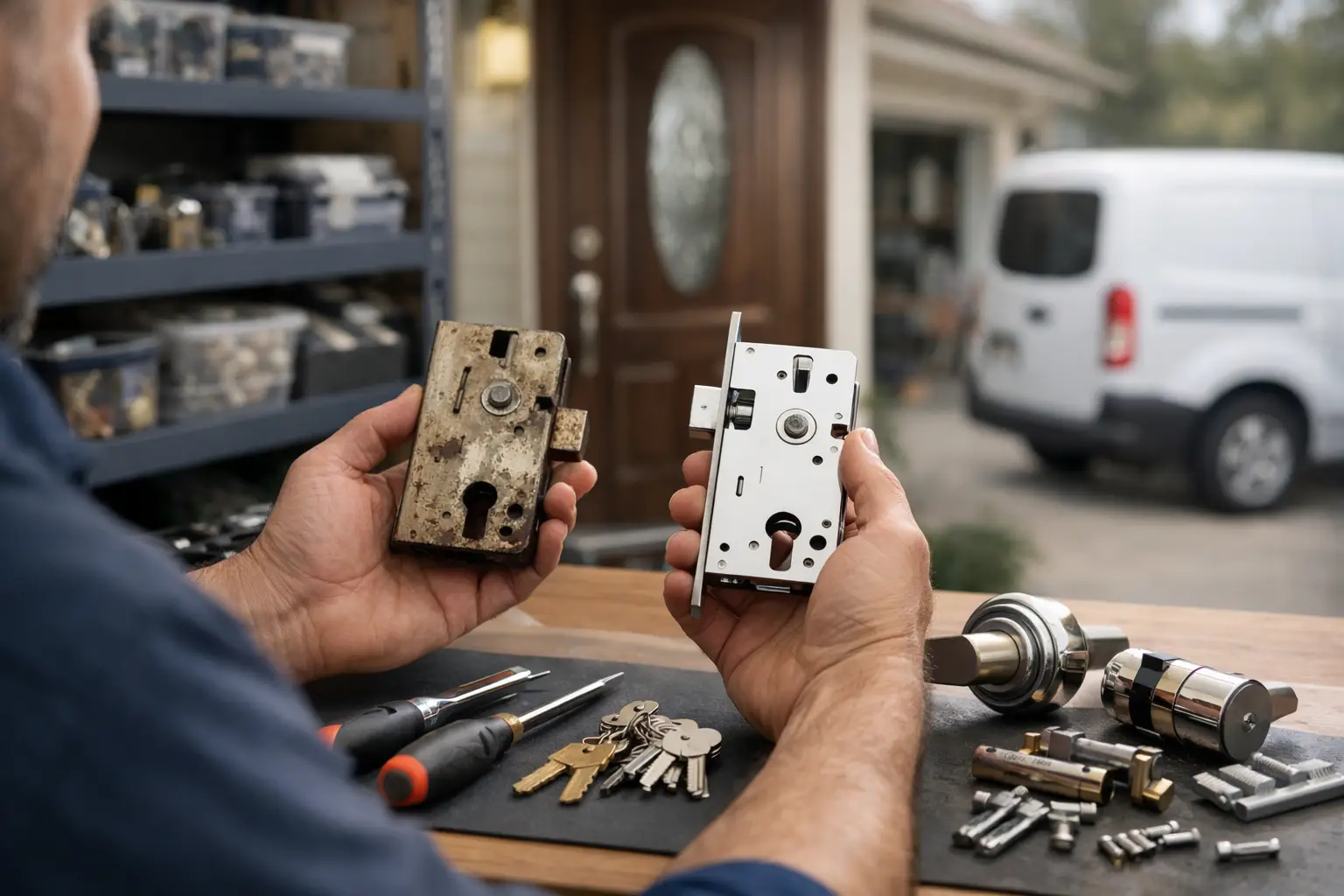
A lock that sticks at 10 p.m. feels like an emergency. A lock that barely works after a break-in feels worse. When you're deciding on lock repair vs lock replacement, the real question is simple: can this lock be made dependable again, or is it time to stop gambling and change it out?
That decision matters because the cheapest option is not always the fair one, and the fastest fix is not always the safest one. Sometimes a repair gets you back to normal quickly and saves money. Sometimes repair just delays the next failure, and replacement is the smarter call from the start.
Lock repair vs lock replacement: what changes the answer
There is no one-size-fits-all rule here. The right choice depends on what failed, how old the hardware is, and whether the issue is mechanical or security-related.
Repair makes sense when the lock itself is still solid but one part is worn, loose, dirty, or slightly out of alignment. That could mean a deadbolt that turns stiff because the strike plate shifted, a latch that does not catch cleanly, or a key that works only if you jiggle it. In many of those cases, the lock body is still usable. A locksmith can adjust, clean, tighten, lubricate, or replace a small internal part and get the lock working properly again.
Replacement makes more sense when the lock is badly damaged, outdated, unreliable, or no longer trustworthy. If the cylinder is cracked, the internal pins are worn beyond a practical fix, the hardware was forced during a break-in, or the lock quality was poor to begin with, replacing it is often the cleaner answer. It costs more upfront, but it can save you from a repeat service call and another bad night.
When lock repair is usually the smart move
A good repair is not a shortcut. If the lock is worth saving, repair can be the fastest and fairest way to restore security without paying for hardware you do not need.
One common case is misalignment. Doors shift over time. Weather, settling, loose hinges, and daily use can move the latch or deadbolt just enough to create friction. People often assume the lock is broken when the real problem is the door frame. If the bolt is rubbing, catching, or refusing to seat fully, adjustment may solve it.
Another strong repair case is minor wear. Springs weaken. Screws back out. Internal pieces get dirty or sticky. If the lock is a decent brand and the damage is limited, replacing a component or servicing the mechanism can extend the life of the hardware.
Repair can also make sense for commercial doors with panic hardware, lever sets, or storefront locks where the issue is isolated and the rest of the system is in good condition. In those cases, replacing everything may be unnecessary and expensive.
If budget is tight and the lock still meets your security needs, repair may be the practical choice. The key phrase is still meets your security needs. Saving money on a lock that you no longer trust is not really saving money.
When lock replacement is the better call
Some locks are repairable but still not worth repairing. That is the part many customers do not hear clearly enough.
If your lock was forced, drilled, kicked, pried, or otherwise compromised during a break-in or attempted break-in, replacement is usually the safer route. Even if the lock can be made to turn again, hidden damage can leave it weak. This is not the time for a patch job.
Replacement is also the right move when keys are lost or stolen and you are unsure who may still have access. In some cases, rekeying is enough. But if the lock is old, low-grade, or already giving you trouble, replacing it may give you a better result than investing more money into worn hardware.
Age matters too. A lock that has been sticking for years, has visible rust, or has already needed multiple service calls is telling you something. You can keep paying to nurse it along, or you can replace it and move on.
Then there is the quality issue. Not all locks are built well. If the hardware was cheap from the start, repair can become a cycle. Fix one issue, then another shows up. For rental properties, storefronts, and busy households, that pattern creates more downtime and more cost.
Security is not the same as functionality
A lock can work and still be a bad lock.
This is where people get tripped up. If the key turns, the door opens, and the bolt extends, it is easy to assume everything is fine. But functionality and security are not the same thing. A worn-out cylinder, a loose deadbolt, or outdated hardware may still operate while offering weak resistance against forced entry or unauthorized key use.
That is why lock repair vs lock replacement should not be based only on whether the lock can be made usable today. It should also be based on whether you want to trust it tonight.
For homeowners, that may mean replacing a basic builder-grade lock after a move-in. For renters, it may mean asking management for a rekey or replacement after a key control problem. For small businesses, it may mean updating exterior door hardware that gets heavy daily traffic and cannot afford failure.
The cost question most people really mean
Most customers ask, "Which is cheaper?" What they usually mean is, "Which gives me the best value without wasting money?"
Repair is typically less expensive in the short term because you are keeping the existing hardware and addressing a specific issue. If the lock is good quality and the problem is limited, that is often the right financial choice.
Replacement costs more because it includes new hardware and installation. But if repair only buys you a few weeks or months before the next problem, replacement can be the better value. A low initial bill is not fair if it leads to another service charge, more lost time, and another security headache.
The honest answer is that cost depends on the lock type, the condition of the door, and whether the issue affects one lock or several. Deadbolts, smart locks, commercial cylinders, storefront hardware, and car locks all live in different price ranges. That is why clear pricing matters. You should know whether the recommendation is based on what solves the problem best, not what inflates the ticket.
A few real-world examples
If your front door deadbolt turns hard but shows no major damage, repair may be enough. The door could be out of alignment, the cylinder may need servicing, or a small internal part might be failing.
If you just moved into a new house and the lock works fine, replacement is not always required. Rekeying may solve the security issue without changing the hardware. But if the existing lock is flimsy or worn, replacing it may be the better long-term move.
If a storefront lock was damaged during an attempted break-in, replacement is usually the safer call. Even if the lock still operates, compromised hardware on a business entrance is not something to gamble on.
If your car key stops turning in the door or ignition, the answer depends on whether the issue is the key, the cylinder, or an electronic component. That is another case where a quick inspection matters before anyone jumps to the most expensive fix.
What a good locksmith should tell you
A trustworthy locksmith should be able to explain the recommendation in plain English. Not jargon. Not pressure. Just the reason.
If repair is enough, they should say so. If replacement is the smarter move, they should explain why the existing lock is no longer worth saving. You should also know if rekeying is an option, especially when the problem is about key control rather than mechanical failure.
That kind of honesty matters most when you are stressed, locked out, or dealing with damage after hours. Fast help is important, but fair help matters just as much. Fast & Fair Locksmith built its name around that exact problem - people need someone who shows up quickly and tells the truth about what actually needs to be done.
The best choice is the one you do not have to second-guess
If a lock can be repaired into a dependable, secure piece of hardware, repair is a smart move. If the lock is damaged, tired, compromised, or simply not worth trusting anymore, replacement is the better decision.
You do not need the fanciest hardware or the biggest invoice. You need a lock that works when you need it, protects what it should, and does not leave you wondering whether you should have done more. That is usually the clearest sign you made the right call.