
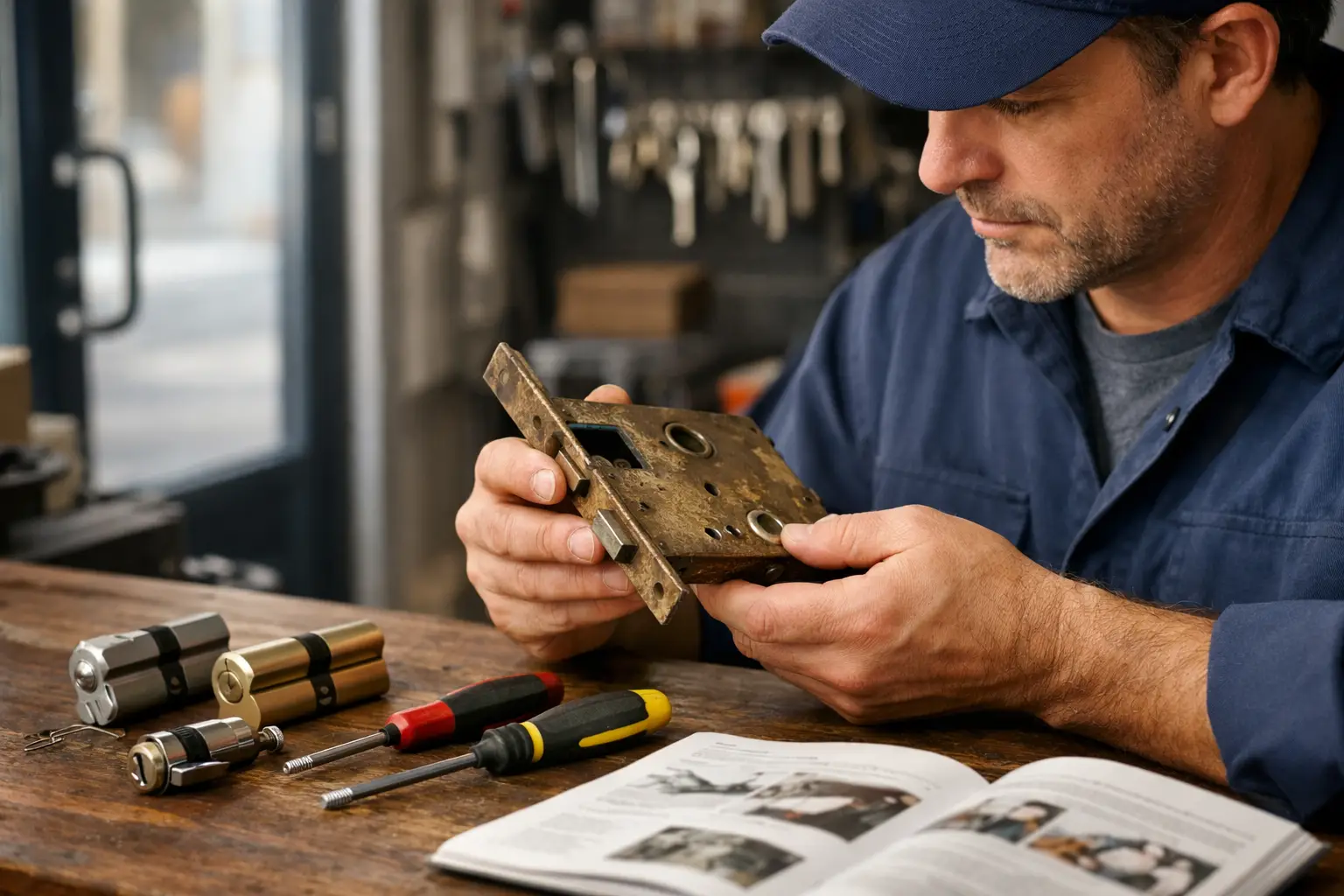
A lock rarely fails at a convenient time. The key starts sticking before work, the deadbolt will not turn after a tenant moves out, or a storefront door will not latch at closing. This lock repair service guide helps you decide what needs immediate attention, when repair makes sense, and when replacement is the safer call.
The goal is not to sell you parts you do not need. It is to get the door secure, the lock working, and the price clear before work begins.
Start With the Problem You Can See
A lock can fail because of ordinary wear, a damaged key, misalignment, weather exposure, a break-in attempt, or an internal mechanical issue. The symptoms matter because a lock that is annoying is not always a lock that is unsafe. But some issues should not wait.
If the door opens and closes normally but the key drags, the cylinder may be dirty, worn, or beginning to fail. If the deadbolt only works when you lift, pull, or push the door, the problem may be the strike plate or door alignment rather than the lock itself. If the key turns but the bolt does not move, the internal mechanism may be damaged.
A lock that will not latch, will not secure from the inside, has visible damage around the cylinder, or was forced during a break-in needs prompt service. So does a commercial door with a faulty lever, deadbolt, or exit device. Security problems tend to get worse when people keep forcing the key or handle.
When Lock Repair Is the Right Move
Repair is often the practical choice when the lock body is sound and the issue is limited to a component, adjustment, or service need. A locksmith may be able to correct a loose handle, realign a strike plate, replace a worn cylinder, remove a broken key, adjust a door that has shifted, or repair internal parts in compatible hardware.
Repair can save money and preserve matching hardware, which matters on a front door, a rental property with multiple units, or a business with a consistent key system. It can also be the faster choice if the right replacement hardware is not immediately available.
However, repair has limits. A heavily worn lock may work again after service but still have a shorter remaining lifespan than a new quality lock. Older or discontinued hardware can also be difficult to repair if parts are no longer available. A fair locksmith should explain that trade-off plainly instead of presenting repair as a permanent solution when it is really a temporary one.
Common Repairs That Are Usually Worth It
Door alignment is one of the most common causes of lock trouble. Changes in temperature, settling, loose hinges, and worn weatherstripping can move a door just enough to prevent the bolt from lining up with the strike. Correcting that issue can restore smooth operation without replacing the lock.
Loose screws, worn latch components, damaged strike plates, and cylinders that need replacement are also routine fixes. On many residential locks, changing the cylinder may restore key operation while keeping the exterior hardware in place.
For commercial properties, a technician may be able to repair a closer, lever set, mortise lock, or panic hardware component. Because these doors affect employee access and life-safety requirements, do not treat a sticking exit door as a minor inconvenience.
When Replacement Is the Better Security Decision
Replace the lock when damage affects its ability to protect the property, when repair costs approach replacement cost, or when the hardware is outdated and unreliable. A lock that was drilled, pried, or severely forced should generally be replaced. The same is true when a key has been stolen and you cannot account for who may have access.
Replacement is also smart after a move if you want a different type of lock, better key control, or upgraded security. A renter should contact the landlord or property manager before changing locks unless the lease or local rules allow it. Property managers should consider whether the existing hardware can be rekeyed across units or whether replacement will reduce repeated maintenance calls.
For homes, the right replacement may be a new deadbolt, lever set, keypad lock, or smart lock. For businesses, it may involve commercial-grade hardware, restricted key systems, or door hardware that can handle high daily traffic. The best option depends on the door, the level of use, the building requirements, and who needs access.
Do not assume the most expensive lock is automatically the best fit. A premium lock installed on a weak door frame or misaligned door will not perform as intended. Good security is a system: the lock, strike plate, door, frame, hinges, and installation all matter.
Do Not Force a Failing Lock
Forcing a key can turn a small repair into an emergency lockout. If the key resists, stop twisting. Check whether the door is pressing against the bolt, then try relieving pressure by gently moving the door while turning the key. Do not use excessive force, pliers, or improvised tools.
Avoid spraying random household lubricants into the keyway. Some products attract dust and can create more buildup over time. The wrong product can also interfere with internal lock components. If you are unsure, leave it alone until a locksmith can inspect it.
A broken key, spinning cylinder, loose deadbolt, or door that will not lock is a good reason to call for on-site service. Trying to disassemble the hardware without knowing the cause can leave the door unsecured or damage the trim, cylinder, and latch.
What a Fair Lock Repair Visit Should Look Like
You should know what is happening before the work starts. When you call, describe the door type, lock type if known, the symptom, and whether you are locked out. Photos can help when scheduling non-emergency work, but an on-site inspection is often necessary to identify the actual failure.
Ask for the service-call or dispatch fee, the expected arrival window, and whether the technician can provide an estimate after inspection. The final price can depend on the hardware, damage, labor, and whether a replacement part is needed. That is normal. What is not normal is a vague low quote that suddenly becomes much higher once a technician arrives without a clear explanation.
Before approving the job, ask what will be repaired or replaced and why. If replacement is recommended, ask whether repair is possible, how long a repair is likely to last, and what hardware options are available. You should also receive a clear price before authorizing work whenever the condition can be assessed.
Fast & Fair Locksmith is built around that basic standard: fast response, straightforward answers, and fair pricing. Whether the issue is a home deadbolt, apartment lock, office door, or vehicle key problem, you deserve to know the plan before the work begins.
A Lock Repair Service Guide for Property Managers
Property managers deal with a different version of the same problem: a lock that fails can disrupt a tenant, expose a vacant unit, or delay a turnover. The lowest upfront repair is not always the best operational choice. If the same lock has caused repeated service calls, replacement may cost less over the next year than another temporary fix.
Keep records of lock changes, rekeys, key copies, and recurring door issues. That record helps identify whether the problem is a lock, a door alignment issue, or a pattern of hardware that is not suited to the property. Standardizing hardware where possible can also make rekeys, maintenance, and emergency service more efficient.
For occupied units, communicate clearly before any access work. For vacant units, rekey or change locks promptly so previous keys no longer work. If a lock has been damaged during an eviction, break-in, or attempted forced entry, inspect the frame and strike area too. Replacing only the visible lock may not solve the security issue.
Act Before a Small Problem Becomes a Lockout
The best time to repair a sticky lock is before it fails with your keys, pets, inventory, or customers on the wrong side of the door. Pay attention to keys that suddenly need extra pressure, deadbolts that no longer extend smoothly, loose handles, and doors that must be pushed or pulled to lock.
A working lock should feel simple: the key turns, the bolt moves, and the door secures without a fight. If yours does not, get it checked while you still have options and control over the timing.