You usually learn the hard way that key fob replacement vs dealer is not a small decision. It shows up when your only fob stops working in a grocery store lot, when the battery swap did nothing, or when the dealer quotes a price that makes you pause. At that point, you do not need a lecture. You need the fastest, fairest way back into your car and back on the road.
For most drivers, the real comparison comes down to three things: cost, wait time, and whether the new fob will actually work the first time. A dealer is not automatically the wrong choice. A locksmith is not automatically the cheapest choice in every case. But if you want on-site help, fewer delays, and pricing that makes sense, a qualified automotive locksmith often has the edge.
Key fob replacement vs dealer: the real difference
A dealership usually handles replacement through the vehicle brand's official process. That can mean ordering a factory fob, verifying ownership, cutting any emergency key blade, and programming the new unit through dealer-level software. If your car is newer, rare, or loaded with advanced security features, that factory path can be the cleanest option.
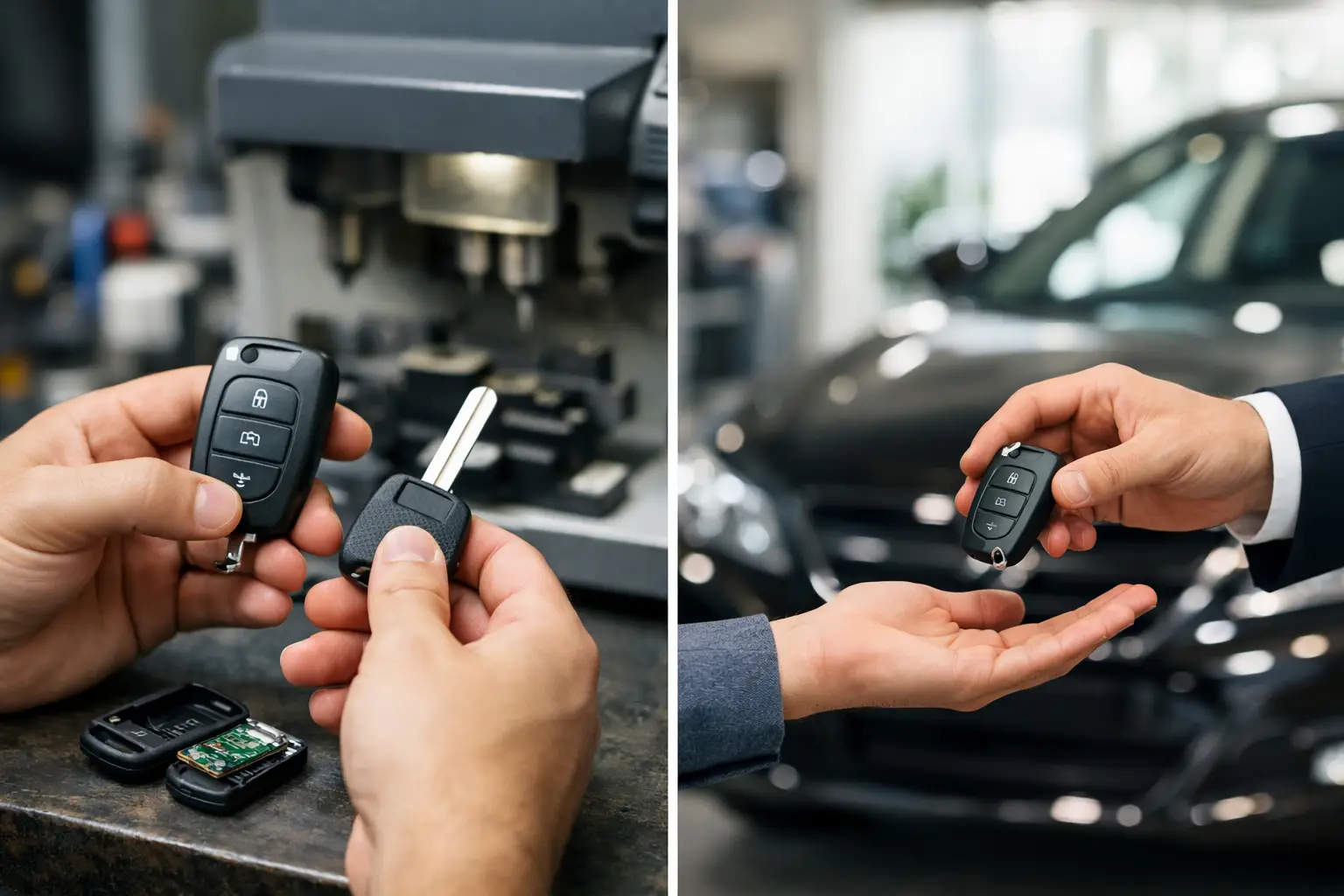
A locksmith approaches the problem from the service side. Instead of making you come to the shop, many automotive locksmiths come to you. They diagnose whether the issue is the fob, the battery contacts, the programming, the vehicle receiver, or the mechanical key itself. In many cases, they can cut and program a replacement on-site.
That difference matters more than people think. If your car will not start or you have lost your only key, getting the vehicle towed to a dealer adds cost and time before the real work even begins.
Cost is where most people start
Dealers often charge more because they work inside a manufacturer system with parts markup, shop rates, and limited flexibility. Sometimes that higher price gets you an original equipment fob, which can be worth it. Other times, you are paying for overhead and a slower process.
A locksmith may offer either OEM or aftermarket options, depending on the vehicle. That is often where the savings show up. An aftermarket fob that is properly programmed can work just as well for many vehicles at a lower price. The catch is simple: quality matters. A cheap, low-grade fob is not a bargain if it fails in three months.
This is why the lowest number over the phone is not always the best number. Ask what type of fob is being used, whether programming is included, whether key cutting is included if needed, and whether there are mobile service or after-hours fees. Fair pricing is clear pricing. If someone gets vague when you ask basic questions, move on.
Speed usually favors the locksmith
If you are stranded, speed is not a luxury. It is the whole job.
Dealers often work on an appointment schedule. Even if they can handle your key issue, you may need to wait for a slot, wait for the part, or arrange towing if the car cannot be driven. That is fine when the vehicle is already at the dealership for service. It is a headache when you are stuck at home, work, or in a parking lot.
A mobile locksmith is built for that moment. They come out, confirm ownership, test the situation, and handle the replacement where the vehicle sits. For drivers in a spread-out area like San Diego, that convenience is not minor. It can save half a day.
That said, not every locksmith stocks every fob. Some high-end, very new, or uncommon models may still require ordering a specific unit. So yes, speed often favors the locksmith, but it depends on the vehicle and the parts available.
Programming is where people get nervous
That is fair. A key fob is not just a plastic remote. On many vehicles, it is tied to immobilizer systems, push-button start functions, remote lock controls, panic alarms, and sometimes memory settings. If the programming is wrong, the car may not recognize the fob at all.
Dealers have direct access to manufacturer systems, which gives them a strong advantage on certain makes and model years. Luxury brands, encrypted systems, and the newest vehicles can lean dealer.
But a skilled automotive locksmith is not guessing. Good locksmiths use specialized diagnostic and programming equipment built for vehicle key systems. They handle a wide range of domestic, Asian, and European vehicles every day. For common models on the road, locksmiths can often program replacement fobs without any problem.
The smart question is not, "Can you do key fobs?" The smart question is, "Can you do my exact year, make, and model, and have you done it before?"
When the dealer makes more sense
There are times when the dealer is the right call.
If your vehicle is brand new and still under a warranty program that covers key replacement, start there. If your car uses a locked-down security platform that independent tools cannot access yet, the dealer may be the only practical option. If you specifically want a factory-original fob from the brand and are willing to wait and pay more for it, that is a fair reason too.
Another case is when the issue may not be the key at all. If the vehicle has a body control module problem, ignition receiver fault, or software issue tied to broader factory systems, the dealer may be better equipped to chase that deeper electrical diagnosis.
So no, this is not a blanket "never call the dealer" argument. It is about matching the job to the right service path.
When a locksmith is usually the better call
If you need help now, a locksmith is often the better move. Lost all keys, broken fob shell, dead transponder, damaged key blade, locked car with a nonworking remote - these are everyday locksmith calls.
A locksmith also makes more sense when convenience matters. You do not have to arrange a tow. You do not have to sit in a service lounge for hours. You do not have to guess whether the final bill will climb after the vehicle is already there.
This is where a company like FAST & FAIR LOCKSMITH earns its keep. The job is not just replacing a fob. The job is getting to you fast, doing the work on-site, and charging a price that does not change shape halfway through the call.
Watch for the hidden costs on both sides
People compare the sticker price and forget the extras.
With a dealer, the extra cost may be towing, longer downtime, or a second trip when a part has to be ordered. With a locksmith, the extra cost can show up if the quote was bait-and-switch from the start, or if the technician arrives without the right equipment and starts improvising.
That is why the phone call matters. Ask whether the quote includes diagnosis, programming, and cutting. Ask whether the price changes for nights, weekends, or service area distance. Ask what happens if the car has a different security package than expected. Honest shops answer directly.
OEM vs aftermarket is not a yes-or-no issue
Some drivers hear "aftermarket" and assume bad quality. Others hear "OEM" and assume better value. Neither is always true.
A good OEM fob usually offers the closest match to the original in fit, finish, and long-term reliability. A good aftermarket fob can still perform very well at a lower cost. The problem is not the category. The problem is poor-quality parts.
If you care most about factory match and you are keeping the car for years, OEM may be worth paying for. If you need a reliable spare, a solid aftermarket option from a reputable source can make a lot of sense.
How to make the right call fast
If you are deciding between key fob replacement vs dealer, start with your car, your timeline, and your budget.
If the vehicle is common, you need help on-site, and you want a faster fix with transparent pricing, call a qualified automotive locksmith first. If the car is very new, highly specialized, or likely tied to dealer-only programming, check with the dealer before you commit.
Either way, do not let urgency push you into a bad quote. Ask clear questions. Confirm the full price. Make sure the provider can handle your exact vehicle. A key fob problem is stressful enough without adding guesswork.
The best choice is the one that gets you a working key, fair pricing, and no wasted time - because once your car is back in your hands, the rest of the day can finally move again.