
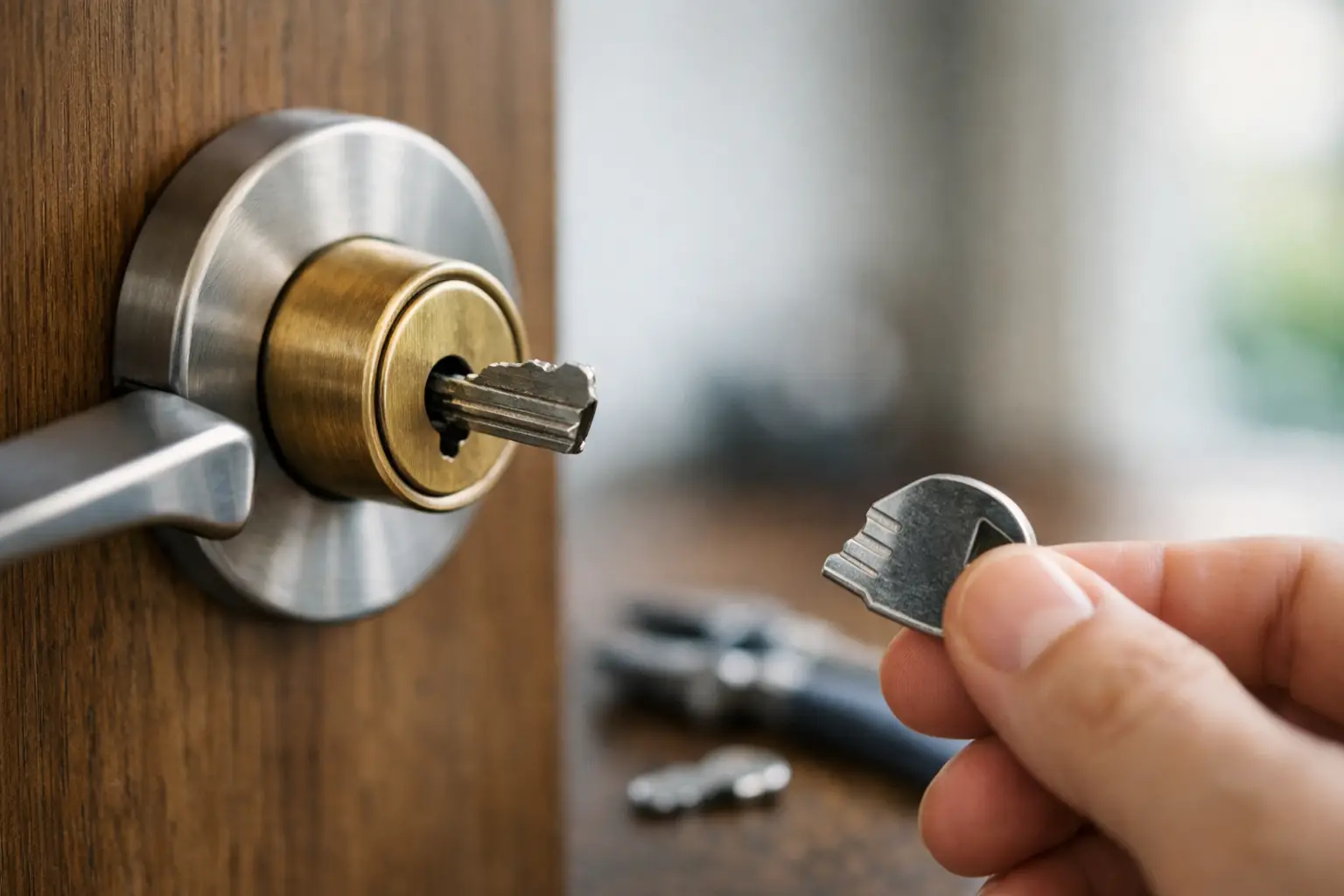
A key never snaps at a convenient time. It happens when you're late for work, standing outside your house with groceries, or trying to close up a shop after a long day. The good news is that a broken key in a lock does not always mean the lock is ruined. The bad news is that one wrong move can turn a simple extraction into a lock replacement.
If part of your key is still stuck inside, the first goal is simple - do not push it deeper.
Key broke in lock removal starts with one rule
Stop using the lock right away. Do not jam the other half of the key back in. Do not force the cylinder with a screwdriver. And do not keep turning the key if you felt grinding before it snapped.
A broken key usually means one of three things. The key was worn down and weak, the lock had internal resistance, or the key was turned under too much pressure. Sometimes it is age. Sometimes it is dirt inside the lock. Sometimes the lock was already failing and the key took the hit first.
That is why key broke in lock removal is not just about getting metal out. It is also about figuring out whether the lock is still safe to use afterward.
What to do in the first five minutes
Start by checking how much of the key is visible. If a small section is sticking out, you may have a chance to remove it without damaging the lock. If the broken piece is flush with the face of the lock or deeper, your odds drop fast.
If this is a door lock, make sure the door is stable and not putting pressure on the latch. Sometimes a misaligned door makes extraction harder because the plug is under tension. Gently pushing or pulling the door into a neutral position can help. For a car lock, stop trying the key and avoid pressing remote lock buttons if the situation is already tense. You want fewer moving parts, not more.
A little dry lubricant can help if you already have it. Dry graphite or a lock-safe dry spray is better than oily products. Avoid soaking the lock with household oil. That can collect dust and make the lock worse over time.
When you can try removing it yourself
There are a few situations where a careful DIY attempt makes sense. The key piece is visible. The lock is not high-security. You are not dealing with a car ignition. And you can work in good light without rushing.
Needle-nose pliers can work, but only if enough of the key is exposed to grip it cleanly. If you have to pinch blindly and wiggle aggressively, stop. That usually pushes the key farther in.
A broken key extractor tool is the better option, but most people do not have one sitting in a drawer. If you do, insert it along the grooves of the key, hook the broken piece, and pull slowly. The keyword there is slowly. Jerking the tool can break the fragment or scratch the lock internals.
Tweezers are usually a bad bet unless the key is clearly protruding. Most tweezers are too thick to fit beside the key fragment, and they often wedge it tighter.
When DIY goes wrong fast
The biggest risk is turning a basic extraction into a damaged cylinder. That happens when people use glue, paper clips, knives, or random metal picks. Super glue is the worst of the bunch. If glue touches the lock pins or the face of the plug, what could have been a quick service call becomes a much more expensive repair.
The second big mistake is ignoring why the key broke. If the key snapped because the lock was stiff, worn, or misaligned, removing the fragment is only half the job. The same problem can break the next key too.
This is especially common on older house locks, storefront hardware, and car ignitions that have seen years of use. You might get the piece out and still be left with a lock that sticks, catches, or fails to turn smoothly.
Key broke in lock removal for house doors
Residential locks are often the most forgiving, but that depends on the hardware. A standard deadbolt or knob lock may allow a straightforward extraction if the plug is not damaged. If the lock is already loose, rusted, or hard to turn, removal should be paired with inspection.
For renters, this is usually the point to stop and call for help. You do not want to damage a lock you do not own and then end up paying for more than the original problem. For homeowners, it depends on your comfort level and the value of the lock. A basic lock is one thing. A smart lock or upgraded deadbolt is another.
If the broken key was your only copy, the next question is whether the lock should be rekeyed or the key duplicated from the remaining piece. A locksmith can often cut a new key if enough of the original is available. If the lock is questionable or security is a concern, rekeying may be the smarter move.
Broken key removal in car locks and ignitions
Cars are less forgiving. Door locks, trunk locks, and especially ignitions have tighter tolerances and more expensive consequences if damaged. Modern vehicle keys may also include chips or fobs, so the broken metal blade is only part of the problem.
If your key broke in the ignition, stop there. Do not force the cylinder to accessory mode. Do not poke around with metal tools near sensitive ignition components. An extraction gone wrong can leave you with a disabled ignition, steering lock issues, or a car that needs more than just a new key.
For car doors, a locksmith can usually remove the fragment and check whether the lock cylinder is still operating correctly. If the key itself was worn, a fresh cut from code or a proper duplication may solve it. If the lock was the cause, that needs attention before the replacement key meets the same fate.
When calling a locksmith is the better move
If the key fragment is fully inside the lock, if the lock was already sticking, if this is a vehicle, or if time matters more than experimenting, call a locksmith. That is not fear talking. It is cost control.
A professional extraction is usually faster and cheaper than repairing damage from trial-and-error. It also gives you answers. Is the lock still usable? Do you need a new key, a rekey, a repair, or a replacement? Those are different jobs with different price points.
This is also where pricing matters. A fair locksmith should be able to explain the likely service before arrival, tell you what can change the quote, and avoid the old bait-and-switch routine that gives this industry a bad name. If you are in the San Diego area and need on-site help, Fast & Fair Locksmith is built around that exact promise - quick response and straightforward pricing.
How to prevent another broken key
Most broken keys give warning signs first. The key starts bending slightly under pressure. It feels rough going in. It catches when turning. You start jiggling it more often. Those are not quirks. They are signs.
Replace worn keys before they snap. If a lock starts sticking, service it before it becomes an emergency. Keep dirt and moisture out of exterior locks where you can. And never treat force as a normal part of using a key.
If one copy works worse than another, stop using the bad one. Duplicate wear matters. A poorly cut copy can stress the lock and break sooner than the original.
Property managers and small business owners should be even more proactive. Heavy-use locks fail earlier, and one snapped key can turn into a tenant issue, an employee lockout, or a late-night service call. Preventive rekeying, repair, and key replacement cost less than emergency downtime.
The real question is not just can it come out
Usually, yes, it can. The better question is what happens after the piece is removed. If the lock is sound, you may only need a clean extraction and a new key. If the lock caused the break, removing the fragment without fixing the cause only resets the clock.
That is why the smartest move is often the simplest one. Do not force it. Do not improvise with glue and random tools. Protect the lock first, then solve the problem the right way.
A broken key feels urgent because it is. But urgent does not have to mean messy, overpriced, or worse than it started.