
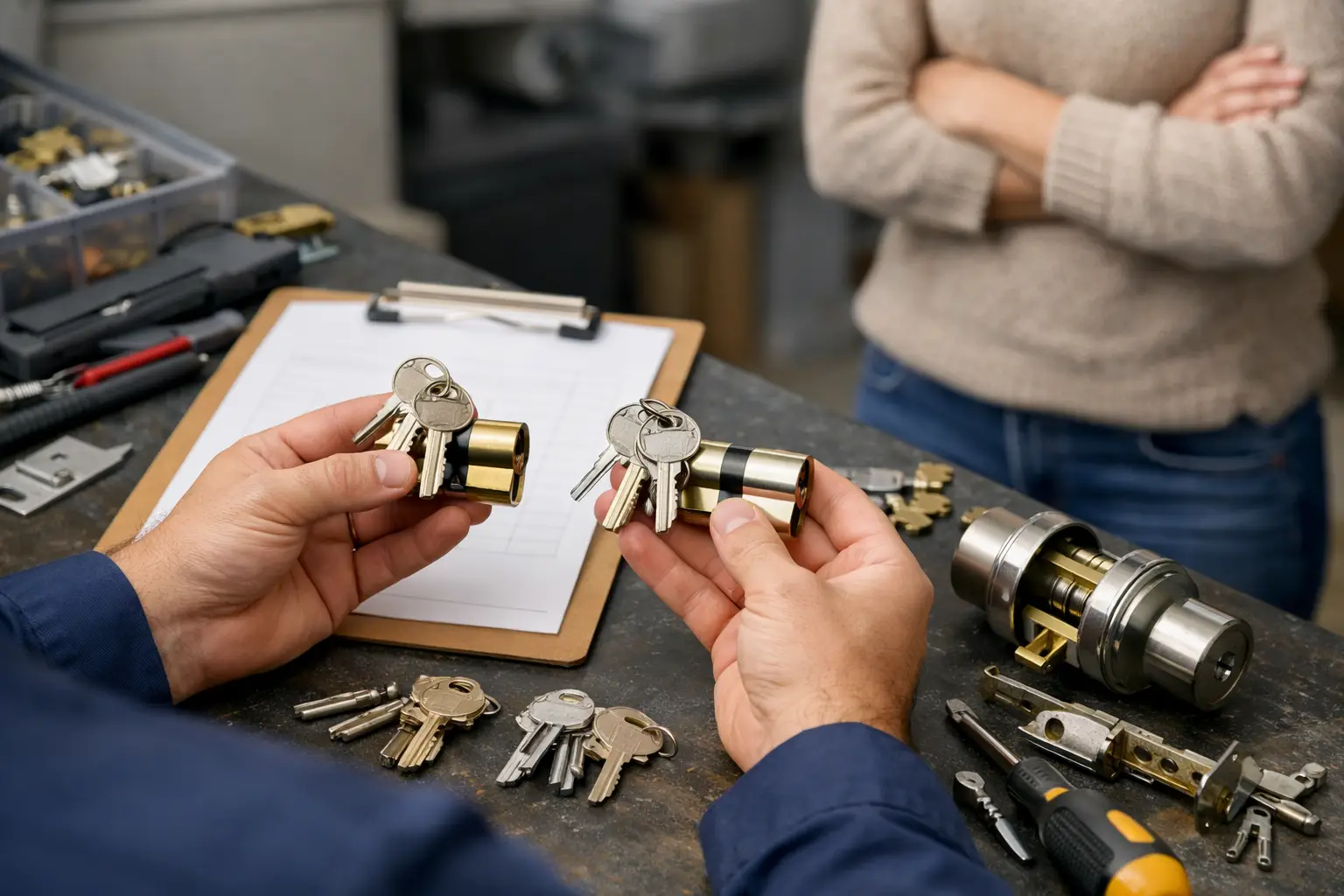
You get home, look at the lock, and ask the question most people ask right away: is rekeying cheaper than replacement? Usually, yes. But not always. The cheaper option depends on what shape the lock is in, why you need the work done, and whether the current hardware is worth keeping.
That matters because a lot of people get sold the wrong fix. Some are told they need all new locks when a simple rekey would do the job. Others try to save money by rekeying worn-out hardware that should have been replaced. If you want the fast answer, rekeying is often the lower-cost option when the lock itself still works well and you just need old keys shut out.
Is rekeying cheaper than replacement in most cases?
In most normal situations, yes. Rekeying changes the inside of the lock so the old key no longer works, and a new key does. The outside hardware usually stays in place. Because you are not paying for brand-new locksets, decorative hardware, or a full hardware swap, the total cost is often lower.
Replacement usually costs more because it includes new hardware plus labor to remove the old lock and install the new one. If you are upgrading style, security grade, or features, that extra cost may be worth it. But if your lock is solid and your real problem is key control, rekeying is usually the smarter spend.
That said, cheap is not the same as right. A fair locksmith should tell you when rekeying is enough and when replacement is the better long-term move.
What rekeying actually solves
Rekeying is a practical fix for access control. It is not a repair, and it is not a hardware upgrade. What it does is change which key operates the lock.
That makes it a strong option after moving into a new home, losing a key, ending a lease, dealing with a breakup, replacing a roommate, or turning over a rental unit. In all of those cases, the lock may be perfectly fine. You just do not want the old key floating around anymore.
For property managers and landlords, rekeying is often the most efficient move between tenants. For homeowners, it is one of the simplest ways to tighten security without paying for a full replacement across every door.
When replacement makes more sense
There are times when replacement is the better call, even if it costs more up front.
If the lock is sticking, loose, damaged, rusted, or visibly worn, rekeying will not fix those problems. You would still have the same failing hardware, just with a different key. That is not a bargain if the lock is going to give you trouble again next month.
Replacement also makes sense when you want better security. Maybe your current deadbolt is low grade, your door hardware is outdated, or you want features your current lock does not have, such as keypad access, smart entry, or a different finish to match a remodel.
Sometimes replacement is not optional. If the lock brand or design does not support rekeying easily, if parts are missing, or if someone forced the lock during a break-in, new hardware may be the only real fix.
The real cost difference
People often want a simple price chart, but locksmith pricing depends on the number of locks, the lock type, the hardware brand, the service time, and whether the work is urgent. A standard residential deadbolt is different from a high-security commercial cylinder, and both are different from specialty hardware.
Still, the general rule holds. Rekeying is usually cheaper because you are keeping the hardware you already own. Replacement adds the cost of new hardware, and that can range from basic to premium fast.
The bigger issue is not just the invoice today. It is whether the job solves the problem the first time. Rekeying a good lock is cost-effective. Rekeying a bad lock is wasted money. Replacing a lock that only needed rekeying is overspending.
That is why straightforward pricing matters. A trustworthy locksmith should explain what you are paying for, what can be saved, and what should not be cut corners on.
Is rekeying cheaper than replacement after moving?
Usually, yes, and this is one of the clearest examples.
When you move into a house, condo, or apartment, you rarely know how many copies of the old keys are out there. Contractors, former owners, old tenants, dog walkers, cleaners, neighbors, and family members may still have access. If the locks are decent and in working order, rekeying is often the fastest and most affordable way to reset control.
It is a smart move because it gives you new keys without replacing every lock on the property. If you have multiple exterior doors, the savings can add up quickly.
The only time replacement is the better option after moving is when the hardware is already poor quality, damaged, mismatched, or not giving you the security level you want.
When rekeying can save even more money
One overlooked benefit of rekeying is convenience across multiple doors. In many cases, a locksmith can key several compatible locks alike so one key works for all of them. That means fewer keys to manage and less confusion for family members, staff, or tenants.
For small businesses, that can be a big operational win. For homeowners, it is one less pocketful of keys. And because you are often reworking existing hardware rather than replacing everything, the cost stays lower than a full swap.
This is especially useful in rental properties and small office spaces where access changes often. You keep control without buying fresh hardware every time someone moves out, turns in keys late, or leaves on bad terms.
When the cheapest option becomes the expensive one
Some lock problems look like rekey jobs but are really signs of failing hardware. If your key is hard to turn, the latch is misaligned, the deadbolt binds, or the lock feels sloppy, do not assume rekeying will solve it. Those symptoms often point to wear, bad installation, door alignment issues, or internal damage.
Trying to save a little now can cost more later if the lock fails, traps you outside, or leaves the property less secure. The right answer is not always the lowest price on paper. It is the fix that matches the actual condition of the lock.
This is where honest service matters most. A locksmith should not push replacement just to pad the bill. But they also should not promise that rekeying will solve a problem it cannot solve.
Questions to ask before you decide
If you are comparing rekeying and replacement, ask a few direct questions. Is the lock in good mechanical condition? Do you need to block old keys, or do you need stronger hardware? Are you trying to solve a security concern, a wear issue, or both?
Also ask whether your existing locks can be keyed alike, whether the current hardware is worth keeping, and whether any door alignment or strike issues are affecting performance. Those details change the value of the job more than people realize.
If a quote feels vague, press for specifics. You should know whether you are paying for labor only, labor plus hardware, or emergency service on top. Fair pricing should be clear before the work starts, not explained after.
The bottom line for most homes and businesses
If the lock works well and you simply need old keys shut out, rekeying is usually cheaper than replacement. It is fast, practical, and often the best value. If the lock is damaged, outdated, unreliable, or below the security level you need, replacement is the better investment.
There is no prize for choosing the cheapest option if it leaves the real problem in place. The goal is to pay once, fix it right, and move on.
For customers across San Diego, that usually means getting a clear on-site assessment from a locksmith who values speed and fair pricing over upsells. The right pro will tell you when a rekey is enough, when a replacement is worth it, and when you should not spend a dollar more than necessary.
If you are standing at the door wondering which way to go, start with the condition of the lock, not the sales pitch. That is where the right answer usually shows up.