
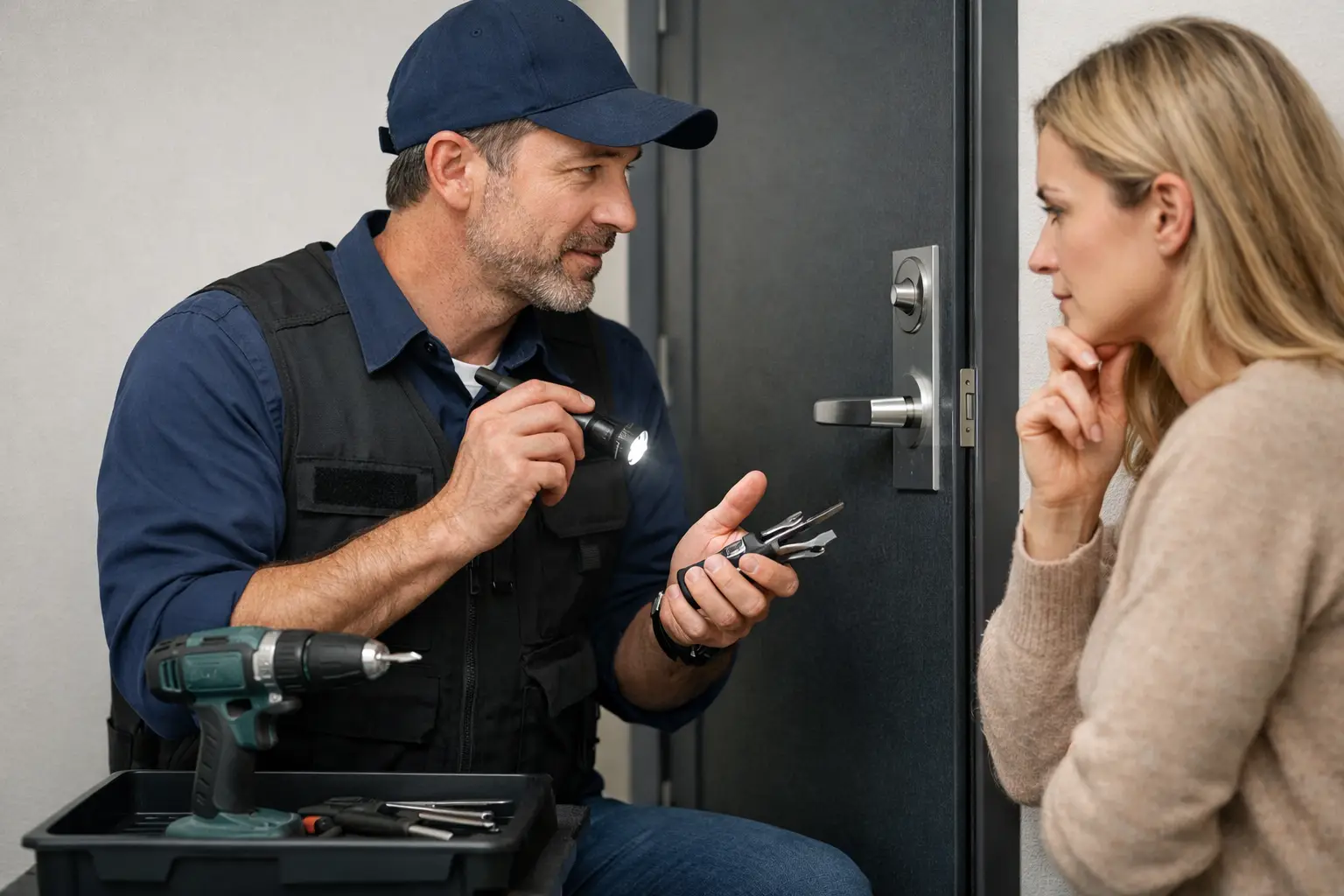
You are locked out, stressed, and staring at a deadbolt that suddenly feels indestructible. In that moment, it is fair to ask: is drilling a lock necessary? Most of the time, no. Drilling is usually the last resort, not the first move, and a trustworthy locksmith should treat it that way.
That matters because drilling destroys the lock cylinder. Once that happens, replacement is usually part of the job. If someone jumps straight to drilling without checking other options, you may end up paying for damage that could have been avoided.
Is drilling a lock necessary in most lockouts?
For a standard house, apartment, office, or storefront lockout, drilling is often unnecessary. A trained locksmith will usually start with non-destructive methods. That can include picking, bypass tools, decoding, or other entry techniques based on the lock type and the condition of the hardware.
A lot depends on the actual problem. If the door simply locked behind you and the lock is working normally, there is a decent chance the door can be opened without destroying anything. If the key broke inside, the cylinder is seized, the lock was vandalized, or the hardware is badly worn, the answer changes.
This is where experience matters. Two lockouts can look the same from the sidewalk and be completely different once a technician inspects the lock up close.
What a good locksmith tries before drilling
A fair locksmith does not treat every lock like a disposable part. The first step should be identifying the lock and what failed. Is it a residential knob, a deadbolt, a mortise cylinder, a commercial lever, or a smart lock with a mechanical backup? Is the issue the cylinder, the latch, the strike alignment, or the key itself?
From there, the goal is simple: get you in with the least damage possible. That may mean picking the cylinder if the pins still move correctly. It may mean bypassing the latch on certain door setups. It may mean extracting a broken key and testing the lock before recommending replacement.
Sometimes the problem is not even the lock. A sagging door, a bent latch, pressure on the frame, or a misaligned strike plate can make a lock feel impossible when the real issue is mechanical alignment. Drilling the cylinder in that case does not solve much.
When drilling a lock is actually necessary
There are situations where drilling is the right call. Not because it is faster for the technician, but because the lock has reached the point where non-destructive methods are unlikely to work or would waste time without improving the outcome.
One common example is a failed cylinder. If internal parts are broken, rusted, frozen, or jammed beyond recovery, picking may not be possible. A second example is a high-security lock with features designed to resist manipulation. Depending on the brand and the damage, drilling may become the only realistic way in.
Another situation is severe key damage. If a key snapped off deep in the cylinder and the plug cannot rotate, extraction may fail. The same goes for locks damaged during a break-in attempt. If the lock face is mangled, the pins are crushed, or glue and debris were forced inside, saving the cylinder may no longer be realistic.
There is also the urgency factor. If a business cannot secure a storefront, a tenant is locked out late at night, or a damaged lock leaves a property exposed, drilling may be the fastest safe path to restoring security. In those cases, speed matters, but there should still be a clear explanation before the drill comes out.
The trade-off: faster entry, but more cost after
Drilling can solve the access problem quickly. The trade-off is that it usually turns a lockout into a lock replacement job. That means extra labor, new hardware, and possibly rekeying if you want your new lock to match existing keys.
This is why price transparency matters. A customer in a stressful situation may hear, "We have to drill it," and assume there is no choice. Sometimes that is true. Sometimes it is not. The difference is whether the technician explains why drilling is necessary and what costs it adds before doing the work.
A fair answer sounds plain: the lock is failed, picking will not work, drilling will destroy the cylinder, and here is the price to replace it. A bad answer sounds vague, rushed, or designed to corner you after arrival.
Not all locks are equal
Whether drilling is necessary depends a lot on the lock itself. Basic residential hardware may be easier to open without damage if it is in decent condition. Older locks can go either way. Some are simple. Some are so worn out internally that they fail in unpredictable ways.
Commercial locks are another story. Many are heavier-duty and may involve mortise cylinders, interchangeable cores, panic hardware, or restricted key systems. The right approach depends on the setup. A storefront with a narrow stile door is not the same job as a bedroom lockout.
Automotive lockouts are different again. Drilling a car lock is rarely the normal answer. Most vehicle lockouts are handled through non-destructive entry methods or key programming solutions if the issue is with the key or ignition. If someone suggests drilling a car lock right away, that deserves serious questions.
Red flags when someone pushes drilling too fast
If a locksmith arrives and decides to drill before inspecting the lock closely, that is a problem. The same goes for anyone who cannot explain what failed, what they tried first, or why the lock cannot be saved.
Another red flag is price fog. If the initial quote was low, but drilling suddenly becomes the reason the bill jumps without a clear breakdown, slow down. You should know what you are authorizing. In a field where bait-and-switch pricing is common, customers need straight answers.
A professional should be able to tell you whether drilling is a last resort, what replacement options are available, and whether rekeying makes sense after the job. That is not a luxury. That is basic honesty.
Questions worth asking on the spot
You do not need locksmith training to protect yourself. Ask whether the lock can likely be opened without drilling. Ask what condition the cylinder is in. Ask whether the replacement lock will match your existing keys or need rekeying. Ask for the full price before drilling starts.
Those questions do two things. First, they help you understand the job. Second, they tell you a lot about the person standing at your door. Good technicians answer clearly. Bad ones get slippery.
What happens after a drilled lock
Once a lock is drilled, it usually needs to be removed and replaced. If it is a standard residential deadbolt or knob, replacement is often straightforward. If it is part of a master key system, a commercial setup, or a specialty hardware configuration, the next step can be more involved.
This is also the right time to ask whether replacement alone is enough. Sometimes rekeying is the better move, especially if you lost keys, moved into a new place, or want one key to work across multiple locks. A drilled lock can be the event that exposes a bigger security issue that was already there.
For property managers and small business owners, this matters even more. The cheapest immediate fix is not always the smartest long-term one. If hardware is aging across several doors, one failure may be a sign to inspect the rest.
So, is drilling a lock necessary?
Sometimes, yes. Usually, no.
The right answer depends on the lock type, the failure, the urgency, and whether non-destructive methods still have a real chance of working. Drilling is a legitimate tool, but it should be the backup plan, not the default sales pitch.
That is the standard we believe in at Fast & Fair Locksmith. Get there fast, explain the situation clearly, avoid unnecessary damage, and charge fairly for the work that actually needs to be done.
If you are locked out and someone says drilling is the only option, do not panic. Ask why. Ask what they tried first. Ask what it will cost after the hole is made. A solid locksmith will not mind those questions. A solid locksmith should already be answering them.