
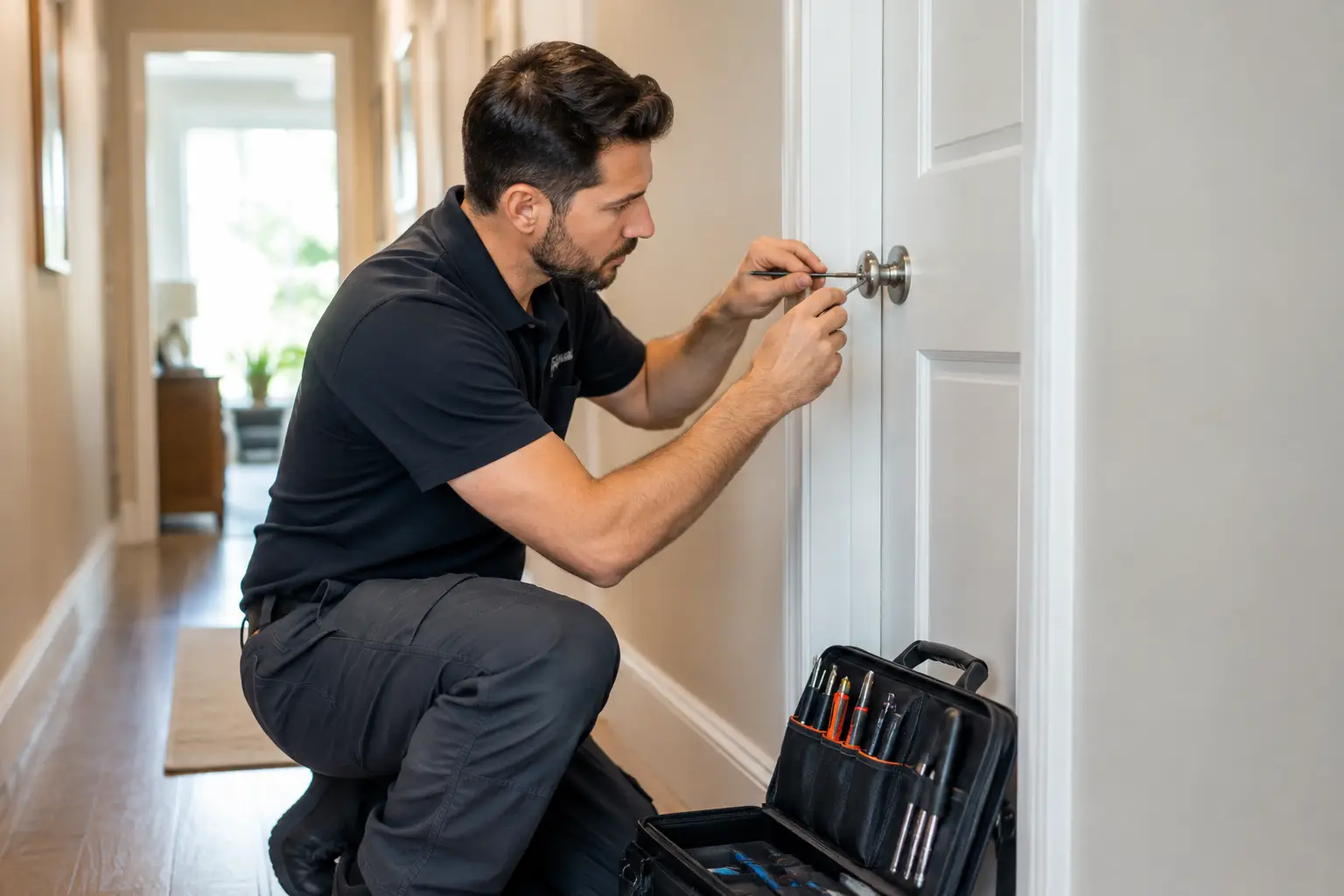
A bedroom door that clicks shut with your child, pet, medication, phone, or keys on the other side can turn stressful fast. If you need to unlock bedroom door access, the goal is simple: get the door open safely without damaging the lock, the frame, or your wallet.
Most interior bedroom doors use a privacy lock, not a high-security deadbolt. That makes many lockouts easier to solve than a front-door lockout. Still, forcing the door, drilling the knob, or prying the frame can create a much larger repair bill than the original problem.
First, Decide Whether This Is an Emergency
Do not spend time troubleshooting if a child is alone and distressed, a person may need medical help, a pet is in danger, or there is smoke, fire, or another immediate hazard. Call 911 when safety is at risk. Tell responders exactly what is happening and where the person is located.
If everyone is safe and the issue is a standard interior lockout, take a breath before trying anything. Bedroom doors are usually lightweight, but their frames and latch areas can split easily. A damaged jamb may prevent the door from closing correctly even after the lock is repaired.
How to Unlock a Bedroom Door Safely
Start by identifying the type of hardware on the outside of the door. A privacy knob or lever normally has either a small pinhole or a narrow slot in the center. Those features exist for emergency access. A keyed cylinder, by contrast, needs the proper key or professional service.
Pinhole privacy locks
For a pinhole-style bedroom lock, use the manufacturer’s emergency-release tool if you have it. A small, straight tool that fits without force may also work, but do not jam thick objects into the opening. Insert it gently and press straight inward. On many common knobs, you will feel a slight release when the internal button disengages.
Keep light pressure on the door while doing this. If the latch is under tension because the door is pushed hard against the frame, the release may not move easily. Try easing the door inward or outward slightly, then test the handle.
If nothing releases after a couple of careful attempts, stop. Repeated probing can bend internal parts or damage the face of the knob. The right next step depends on the hardware, not on how hard you push.
Slot-style privacy locks
Some bedroom door knobs have a narrow slot instead of a pinhole. These are commonly designed to turn with a flat emergency-release key. Use a tool that fits the slot properly and rotate it gently in the direction the mechanism allows. You are not trying to force the knob around. You are turning the internal release.
If the slot is chewed up, the knob spins without opening, or the handle feels loose, the lock may have failed mechanically. That is a repair issue, not a simple lockout. A locksmith can usually open the door with minimal disruption and replace only the damaged part if replacement is needed.
Doors that are not actually locked
Sometimes the problem is not the privacy button. A swollen door, loose hinge, damaged latch, or misaligned strike plate can make a bedroom door feel locked when it is simply stuck.
Try turning the handle while gently pulling, then gently pushing the door. Do not kick it, shoulder it, or wedge a screwdriver between the door and frame. Those moves can crack trim, tear out the strike plate, and turn a quick service call into carpentry work.
If you can see that the hinges are on your side of the door, avoid removing them unless you understand the door’s setup and there is no safety concern inside. Interior doors can shift or fall when hinge pins are removed, and painted-over or damaged hinges rarely come apart cleanly.
When to Stop Trying
A fair rule is to stop when the simple release method does not work quickly, when the lock is keyed, or when the door and frame start showing damage. There is no prize for getting through a bedroom door with a broken jamb and a replacement knob to buy afterward.
Call a locksmith sooner if any of these conditions apply:
- The person inside cannot respond or may need help.
- The lock is a keyed knob, deadbolt, or smart lock.
- The knob turns but the latch will not retract.
- The door is stuck, warped, or badly misaligned.
- You rent the property and want to avoid lease-related damage charges.
For Orange County homeowners, renters, and property managers, on-site help is often the lowest-risk choice once the easy privacy release has failed. A trained technician can assess whether the issue is the latch, knob, strike plate, key, or door alignment before recommending work.
What Fair Locksmith Service Should Look Like
A bedroom lockout should not become an excuse for vague pricing or unnecessary replacement hardware. Before a technician begins, ask for the service price, any after-hours charge, and the expected cost if the lock cannot be repaired. A legitimate locksmith should be able to explain the work in plain language.
Be cautious with quotes that sound unusually low but do not include a service call, labor, or after-hours details. The final price should not be a surprise revealed after the door is open. You also do not automatically need a new lock because you were locked out. Privacy locks are often opened without drilling, and a good technician will preserve working hardware whenever practical.
Fast & Fair Locksmith approaches these calls with the same standard: arrive ready, explain the options, and keep the price straightforward. If replacement is truly needed, you should know why and what it costs before work starts.
After the Door Opens, Check the Cause
Do not just close the door and move on. Test the latch several times with the door open, then with the door closed. Make sure the handle returns normally, the privacy button releases properly, and the latch enters the strike plate without catching.
A bedroom lock can fail because of loose mounting screws, a worn latch spring, paint buildup, a shifted strike plate, or a door that expands in humidity. In a rental, document visible damage and notify the property manager if the lock is unreliable. In a home, repairing a loose or sticking lock early is cheaper than dealing with another late-night lockout.
If small children live in the home, make sure adults know where the emergency-release key is stored. Keep it somewhere accessible outside the bedroom, not in a drawer behind the door that may lock. For elderly relatives or anyone with mobility concerns, consider whether a simple privacy lock is the right hardware for that room.
Avoid the Expensive Shortcuts
Online videos often make bypassing a door look easy. What they leave out is the cost of a cracked frame, bent latch, broken knob, or injured hand. Credit cards can snap or damage weatherstripping. Wire tools can jam mechanisms. Drilling is a last-resort professional decision, not a first move for an interior door.
The best response depends on what is behind the door and what kind of lock you have. A calm emergency-release attempt is reasonable for a standard privacy knob. Beyond that, protecting the door and getting a clear price before service begins is usually the smarter call.
A locked bedroom door is frustrating, but it does not need to become a damaged-door project or a surprise bill. Keep the simple release option in mind, act fast when safety requires it, and choose help that treats both your time and your property with respect.