
You do not know how many keys to your new place are still out there. The seller may have handed over two. The landlord may have handed over one. That tells you almost nothing. If you are wondering how to rekey a lock after moving, the short answer is this: do it early, do it right, and do not assume you are the only person with access.
Moving comes with a long list of jobs, and lock security is easy to push down the page. That is a mistake. Old roommates, past tenants, contractors, cleaners, dog walkers, neighbors, and real estate agents may still have working keys. Rekeying fixes that problem without replacing the whole lock in many cases, which makes it one of the fastest and most cost-effective ways to secure a home.
How to rekey a lock after moving: what it actually means
Rekeying changes the inside of a lock so the old key stops working and a new key works instead. The lock hardware usually stays in place. That is the big difference between rekeying and replacing.
If your lock is in decent shape, rekeying is often the smarter move. It costs less than full replacement, takes less time, and avoids changing out every knob, deadbolt, or lever unless there is a real reason to. If the lock is damaged, cheap, badly worn, or part of a mismatched setup you want to standardize, replacement may make more sense.
This is where people often get tripped up. They think changing locks is always safer. Not necessarily. A properly rekeyed quality lock is secure. What matters is the condition of the hardware and whether the work is done correctly.
Start with the locks you have
Before you buy anything or pull a lock apart, check what is on your doors. Most homes have pin tumbler locks that can be rekeyed, especially common residential deadbolts and knobs. Some smart locks still use a standard key cylinder and can be rekeyed. Others use proprietary cylinders or are better handled by a locksmith.
Look at every entry point, not just the front door. Back doors, side garage doors, patio doors, security screen doors, and any door between the garage and the house all matter. If you moved into a condo or small business space, storage rooms, gates, and mailbox locks may also need attention.
You should also check whether multiple doors already use one key or several. Some people want every exterior door keyed alike for convenience. Others prefer separate keys for certain entries. There is no one right answer. If speed matters and you do not want a crowded keyring, keying doors alike is often the practical call.
When DIY rekeying makes sense
DIY rekeying can work if three things are true. First, you have standard rekeyable locks. Second, the locks are in good condition. Third, you are comfortable handling small parts without rushing.
A typical rekey kit includes new pins, tools, and instructions for a specific lock brand. That last part matters. Rekey kits are usually brand-specific, and sometimes even model-specific. If you buy the wrong one, you waste time and may still end up calling for help.
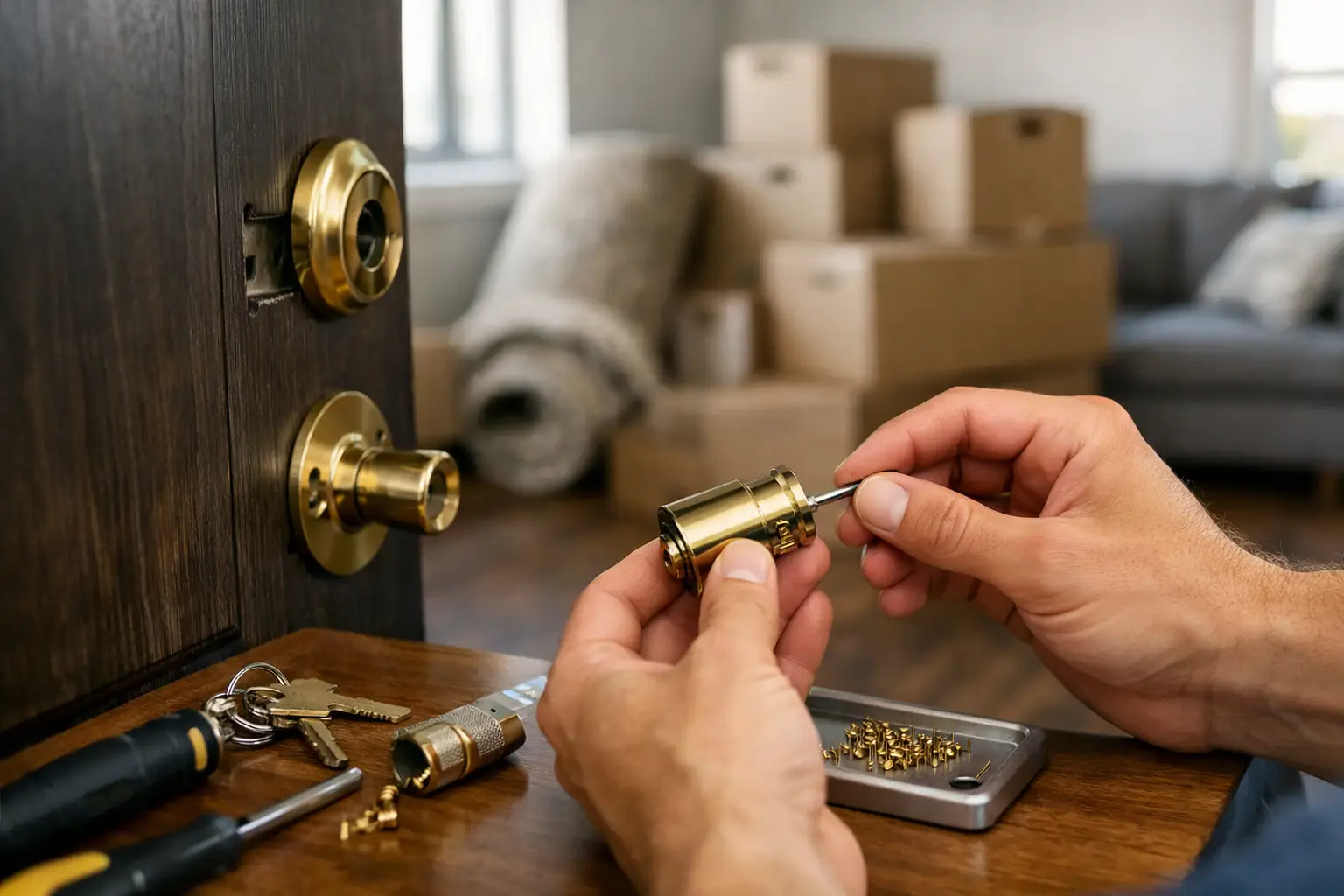
The process usually involves removing the lock cylinder, taking out the plug, matching new pins to a new key, and reassembling everything without losing springs or mixing parts. It is not advanced engineering, but it is detail work. One small mistake can leave a lock sticky, unreliable, or completely jammed.
If you are only rekeying one or two common locks and you already know the brand, DIY may save some money. If you are dealing with several doors, mixed hardware, worn locks, or you simply want it done fast, professional service is usually the better value.
Basic DIY steps without the guesswork
If you want to know how to rekey a lock after moving on your own, keep the job simple and controlled. Start by confirming the lock brand and buying the matching rekey kit. Remove the lock from the door carefully and keep every screw and part together.
Next, insert the current working key and remove the cylinder plug according to the kit instructions. Replace the old pins with the new pin combination that matches your new key. Then reassemble the cylinder, reinstall the lock, and test the key several times before you close the door.
That last part is not optional. Test with the door open. If the lock binds while the door is shut, you can create a bigger problem than the one you started with.
Also, if you do not have the current key, rekeying gets harder. Some locks can still be serviced, but many DIY kits assume you have a working key to remove the cylinder plug safely. Without that key, this becomes much more of a locksmith job.
When calling a locksmith is the smarter move
This is not just about convenience. Sometimes it is the safer and cheaper decision once you factor in time, replacement parts, and the risk of getting stuck with a half-working lock.
Call a locksmith if the locks are old, if you do not have the current keys, if the hardware is commercial-grade, or if you want multiple locks keyed alike in one visit. The same goes for damaged cylinders, smart lock integrations, restricted key systems, and rental properties where you need clear, reliable turnover work.
A good locksmith can also tell you when rekeying is not enough. If the strike plate is loose, the door is misaligned, or the deadbolt barely catches, the issue is not just key control. You may have a security problem that a new pin set will not fix.
That is where a service-first company matters. Fast response helps, but fair pricing matters just as much. Nobody wants to move into a new place and get hit with vague quotes, mystery fees, or pressure to replace every lock on the property. Straight answers matter.
Rekey or replace? Here is the real trade-off
Rekeying is usually best when the lock works well and your main concern is who has keys. Replacing is better when the lock is broken, outdated, low quality, or you want a different style or finish.
There is also the issue of consistency. If your home has five different lock brands and keyways, rekeying everything to one key may not be possible without some replacement. A locksmith can often spot the most cost-effective route, which might mean rekeying some doors and replacing one or two problem locks.
For renters, there is one more factor: permission. In many cases, you need landlord approval before changing or rekeying locks, especially if the lease requires management to retain emergency access. Always check first. If you own the property, the decision is yours.
Common mistakes after moving
The biggest mistake is waiting. People spend money on paint, internet setup, furniture delivery, and cameras while the front door still works with an unknown old key. Physical access comes first.
The next mistake is ignoring secondary doors. If the garage side door still has the old key in circulation, rekeying only the front door does not solve much. Another common problem is keeping old, unreliable hardware because it still technically turns. A lock that sticks, slips, or feels loose should be inspected.
Then there is the temptation to choose the cheapest option without asking what is included. Rekeying prices can vary depending on the number of cylinders, lock type, key copies, and whether service is needed after hours. Fair pricing should be clear up front.
How fast should you do it?
Ideally, the same day you take possession or get the keys. If that is not realistic, do it as soon as you can physically be at the property. The first few days after a move are busy and chaotic. That is exactly why access control should not be left open-ended.
If you just moved into a house or apartment in the San Diego area and need it handled without the usual runaround, Fast & Fair Locksmith is built for that kind of call. Quick arrival is useful. Clear pricing is what keeps the job from becoming another moving headache.
A practical way to decide
If your locks are standard, you have the current keys, and you are comfortable working with small mechanical parts, DIY can be fine for a simple setup. If you are unsure about the lock type, missing keys, managing several doors, or you just want the job finished quickly and correctly, call a locksmith.
The goal is not to prove you can do it yourself. The goal is to know who can get in and who cannot.
Once you are inside a new place, peace of mind should not take weeks. Handle the locks early, test everything before you trust it, and choose the option that gives you a secure door without wasting time or money.