
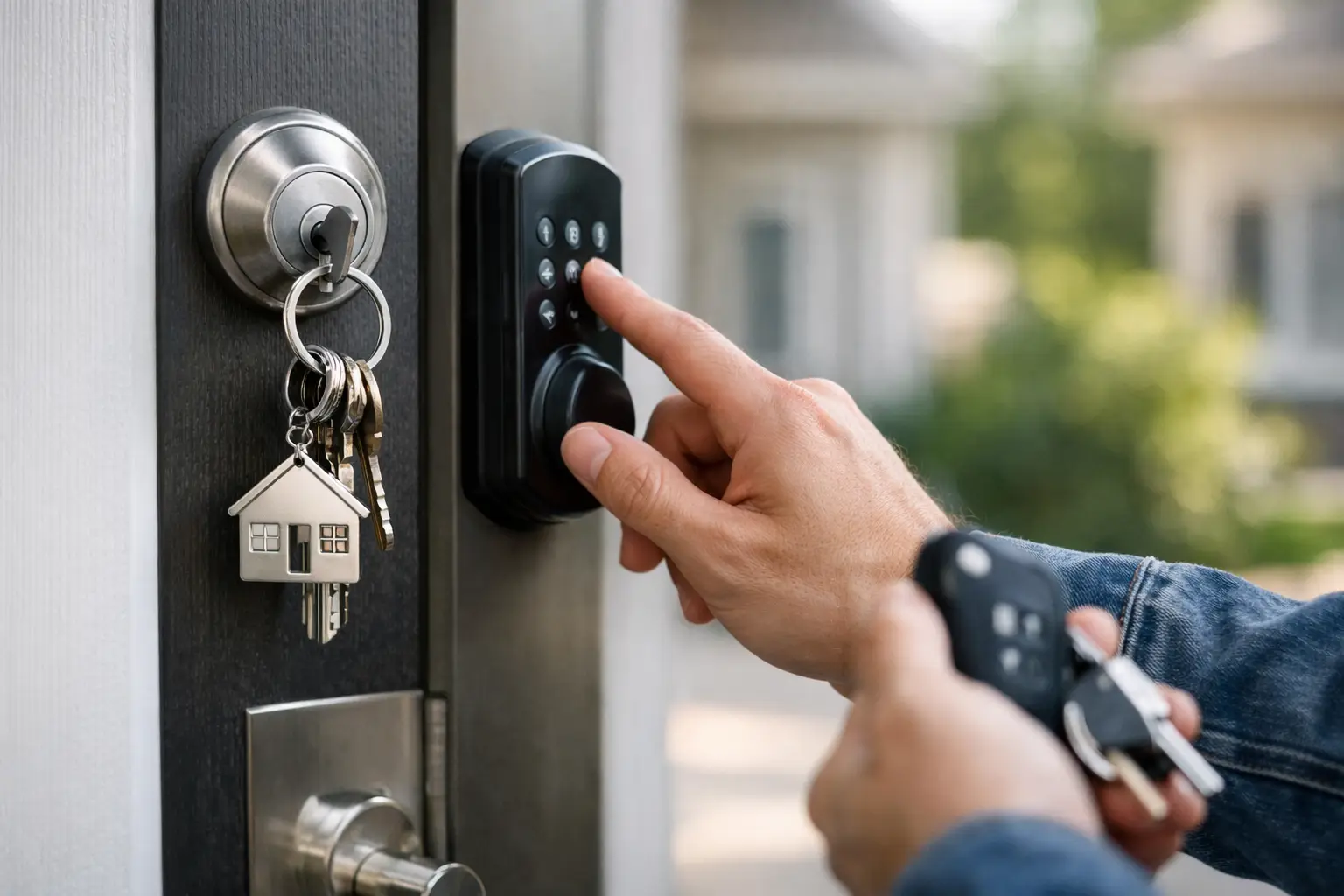
The worst lockouts happen on ordinary days: you step outside for a package, the door swings shut, and your keys are on the counter. Knowing how to prevent future home lockouts is less about buying expensive gadgets and more about building a backup plan that works when you are distracted, late, or juggling groceries.
A good plan should be simple enough to use every day and secure enough that it does not create a bigger problem. The right setup depends on your household, your door hardware, whether you rent, and who needs access to the property.
Start With the Habit That Stops Most Lockouts
Most home lockouts begin before the door closes. People carry keys in a loose pocket, set them down while unloading the car, or leave through a side door that locks automatically. The fix is to create one non-negotiable exit routine: phone, wallet, keys.
Keep your primary keys in the same place every time. A dedicated hook near the main exit can help, but only if it is out of sight from windows or an open garage. If you carry a bag, use a clipped key ring or an interior zippered pocket rather than letting keys float at the bottom.
For homes with self-locking knobs or handles, pause before closing the door. Make a quick physical check that your keys are in hand. It may feel overly deliberate at first, but it becomes automatic faster than most people expect.
Build a Secure Backup Key Plan
A backup key is practical. Hiding one carelessly is not. Avoid the predictable spots: under a mat, inside a fake rock, above the door frame, or in an unlocked mailbox. Those are the first places a person with bad intentions will check.
The strongest option is usually to leave a spare with a nearby person you genuinely trust, such as a family member, close neighbor, or local friend. Choose someone who is typically home or can reach the property without a long drive. Let them know if you change the locks, move, or update the key.
If no trusted person is nearby, consider a quality lockbox mounted in a discreet, solid location. A lockbox is not right for every home. It adds convenience, but its security depends on the model, where it is installed, and whether the code is protected. Never use an easy-to-guess code such as your address, birthday, or phone number.
For apartment residents, check the lease before installing anything outside your unit. Management may have rules about lockboxes, smart locks, and lock changes. A lease violation is an expensive way to solve a key problem.
Make Copies Before You Need Them
One worn, bent, or barely working key is a warning sign. Get copies made while the original still works smoothly, then test each copy in the lock before depending on it. A key that turns at the hardware counter may still stick in your specific deadbolt.
Keep track of who has copies. This matters after a breakup, roommate change, contractor visit, or move. If you cannot account for old keys, rekeying is often smarter than hoping every copy was returned. Rekeying changes the lock so old keys no longer work, usually without replacing the full hardware.
Do not label a house key with your full address. If a labeled key ring is lost, it can point someone straight to your home. A simple identifier only you understand is safer.
Give Household Members a Real Plan
Families often have multiple keys but no actual access plan. Kids, teens, roommates, and frequent caregivers should know which door to use, where their key belongs, and who to call if they are locked out.
For school-age children, a key clipped inside a backpack can be more dependable than a loose key in a pocket. For older relatives or caregivers, a keypad entry code may be easier than managing a small metal key. The goal is not to hand out access casually. It is to make sure the people who need entry can get it without breaking a window, forcing a door, or waiting outside after dark.
Consider Keyless Entry, but Choose It Carefully
A keypad deadbolt or smart lock can reduce the chance of a traditional key lockout. With a keypad, you can enter a code instead of carrying a key on every walk to the mailbox or trash bins. Some models also allow temporary codes for guests, cleaners, or service providers.
There are trade-offs. Battery-powered locks need fresh batteries, and electronic hardware can fail just like mechanical hardware can. Some smart locks depend on an app, Wi-Fi connection, or phone battery for certain features. A smart lock should be convenience, not your only backup.
Choose a model with a physical key override when possible, and keep that physical key available through a separate, secure plan. Test the keypad regularly, replace batteries before they are low, and change codes when someone no longer needs access. If you rent, get approval before replacing any lock hardware.
Keep Your Locks Working Properly
A lockout is not always caused by lost keys. A worn key, misaligned strike plate, damaged deadbolt, or failing knob can leave you standing outside with the correct key in hand.
Pay attention to small changes. If the key needs to be wiggled, the deadbolt drags, the latch catches, or the door only locks when you lift it, address it early. Waiting until the lock fails completely can turn a minor repair into an after-hours emergency.
Door alignment can shift with weather, settling, loose hinges, or swollen wood. Forcing a key or turning it hard can break the key inside the lock and damage the cylinder. A locksmith can identify whether the problem is the key, the lock, the strike plate, or the door itself, then recommend the least expensive repair that actually solves it.
Use a Backup That Fits Your Daily Life
The best way to prevent future home lockouts is not necessarily the most high-tech option. A homeowner who lives near trusted family may only need a spare key and a better exit routine. A busy household with teenagers may benefit from keypad codes. A property manager may need controlled key tracking, rekeying between tenants, and a documented process for emergency access.
Think through the moments when you are most likely to get locked out. Is it when taking out the trash? Coming home after a run? Leaving through the garage? Returning from a late shift? Build your solution around that real behavior instead of a plan you will not follow.
A practical home-access setup may include four parts:
- A daily key routine for every exit.
- At least one tested backup key held securely.
- A clear plan for household members and trusted contacts.
- Locks that are maintained, correctly aligned, and rekeyed when access changes.
What to Do If You Are Locked Out Anyway
Do not force the door, pry a window, or try to defeat the lock yourself. Those shortcuts can damage the door, frame, glass, and lock, often costing much more than professional entry. They can also create a security issue that remains after you get inside.
First, check safe alternatives you are authorized to use, such as another unlocked entry point or a trusted person with a spare. If there is a child, vulnerable adult, or pet in immediate danger inside, call emergency services. Otherwise, call a reputable locksmith and ask for the total expected price, including service-call and after-hours fees, before work begins.
In Orange County, Fast & Fair Locksmith focuses on getting to the location quickly and explaining the price clearly. That is what a lockout service should feel like: prompt help, no pressure, and no surprise charge after the door is open.
The best backup plan is the one you can still use on a rushed Tuesday, with your hands full and your mind somewhere else. Put it in place now, test it once, and let a closed door stay a small inconvenience instead of a full-blown emergency.