
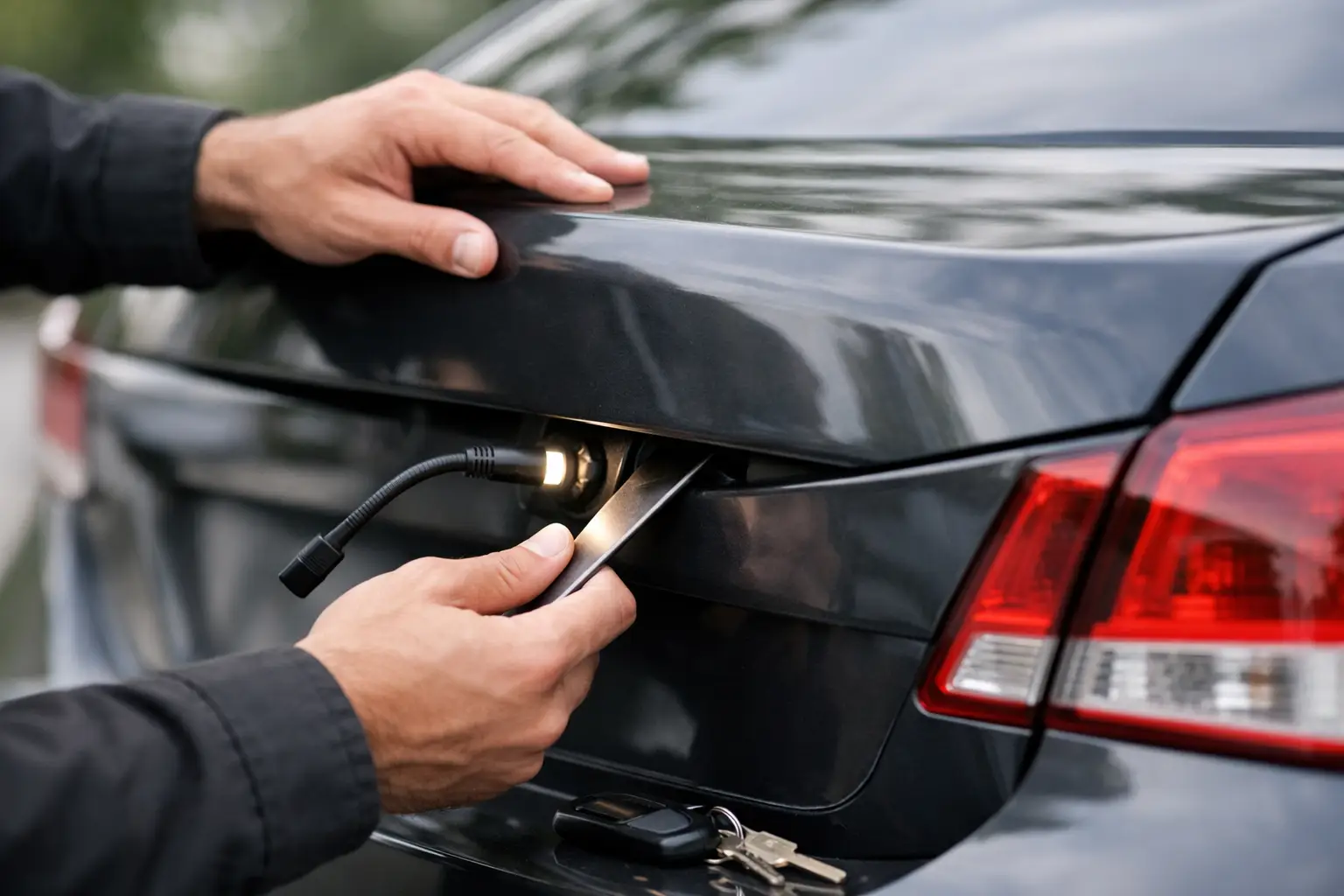
A locked trunk is more than an inconvenience when your groceries, work equipment, medication, luggage, or spare tire are inside. If you need to know how to open locked trunk access safely, start with the methods your vehicle was designed to use. Skip improvised tools, forced entry, and internet tricks that can damage the lock, latch, paint, wiring, or rear seats.
The right move depends on why the trunk will not open. A dead key fob battery calls for a different solution than a broken latch, a drained car battery, or keys locked inside. The goal is simple: get back into your own vehicle without turning one problem into an expensive repair.
First, Make Sure It Is Really Locked
Before assuming there is a serious failure, try the normal controls in a calm, deliberate order. Press the trunk-release button on your key fob from close range. Then try the trunk-release button inside the vehicle, if you can access the cabin. Some cars also have a release switch on the trunk lid itself, often above the license plate or near the handle.
If you have a physical key hidden in the fob, check your owner's manual for the exterior key cylinder location. On some models, it is visible on the trunk. On others, it is concealed near the rear badge, handle, or rear-seat area. Do not force the key if it will not turn. A worn key, damaged cylinder, or incorrect key can make the issue worse.
Many newer vehicles also have a valet mode or trunk lockout setting. This feature is meant to keep valet attendants or other drivers out of the cargo area. If your fob and interior switch suddenly stopped opening the trunk, check whether valet mode was activated. The exact process varies by vehicle, so the owner's manual is the safest source for your model.
Check the Simple Causes Before Calling for Help
A key fob battery can fail without much warning. Your doors may still respond inconsistently, or the fob may work only when held close to the vehicle. Replace the battery if you have a spare and know the correct type. If the physical key opens the driver door, get into the vehicle and test the interior trunk release.
A weak or dead vehicle battery is another common cause. Electronic trunk releases need power. If the car has no interior lights, no dash response, and no fob response, the battery may be the real problem. Use the manufacturer-approved jump-start points if you can access them safely, or call roadside assistance. Do not attempt to connect power to random wires or electrical components near the trunk. That can damage modules and create a much larger bill.
Also consider the conditions around the trunk. Ice, road grit, a misaligned lid, or cargo pressing against the latch can stop a trunk from opening even when the release is working. If the lid feels tight, do not pull hard or slam it repeatedly. Gentle pressure on the lid while using the normal release may help if cargo is binding the latch. If it does not open easily, stop there.
How to Open a Locked Trunk From Inside the Vehicle
If you have legal access to the car's cabin, look for the factory rear-seat release. Many sedans and hatchbacks have folding rear seats with release levers, straps, or buttons. These are often located at the top of the rear seatback, inside the cabin, or accessible from the trunk side only.
If your rear seats fold down from the cabin, lower them according to the vehicle instructions and look for the glow-in-the-dark emergency trunk release handle. Federal safety requirements have made these handles common in many passenger vehicles. It is intended for emergency exit from inside the trunk, but it can also provide a legitimate way to release the lid when you are accessing your own vehicle from the cabin.
Not every vehicle has folding rear seats. Some luxury cars, older models, trucks, and vehicles with fixed rear bulkheads do not provide a pass-through. Do not remove seat cushions, pry trim panels, or cut through interior materials to reach the trunk. Airbags, wiring harnesses, fuel-system components, and structural parts may be behind those panels.
What Not to Do When a Trunk Will Not Open
A trunk lockout can make anyone impatient. That is when costly damage usually happens. Avoid actions that are unlikely to solve the problem and can compromise the vehicle's security.
Do not pry around the trunk lid with a screwdriver, coat hanger, wedge, or crowbar. The metal can bend, the weather seal can tear, and the paint can crack. Even if the lid opens, it may no longer close or seal correctly.
Do not drill the lock cylinder or attempt to manipulate the latch through gaps in the body panels. Modern vehicles often use electronic latches, protected linkages, alarms, cameras, and sensors. A damaged latch assembly can cost far more than professional entry.
Do not break a window to reach an interior release unless there is an immediate life-threatening emergency and emergency responders direct you to do so. Broken glass creates injury risks and usually turns a lockout into a repair that costs hundreds of dollars.
Finally, be cautious with anyone promising a very low phone quote but refusing to explain what it covers. Ask for clear pricing before work begins, including any service call, labor, key programming, or after-hours charge. Fair service means you know what you are agreeing to.
When a Locksmith Is the Best Option
Call a qualified automotive locksmith when your keys are inside the trunk, the fob is lost or damaged, the trunk lock is jammed, the latch will not respond, or the vehicle battery issue cannot be handled safely. A trained technician can verify ownership, assess the vehicle, and use the appropriate non-destructive entry method for the situation.
A locksmith may be able to open the vehicle cabin, create or program a replacement key, repair a damaged key, or diagnose whether the issue is the lock, latch, fob, battery, or vehicle electronics. The best solution depends on the make, model, year, and security system. There is no single safe method that works for every car.
For Orange County drivers, Fast & Fair Locksmith focuses on rapid on-site help with straightforward pricing. Have your photo ID, vehicle registration, or other proof of authorization ready when possible. That protects you and helps the technician resolve the problem without unnecessary delay.
If a Person or Pet Is Trapped Inside
This is not a locksmith situation to troubleshoot. Call 911 immediately if a child, adult, or pet is trapped in a trunk, especially in heat or cold. Tell the dispatcher the vehicle location, make, model, color, and license plate if available. Follow their instructions while help is on the way.
If there is no immediate danger, take a breath and use the vehicle's intended access points first. A locked trunk is frustrating, but protecting the car and avoiding surprise repair costs is worth a few extra minutes. The fastest solution is usually the one that fixes the actual cause without forcing anything.