
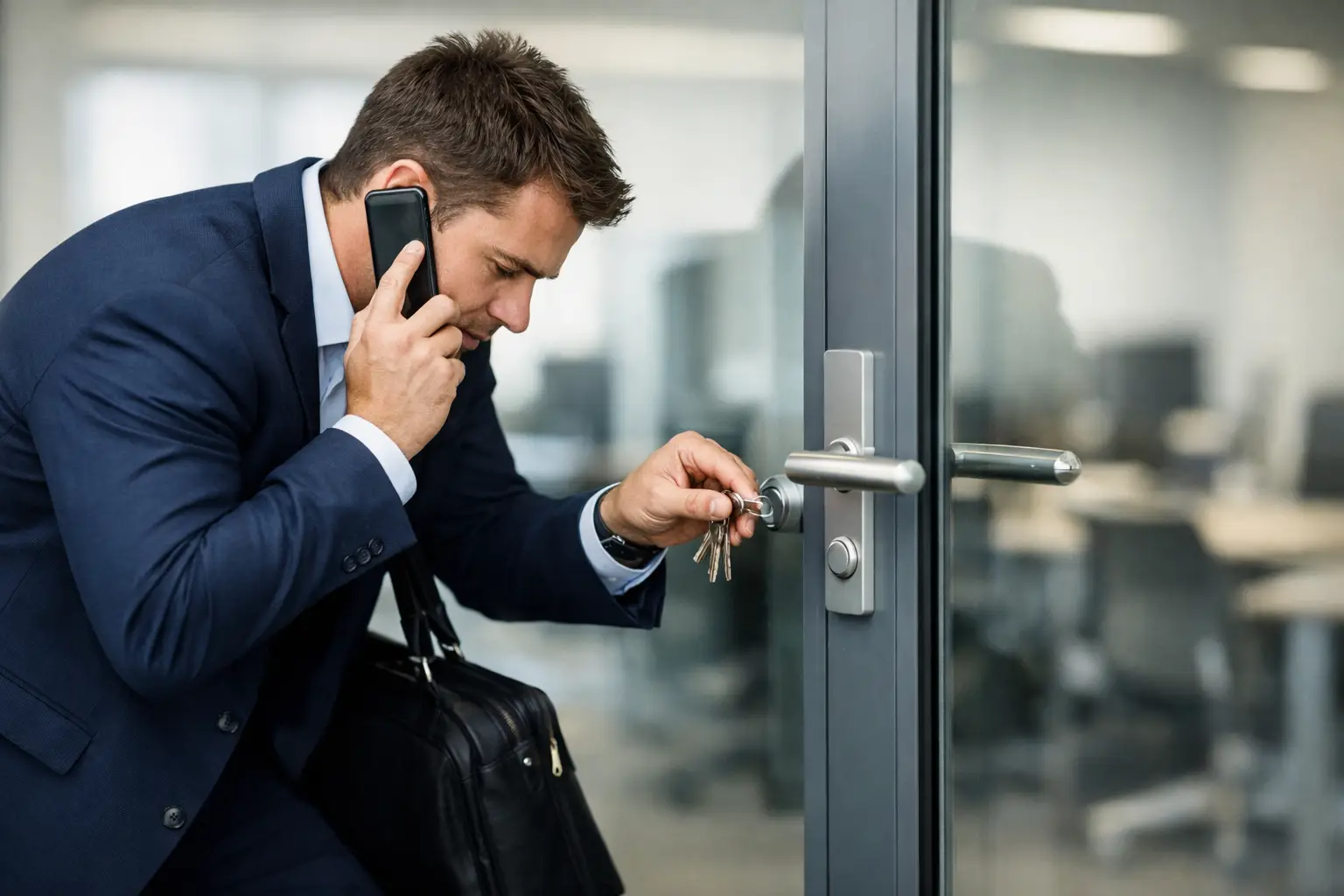
The front door is locked, your keys are inside, staff are waiting, and the workday is already going sideways. If you need to know how to handle office lockout without making the situation worse, start with this: stay calm, verify who has access, and avoid any quick fix that can damage the door, frame, or lock.
An office lockout is different from getting locked out of a house or car. There may be employees on site, customers arriving, alarms armed, sensitive files behind that door, and a property manager who needs answers. Speed matters, but so does control. The wrong move can turn a short delay into a repair bill, a security problem, or both.
How to handle office lockout without making it worse
The first few minutes matter most. Before anyone starts testing random keys or forcing a handle, confirm exactly what kind of lockout you are dealing with. Is the key missing, broken, or locked inside? Did the electronic keypad fail? Did the door shut behind someone while the deadbolt was engaged? Each scenario points to a different fix.
Next, check whether there is another approved way in. Many offices have a secondary entrance, a rear service door, or building-managed access that can solve the problem faster than working on the locked door itself. If you are in a multi-tenant building, contact building management right away. They may have master access to common entry points or know whether the lock is part of the building system.
At the same time, confirm who is authorized to approve service. In a small business, that may be the owner or office manager. In a leased suite, it could be the tenant contact or property manager. That step matters because a legitimate locksmith will usually want to know they are opening the space for someone with the right to be there.
What you should not do is just as important. Do not pry the door. Do not try to drill the lock unless you fully accept that replacement may be required. Do not keep turning a jammed key until it snaps. And do not let an employee “who watched a video once” take over. Office hardware is expensive, and many commercial doors are built to resist exactly that kind of force.
Start with the simplest office lockout checks
A lot of lockouts look worse than they are. Before you call for emergency service, run through a few fast checks.
Make sure the door is actually locked and not just stuck from pressure, misalignment, or a closer pulling it too tight. Commercial doors can bind if the frame shifts, the weather changes, or the latch is slightly out of position. If the key turns partway but the door will not open, it may be a mechanical issue rather than a true lockout.
If the office uses an electronic lock or keypad, check the power source. Dead batteries, a tripped system, or a bad code entry can mimic a hard lockout. If there is a backup key override, use it. If there is not, stop there. Electronic systems can become more costly if handled the wrong way.
Also check whether someone else on the team has a working key or credential. This sounds obvious, but in real office lockouts, time gets wasted because everyone assumes someone else already checked. One quick group text or phone call can save a service visit.
If you do regain entry, do not just move on. Figure out why the lockout happened. A worn key, a sticky cylinder, a failing keypad, or a door that is out of alignment will usually lock you out again at the worst time.
When to call a locksmith for an office lockout
If the key is inside, the lock is jammed, the key broke off, the electronic system failed, or there is no authorized spare available, call a commercial locksmith. That is the cleanest move. A trained technician can usually get you back in with far less risk than a forced entry or trial-and-error approach.
This is where people often make a costly mistake. Under pressure, they call the first number they find and agree to vague pricing. Then the tech arrives and the price changes. Office lockouts already come with stress. You do not need a pricing fight on top of it.
Ask direct questions before service is dispatched. Ask for the service call fee, the labor range, whether commercial lockout work is priced differently, and what could increase the total. Ask whether destructive entry is a last resort. Ask for an ETA that is realistic, not just what sounds good on the phone.
If the office contains restricted records, inventory, cash handling areas, or server equipment, say that upfront. It helps the locksmith prepare the right tools and approach. It also helps establish the seriousness of the access issue.
In the San Diego area, especially in shared office buildings and retail strips, response time can vary based on building access and parking. A straight answer on arrival time matters. Fast is important, but honest is better than a fake promise followed by a long wait.
Office lockout risks people forget about
Getting back inside is only part of the problem. The bigger issue is what the lockout may be telling you.
If an employee lost a key, you may have a security exposure, not just an access issue. If a former employee still has a copy, rekeying may make more sense than simply opening the door. If the lock failed on its own, you may be dealing with aging hardware that should be repaired or replaced before it fails again.
There is also the question of interruption. A lockout at 8:00 a.m. can affect payroll, customer appointments, deliveries, and staff time. For medical, legal, or financial offices, delays can create privacy and compliance concerns too. That is why office lockout response should be practical, not improvised.
If the office has an alarm, be careful. Forced entry can trigger a response and complicate the situation. If you are authorized on the alarm account, notify the monitoring company once you know a locksmith is on the way. That reduces the chances of a second problem showing up while you are still handling the first one.
How to prevent the next office lockout
The best office lockout plan is simple and boring. That is exactly why it works.
Keep at least one controlled spare key off site or with a trusted authorized person. If your office uses multiple locks, label and track them properly. Too many businesses have a “spare” that opens nothing because nobody tested it after the last rekey.
If employee turnover is common, review your key control. Former staff, copied keys, and undocumented handoffs create risk. Rekeying is often a smarter and cheaper fix than full lock replacement when access has become messy.
If your door has been hard to open for weeks, deal with it before it becomes an emergency. Sticky locks, loose hardware, worn keys, and latch issues are warning signs. Commercial lock problems usually get more expensive when ignored.
It also helps to document who can approve emergency locksmith service. In a real lockout, delays often come from confusion, not the lock itself. If your team knows who to call, who can authorize work, and where backup access is stored, the problem stays smaller.
Fast & Fair Locksmith works with exactly this kind of situation - urgent access problems where people need quick help and straight pricing, not a runaround.
If the office lockout happens after hours
After-hours lockouts are harder because your normal backup options may be unavailable. Building management may be off site, the employee with the spare key may not answer, and the pressure to “just get in somehow” gets stronger.
That is the moment to slow down and make the right call. Verify authority, contact a commercial locksmith, and protect the property while you wait. If staff are outside, keep the area organized and avoid broadcasting details about keys, alarms, or access points where others can hear.
If there are signs of tampering, treat it differently. A failed key is one thing. A damaged cylinder, a door that looks forced, or a lock that suddenly does not match known keys could point to attempted break-in activity. In that case, document what you see and consider whether law enforcement or property management should be contacted before entry work begins.
A lockout feels urgent because it is. But urgency should lead to fast decisions, not sloppy ones. The best move is usually the one that gets the door open without creating a second bill, a security gap, or a bigger mess for tomorrow.