
You are locked out. It is late. Your phone is at 12%. That is the exact moment scammy locksmith operations are built for - panic, speed, and a price you do not have time to question.
If you want to know how to avoid locksmith scams, the goal is simple: slow the process down just enough to confirm you are dealing with a real local technician with a real price. You do not need to become a lock expert. You just need a few non-negotiables before anyone rolls a truck.
Why locksmith scams work (and why it is not your fault)
A lot of scam calls start with a cheap quote that feels like a lifeline: “$19 service call” or “$39 to get you in.” The person on the phone sounds confident. A van shows up. Then the story changes - “high-security lock,” “special tools,” “after-hours fee,” “drill required.” Now you are stuck choosing between paying or staying locked out.
The scam is not the lock. The scam is the pressure. They count on you being tired, embarrassed, or worried about safety, so you will approve work you did not agree to.
The most common locksmith scam patterns
Most bad experiences fall into a few predictable plays. Once you recognize them, they get a lot easier to avoid.
The too-good-to-be-true phone quote
If the price sounds like it would not cover gas, it probably will not. Lowball quotes are used to win the call, not to reflect the real cost.
The “dispatch center” that is not local
Some operations run a national call center, buy local-looking phone numbers, and send whoever is available. You think you are calling someone nearby. You are not.
The bait-and-switch at the door
They quote one thing on the phone, then claim your situation is “different” once they arrive. Sometimes it is true that details change pricing - but the honest version sounds like a clear explanation and a new estimate you can approve or decline.
Unneeded drilling or forced hardware replacement
Drilling is sometimes necessary, but it is not the default. A common scam move is to drill quickly, then insist you must buy an expensive replacement lock from them right now.
Vague invoices and mystery fees
“Labor,” “service,” “parts,” “security upgrade,” “special key,” “after-hours,” “trip charge,” “processing fee.” Any fee can be legitimate in the right context. The scam is when nothing is explained until you are already committed.
How to avoid locksmith scams before you call
The best time to protect yourself is before you are standing outside.
Save one trusted number in your phone now. Do it while you are calm. If you manage properties, save a primary and a backup. In an emergency, you will call whoever is already in your contacts.
If you are already locked out and searching on the spot, do not click the first “ad” result just because it is at the top. Take 60 seconds to check for signs the company is real: a consistent business name, a local service area, and an actual street address listed somewhere (even if they dispatch techs, legitimate businesses can still be transparent about who they are).
What to ask on the phone (and what answers you need)
A good call is short, but it is specific. You are not being difficult. You are setting terms.
Ask for a price range that includes the service call and labor. If they refuse to give any range at all, that is a problem. It is fair for a locksmith to say “it depends” - a car key replacement is different from a simple home lockout - but they should still be able to give boundaries and explain what changes the price.
Ask: “Are you the locksmith, or are you a dispatch service?” Some companies do dispatch ethically, but scam networks hide behind it. You want the name of the business and confirmation the technician represents that business.
Ask how they charge after-hours. A real company has a real policy. If they dodge, expect a surprise.
Ask what ID the technician will show when they arrive. A legitimate tech should be comfortable identifying themselves and the company they work for.
How to spot trouble when the technician arrives
When the tech shows up, you should still feel in control.
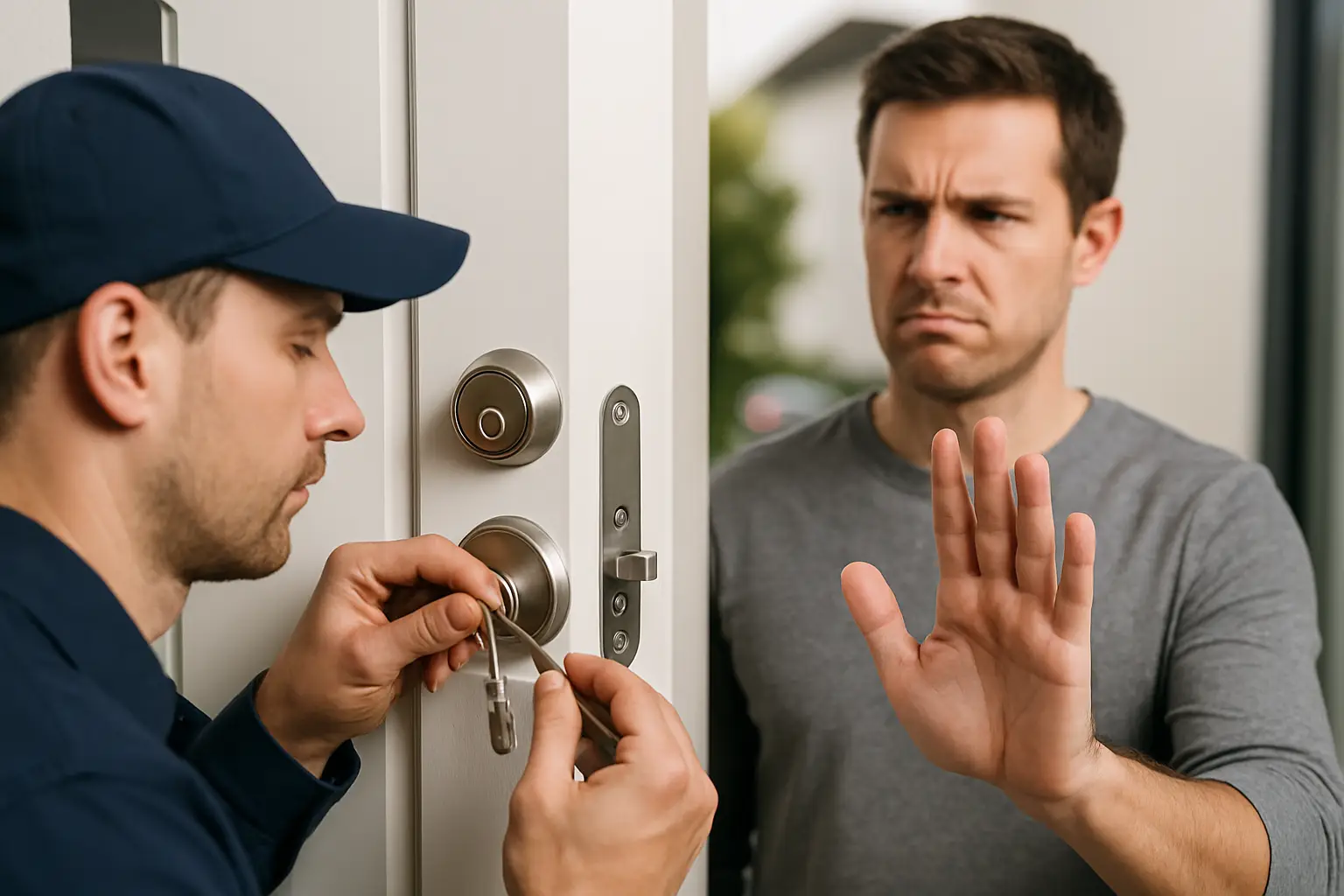
A straightforward locksmith will confirm the situation, explain the plan, and give you an estimate before touching the lock. If the person starts working immediately, blocks you from seeing what they are doing, or gets irritated when you ask about price, stop the job. You can end the call. You can pay a reasonable trip/service fee if it was disclosed - but you do not have to approve mystery work.
Look at the vehicle and branding. Not every honest locksmith has a fully wrapped van, but total anonymity is a pattern with scammers. If there is no company name, no paperwork, and no clear identification, that is not a good sign.
Pricing reality: what “fair” actually looks like
Customers get scammed because they do not know what normal costs look like. Exact pricing depends on the city, time of day, and the job, but you can still use common sense.
A lockout is usually a straightforward service. If someone quotes a rock-bottom price on the phone, then tries to charge several hundred dollars without a clear reason, that is not “emergency pricing.” That is a setup.
Rekeying has variables (how many cylinders, what keyway, what condition the lock is in). Lock replacement depends on hardware choice. Car key work depends heavily on the year and whether programming is involved. In other words, “it depends” is real - but honest companies explain what it depends on, and they do it before the work.
Drilling: sometimes necessary, often abused
Here is the clean way to think about drilling.
If your key is inside and the lock is functioning, a skilled technician will usually attempt non-destructive entry first. If the lock is damaged, if a key snapped in a way that blocks the mechanism, or if you are dealing with certain high-security setups, drilling might be necessary.
The red flag is when drilling is presented as the first and only option with zero explanation. Another red flag is when they drill, then pressure you into buying an overpriced lock “because now you have to.” If drilling is truly required, you should hear the why, the cost, and the replacement options before the drill comes out.
Payment and paperwork: keep it clean
Scams love messy payment.
Before you pay, ask for an itemized invoice. Not a scribble with one big number. You want the service call, labor, parts, and any after-hours charge listed separately.
Be cautious if they insist on cash only, refuse to provide a receipt, or try to move the conversation away from specifics. Plenty of legitimate small businesses accept cash, but a legitimate locksmith can still document the work.
If the final price is higher than the estimate, pause and ask exactly what changed. If they cannot explain it in plain language, do not approve it.
If you manage properties, set rules for your team
Property managers and business owners get hit because different staff members call different numbers under pressure.
Set a single approved vendor list and a spend limit that requires authorization. Teach staff one sentence: “We need a written estimate before any work begins.” That one habit prevents most bait-and-switch jobs.
If you are rekeying multiple units, ask for per-door pricing and a clear plan for key control. The scam version is vague pricing and surprise hardware swaps mid-job.
What to do if you think you are being scammed
If it feels wrong, stop.
Tell the technician you are not approving additional work and you want the lock returned to its current state as much as possible. If they already started, you may owe the disclosed service call, but you do not owe a blank check.
If you are being threatened or pressured, prioritize safety. Step inside your car or a neighbor’s doorway if you can. Call a friend. If you feel unsafe, call local authorities.
Take photos of the vehicle, license plate, and any paperwork. Save texts and call logs. If you paid by card, keep the receipt and document what was agreed to.
The simplest prevention: choose fast and fair on purpose
A real locksmith business does not need tricks. They win on showing up quickly, doing the job cleanly, and charging what they said they would charge.
If you want a baseline for what that looks like, this is exactly how we operate at FAST & FAIR LOCKSMITH: rapid response, straightforward options, and pricing you can understand before the work starts.
Lockouts and broken keys are stressful enough. Your one job in the moment is to protect your leverage - get the details, get the estimate, and do not let urgency make the decisions for you.