
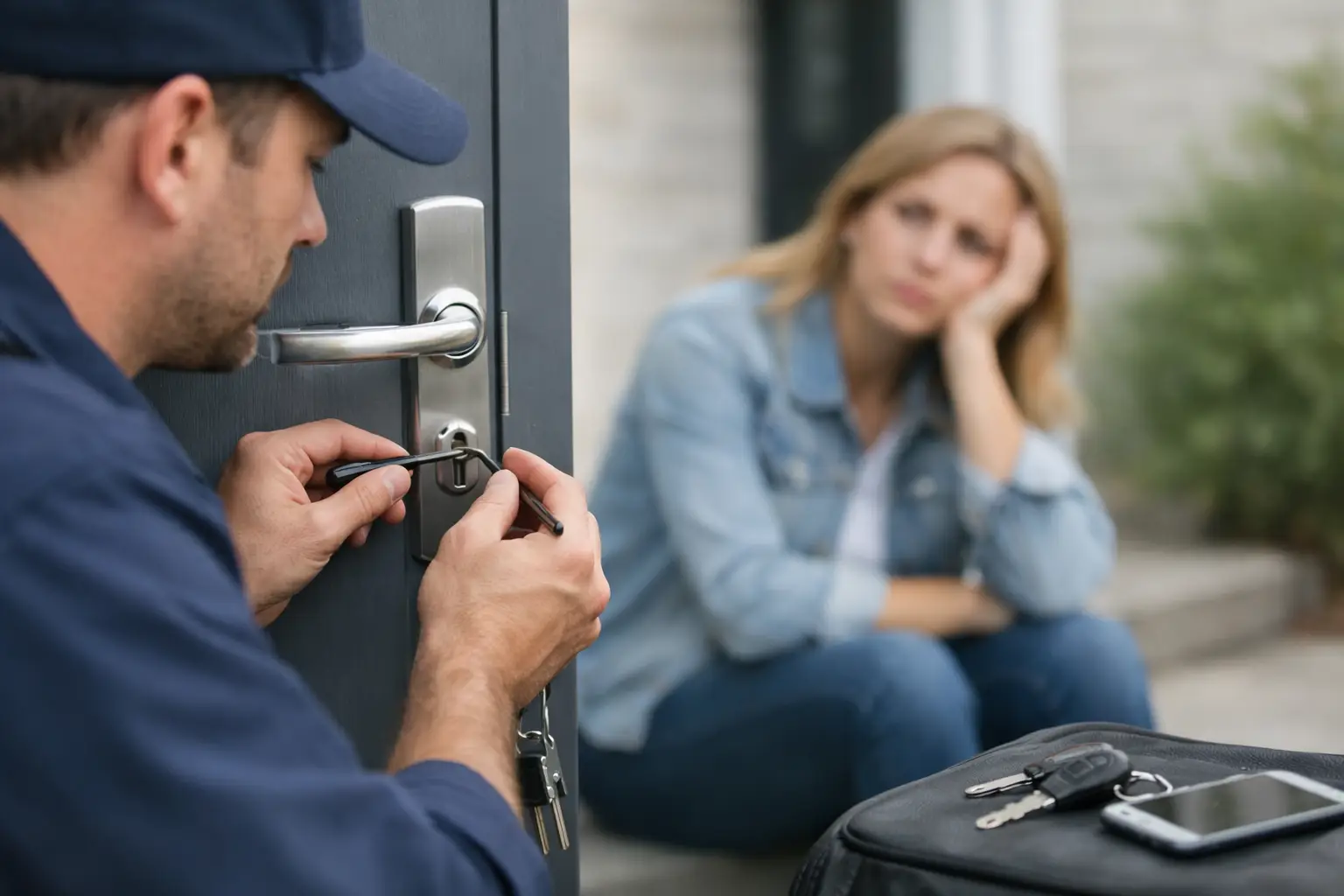
You realize the door clicked shut a second before you pat your pocket and feel nothing. No keys. Maybe your phone is inside too. Maybe dinner is on the stove. That is exactly when a good home lockout service guide matters - not when things are calm, but when you need the right move fast.
A home lockout is usually simple, but the wrong response can make it expensive. People panic, force a door, break a window, or call the first number they see and agree to a vague quote. That is where trouble starts. The better play is simple: protect the property, verify who you are hiring, and get back in without turning a lockout into a repair bill.
What to do first during a home lockout
Start with the basics before you call anyone. Check every accessible door and window you normally use, but do it carefully. If a back door is unlocked, great. If a window is cracked open but requires forcing a screen or climbing unsafely, stop there. Saving a service call is not worth an injury.
If someone else in the home has a key, call them. If you rent, check whether your landlord or property manager has after-hours access rules. In some apartment buildings, management can open a common-area-secured unit, but many will still require a locksmith. If a child, elderly family member, or pet is inside and there is any sign of danger, treat it as an emergency and call 911 first.
If there is no immediate safety threat and no spare key option, a locksmith is usually the fastest and least damaging choice. Most standard residential lockouts can be handled without drilling or replacing the entire lock. That matters, because the cheapest-looking option is not always the lowest total cost if it ends with damaged hardware.
How a home lockout service guide helps you avoid bad calls
The locksmith industry has plenty of solid professionals, but it also has a reputation problem for a reason. A common complaint is the bait-and-switch quote: a low number on the phone that jumps once the technician arrives. Another is unnecessary drilling when a non-destructive entry method would have worked.
A real home lockout service guide should help you screen for those problems fast. Ask for a clear service call range before dispatch. Ask whether the quoted price includes labor for standard lockout entry or if there are separate charges. Ask what could raise the price. A straight answer is a good sign. A vague one usually is not.
You should also ask when the technician can arrive and whether they will arrive in a marked vehicle or provide identifying information. When you are locked out, speed matters. So does knowing who is coming to your home.
What a locksmith should ask you
A legitimate locksmith is not just trying to open a door. They are also expected to protect the property from unauthorized entry. That means they may ask for proof you live there. If your ID is inside, that is common. In that case, they may let you retrieve it once the door is open or ask for other verification, like a lease, utility bill on your phone, or confirmation from property management.
That can feel inconvenient when you are standing outside, but it is the right process. A locksmith who does not care whether you belong at the property is not someone you want handling your lock.
How residential lockouts are usually opened
Most home lockouts are resolved with non-destructive techniques. The exact method depends on the lock type, door condition, and whether the lock is a standard knob, deadbolt, smart lock, or high-security cylinder. Older hardware may open more easily. Better hardware may take longer. That is normal.
If the door is simply latched and not deadbolted, entry can be quicker. If a deadbolt is engaged, it may require more time and skill. If the lock is damaged, misaligned, or already failing, the job can shift from lockout service to repair or replacement. That is one of the main it-depends moments with pricing and timing. A simple lockout is one thing. A broken lock is another.
Drilling should not be the default. Sometimes it is necessary, especially with failed locks or certain high-security setups, but it should come with a clear explanation first. If someone wants to drill immediately without assessing the lock, that is a reason to ask questions.
What home lockout service usually costs
There is no honest flat price for every lockout because too many factors change the job. Time of day matters. A late-night emergency call usually costs more than a midday visit. Lock type matters. Travel distance can matter. The condition of the hardware matters too.
What should stay consistent is transparency. You should know the service call charge, the labor expectation, and the conditions that could increase the total before work begins. If the tech arrives and suddenly claims the original number meant nothing, pause the job and get a direct explanation.
Fair pricing does not always mean the absolute lowest number. It means the price makes sense for the work, the response time, and the situation, and that you were told the truth up front. That is the difference people remember after the stress wears off.
When to repair, rekey, or replace after a lockout
A lockout does not always end when the door opens. Sometimes the real question starts after entry. If you lost your keys somewhere identifiable, rekeying may be the smart move. If the lock was sticking before the lockout, repair or replacement may save you from a repeat problem next week. If you just moved into a new place and got locked out, that is a good reminder to rekey anyway.
For renters, your lease may control what changes you can make. For homeowners, the decision usually comes down to cost, condition, and peace of mind. Rekeying is often the better value when the hardware is still in good shape. Replacement makes more sense when the lock is worn out, damaged, or no longer meets your security needs.
How to choose a locksmith without wasting time
When you are stuck outside, you do not need a long research project. You need a few fast checks. First, look for a locksmith who gives direct answers about arrival time and pricing. Second, make sure they actually provide residential lockout service, not just general key work. Third, pay attention to how they talk to you. If the tone is pushy, evasive, or loaded with maybe-this-maybe-that pricing, trust that instinct.
The best service feels clear from the first call. They ask where you are, what kind of lock you have if you know, whether there is an emergency inside, and how quickly they can get there. Then they explain the cost structure in plain English. That is how a service business should work.
In San Diego, where apartments, condos, gated entries, and detached homes all create different access situations, that clarity matters even more. The right locksmith will understand the difference between a simple front-door lockout and a unit with layered access points.
What not to do during a lockout
Do not kick the door. Residential doors, frames, and strike plates can fail in ugly and expensive ways. Do not try random internet tricks with improvised tools if you do not know your lock type. The internet makes many lockouts look easier than they are, and people often end up damaging weather stripping, hardware, or the frame itself.
Do not leave your property unsecured while searching the neighborhood for help. And do not agree to work without a clear number. Stress makes people accept bad terms. Slow down just enough to ask the right questions.
How to lower the chance of another lockout
Most repeat lockouts come from routine, not bad luck. A spare key with a trusted local contact helps. So does a simple habit like checking for keys before shutting the door. For households with multiple residents, decide who holds backups and where emergency contact details are stored.
If your lock is already sticking, fix it before it becomes a lockout. If your smart lock battery is fading, replace it early. If your key is bent or worn, copy it before it fails. Small maintenance is cheaper than emergency service almost every time.
Fast matters in a lockout. Fair matters just as much. If you need help, look for both. A good locksmith should get you back inside without games, without damage when it can be avoided, and without a final bill that feels like a second emergency.