
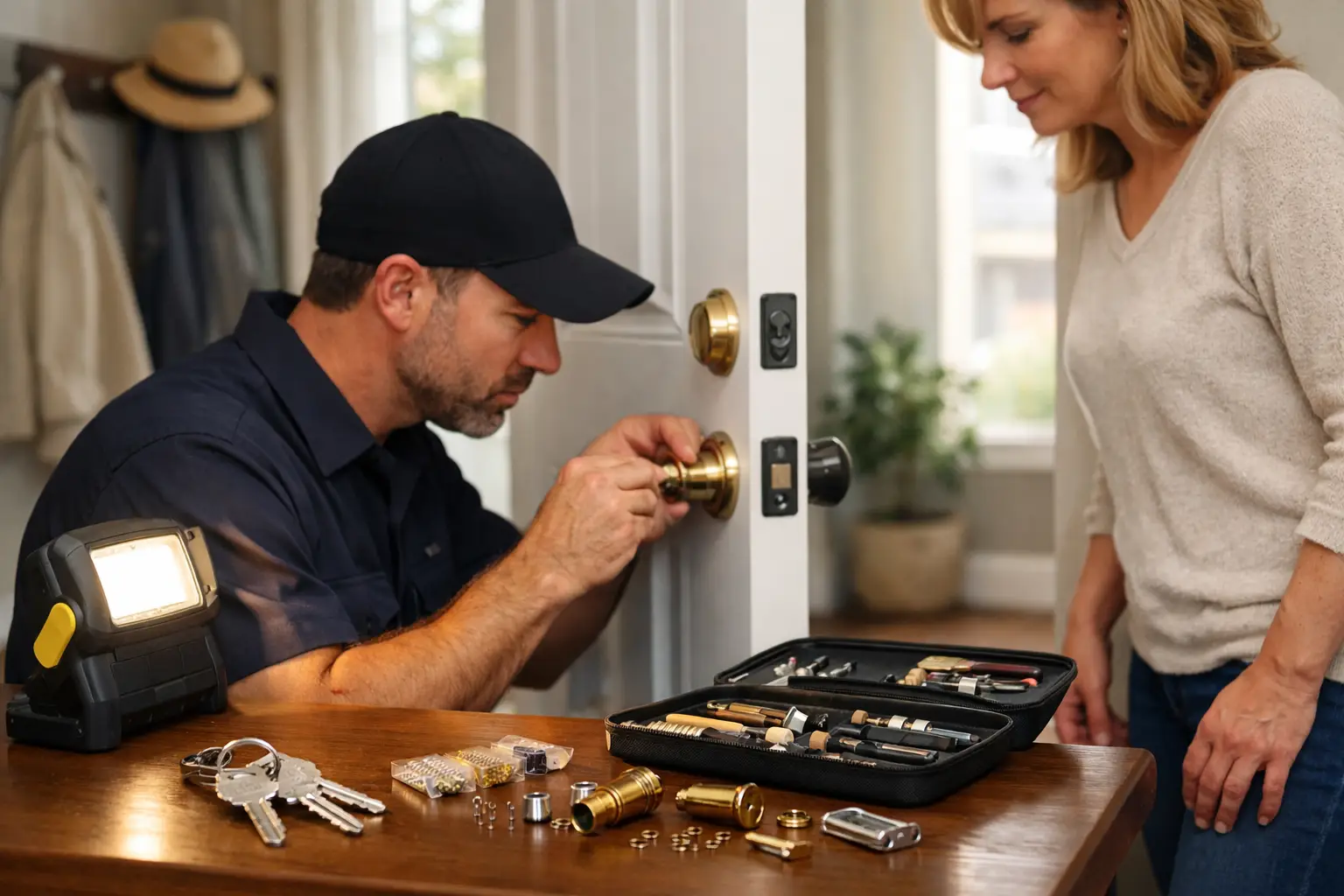
You do not need to replace every lock after a move, breakup, lost key, or tenant turnover. In many cases, a guide to residential lock rekeying process starts with one simple fact: if the lock hardware still works, rekeying can restore control of who has access without paying for full replacement.
That matters because homeowners and property managers are often pushed toward the more expensive option first. New locks have their place, but rekeying is usually the faster, cleaner fix when the goal is changing key access, not changing the entire lock.
What rekeying actually means
Rekeying changes the inside of a lock so the old key no longer works. A locksmith adjusts the lock cylinder by replacing or rearranging the small internal pins to match a new key cut. From the outside, the lock usually looks the same. The door hardware stays in place, but the key that operates it changes.
This is different from replacing a lock. Replacement means removing the existing hardware and installing a new lockset or deadbolt. Rekeying is more focused. It solves an access problem without forcing you to buy all new hardware.
For many homes, that is the right call after a move, after a roommate leaves, after a contractor had temporary access, or when keys are missing and you cannot be sure where they ended up.
When the guide to residential lock rekeying process points to rekeying
The best time to rekey is when the lock is in decent working condition but key control is no longer acceptable. If your deadbolt turns smoothly, the latch lines up properly, and the hardware is not badly worn, rekeying often makes more sense than replacement.
A few situations come up again and again. You bought a house and do not know how many copies of the old keys exist. A tenant moved out and did not return every key. A purse, backpack, or spare key went missing. An ex-partner, former cleaner, dog walker, or maintenance worker had access at some point and now should not.
There is also the convenience factor. If your home has multiple doors with separate keys, rekeying can sometimes put them on one key, as long as the lock brands and cylinder types allow it. That saves time every single day.
When rekeying is not the right fix
Rekeying has limits. If the lock is damaged, cheap enough that repair makes no financial sense, or outdated to the point that security is poor, replacement may be smarter.
The same goes for a lock that sticks because the door is sagging or the strike is misaligned. Rekeying the cylinder will not correct a door fit issue. If the hardware is loose, the bolt is failing, or the cylinder is worn out, a locksmith may recommend repair or replacement first.
There is also a compatibility issue. Some high-security systems, electronic locks, and smart locks use proprietary cylinders or modules that change the process. Rekeying may still be possible, but it depends on the manufacturer and the specific model.
How the residential lock rekeying process works
The actual process is straightforward when handled by a locksmith with the right tools. First, the technician identifies the lock type and checks whether the hardware is worth rekeying. That quick evaluation matters. A fair locksmith tells you if the lock is too worn, too damaged, or too limited to justify the work.
Next, the lock cylinder is removed or accessed so the internal pin stack can be changed. In a standard pin tumbler lock, each cut on the key lines up with a set of pins. The locksmith selects new pins that match a different key pattern. Once those pins are set correctly, the old key stops working and the new key operates the lock.
After that, the lock is reassembled, tested, and usually lubricated if needed. A good technician does not stop at making the new key turn. They check for smooth operation, proper bolt throw, and any signs that the door or strike plate may need adjustment.
If multiple locks are being keyed alike, the process is repeated so one key works across the selected doors. That can be a big quality-of-life upgrade for a house with front, back, and side entries.
How long rekeying usually takes
For a typical home, rekeying is usually fast. A single lock can often be done in minutes once the right keyway and parts are confirmed. Several locks across a house may take longer, especially if different brands are involved or some cylinders are sticking.
What slows things down is not usually the pin change itself. It is worn hardware, unusual lock types, missing parts, rust, stripped screws, or doors that were installed poorly. That is why accurate pricing and timing should come after someone understands what is actually on the door.
If you are calling for service, it helps to know how many doors need rekeying, whether you want one key for all of them, and whether any locks are currently hard to turn.
What affects the cost
People usually ask one question first: is rekeying cheaper than replacing locks? Most of the time, yes. You are paying for skilled labor and small internal parts rather than full new hardware. But price still depends on the number of locks, the lock type, the condition of the hardware, whether the locks can be keyed alike, and whether service is needed urgently or after hours.
This is also where the locksmith industry gets a bad reputation. Some companies advertise a very low number to get the call, then pile on fees once they arrive. A fair quote should account for the scope of the job and explain what changes the price. If a lock is too damaged to rekey, that should be shown clearly, not used as a pressure tactic.
Reasonable customers do not expect every job to cost the same. They do expect honesty. That is the real standard.
DIY vs calling a locksmith
DIY rekey kits exist for some common residential lock brands. If you are comfortable disassembling lock cylinders and you know the exact brand and model, a kit can work in limited cases. For one or two matching locks in good condition, it may be enough.
But the trade-off is precision. Rekeying mistakes are easy to make and annoying to discover after the lock is back on the door. Wrong pins, incomplete reassembly, springs out of place, or a key that works inconsistently can turn a simple job into a lockout or a service call anyway.
A locksmith is usually the better move when you have multiple doors, mixed hardware, worn locks, tenant turnover, time pressure, or no room for trial and error. If security is the reason you are rekeying, cutting corners on the process defeats the point.
Questions to ask before you book service
You do not need a long checklist. You need clear answers. Ask whether the quote includes service call charges, labor, and the number of locks expected. Ask whether the locksmith can key multiple locks to one key if that is your goal. Ask what happens if a lock is found to be damaged and cannot be rekeyed.
It also helps to ask how identification and property access are handled. A legitimate locksmith should care about making sure the person authorizing the work has the right to do so. That protects everyone.
For larger jobs in the San Diego area, especially rental turnovers or multi-unit properties, speed and coordination matter just as much as price. Fast & Fair Locksmith built its reputation on both, because waiting around for vague answers is not a service.
After the rekey: what smart homeowners do next
Once your locks are rekeyed, the next step is simple: tighten key control. Know who has copies. Label keys carefully if you need to, but do not attach identifying address information. Decide where spare keys live and who can access them.
This is also a good time to test every exterior door, not just the one that triggered the call. If one lock was worn, another may be close behind. A quick check can catch problems before they become after-hours emergencies.
Rekeying is not flashy. It is just practical security work that solves a real problem fast when done right. If the goal is to take back control of access without paying for hardware you do not need, rekeying is often the smartest move - and the right locksmith will tell you that plainly.