
Losing your car key usually happens at the worst possible time - when you're late, parked far from home, or stuck outside after dark. This guide to car key replacement options is built for that moment. No fluff, no guesswork, just the real ways to get back in and back on the road without wasting time or paying for services you do not need.
The right replacement depends on the key you have
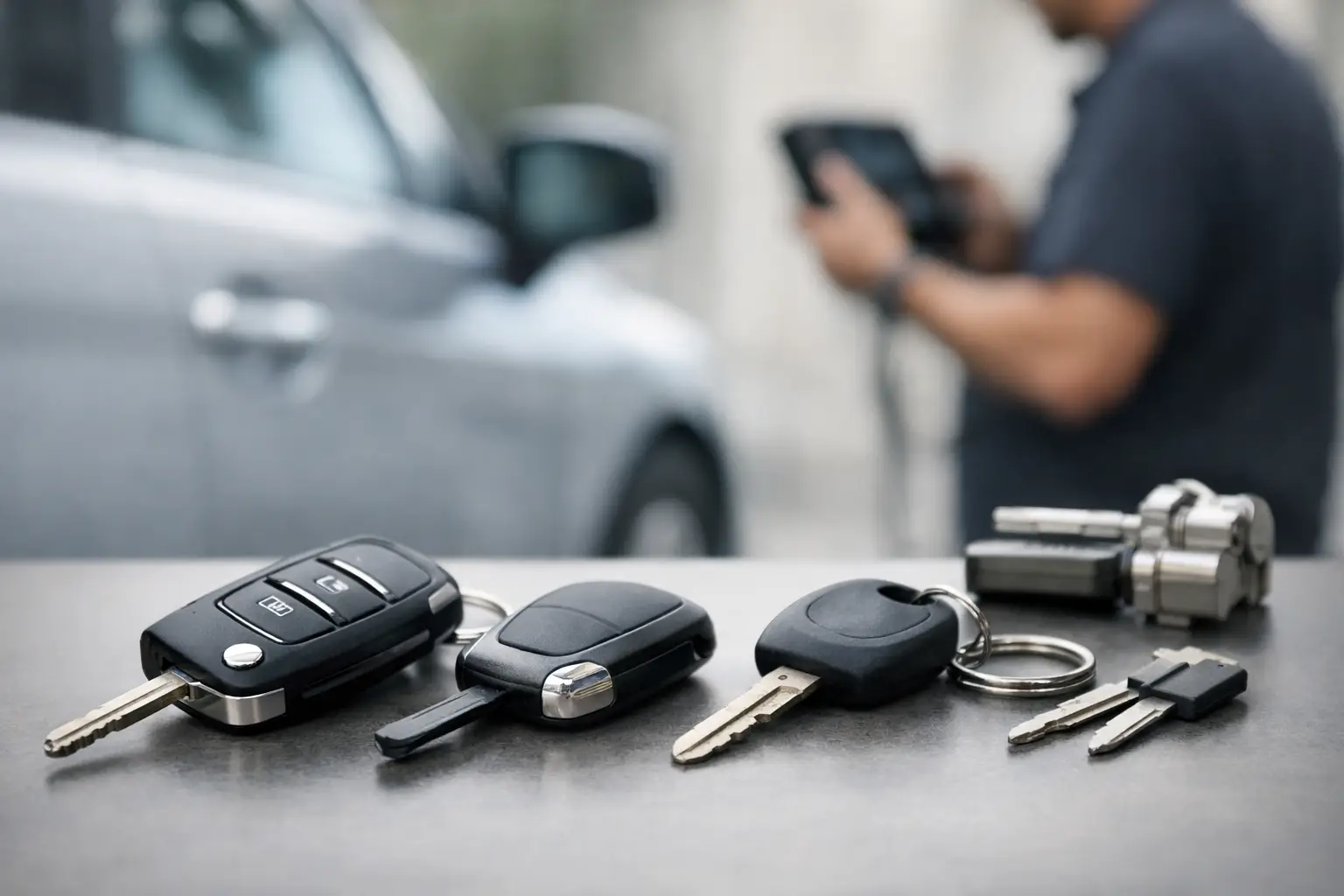
Car key replacement is not one service. It can be a simple cut key, a transponder key that needs programming, a remote fob, a flip key, or a push-to-start smart key. The fastest and most affordable option depends on what your vehicle uses now, whether you have a spare, and whether all keys are lost.
If your car is older and uses a basic metal key, replacement is usually straightforward. If your key has a chip inside, the new key has to be cut and programmed to the vehicle. If you drive a newer push-to-start vehicle, the process is more specialized and usually costs more because the key itself is more expensive and setup takes longer.
That is where many drivers get tripped up. They assume every replacement works the same way, then get quoted one price over the phone and a very different one on site. A fair locksmith should ask the make, model, year, and whether you still have a working key before giving you a realistic range.
Guide to car key replacement options by key type
Basic mechanical keys
These are the simplest car keys - no chip, no buttons, no programming. If your vehicle uses one, replacement is usually the cheapest option. A locksmith can cut a new key on site in many cases, which saves you the hassle of towing the car anywhere.
The trade-off is security and convenience. Older mechanical keys are easier to duplicate, but from a replacement standpoint, they are the least complicated.
Transponder keys
A transponder key looks like a regular key, but it has a chip inside that communicates with the car's immobilizer. Even if the key blade turns, the vehicle may not start unless that chip is programmed correctly.
For these, replacement is a two-part job: cutting the key and programming it. If you still have one working key, the process can be easier on some models. If all keys are gone, it may take more time and equipment to generate and program a new one from scratch.
Remote head keys and flip keys
These keys combine the metal key and remote buttons in one unit. They often control lock, unlock, trunk, and panic functions, and they may also contain a transponder chip.
Replacement costs more than a plain transponder key because the hardware is more complex. Sometimes you only need the remote fixed. Other times the shell is broken, the blade is worn, or the internal electronics have failed. A good locksmith should tell you whether you need a full replacement or just a repair or reprogramming.
Smart keys and proximity fobs
Push-to-start vehicles use smart keys or proximity fobs. These let you start the car with the fob nearby rather than inserting a key into the ignition.
This is usually the most expensive category. The fob itself costs more, and programming is more involved. Some makes and models are quick to handle on site. Others require advanced tools, security access, or extra steps. If someone quotes a rock-bottom price for a smart key without asking any details, that is a red flag.
Locksmith, dealer, or online key - what makes sense?
Most drivers have three possible paths: a local locksmith, the dealership, or buying a key online and trying to finish the job later. Each has a place. Each also has downsides.
Local locksmith service
For speed and convenience, a locksmith is often the best first call. Mobile service means the technician comes to your location, whether you're at home, work, or stranded in a parking lot. That matters if the car cannot be driven or if all keys are lost.
The main advantage is time. You may avoid towing, long dealership scheduling windows, and back-and-forth trips. The cost can also be better than dealer pricing, especially when travel, towing, and downtime are part of the real bill.
The catch is that not every locksmith handles every vehicle. Some brands, newer models, and high-security systems need specialized equipment. That is why clear questions up front matter.
Dealership replacement
A dealership may be the right choice for certain luxury brands, very new vehicles, or cases where the key must be ordered directly from the manufacturer. If your vehicle has a heavily restricted system, the dealer may be your only option.
But dealerships are not usually the fastest option when you are locked out or have lost all keys. You may need proof of ownership, an appointment, and sometimes a tow to the service department. For urgent situations, that can be a bad fit.
Buying a key online
This is where people try to save money and often end up paying twice. Yes, online key blanks and fobs can be cheaper. But if you buy the wrong frequency, the wrong chip type, or a low-quality aftermarket unit, it may not program correctly or may fail early.
Sometimes an online key works fine if it matches your vehicle exactly and a qualified locksmith is willing to cut and program customer-supplied parts. Sometimes it turns into a delay that costs more than getting the right key from the start. It depends on the vehicle and the quality of the part.
What changes the price
A fair price is not one flat number for every car. The real cost depends on the key type, vehicle year and brand, whether you have a working key, and whether programming is required. Emergency timing can also affect the bill, especially after hours.
The biggest price jumps usually happen when all keys are lost or when the vehicle uses a smart key system. In those cases, the technician may need to decode locks, access vehicle data, or erase missing keys from memory for security.
That last part matters. If a lost smart key is still active, whoever finds it could potentially access the vehicle. In some situations, part of the job is not just making a new key but disabling the old one.
How to avoid getting overcharged
This is the part many people wish they knew sooner. Car key emergencies attract bait pricing. You see a very low quote, then the price climbs once the technician arrives and starts using terms you were never told about.
Protect yourself by asking a few direct questions before anyone is dispatched. Ask whether the quote includes cutting, programming, service call, and any after-hours fee. Ask whether the price changes if all keys are lost. Ask whether the technician can handle your exact make, model, and year.
If the answers are vague, move on. Fair service should be clear service.
When repair makes more sense than replacement
Not every bad key needs a full replacement. Sometimes the battery is dead, the shell is cracked, the buttons are worn, or the blade is loose. A remote that stopped working may need reprogramming rather than a brand-new unit.
This is one place where honest service saves people real money. Replacing a battery or shell is not the same as replacing a fully programmed smart key. If a technician pushes the highest-cost option without checking the condition of the key first, be cautious.
What to have ready before you call
To speed things up, have your vehicle year, make, model, and current location ready. If you know whether the car uses a chip key, remote, or push-to-start fob, mention that too. Tell them if you have a working spare, if all keys are missing, or if one is locked inside.
You will also need proof that the vehicle is yours or that you are authorized to access it. That protects everyone and helps keep the job legitimate.
In the San Diego area, mobile locksmith service can make the biggest difference when traffic, distance, and towing delays turn a small problem into a half-day mess. Fast response matters, but fair pricing matters just as much. Fast & Fair Locksmith is built around both.
A smarter way to think about spare keys
The cheapest car key replacement is usually the one you do before it becomes an emergency. If you still have one working key, making a spare is often easier and less expensive than replacing everything after the last key disappears.
That is especially true for chip keys and smart keys. Waiting until you are down to zero limits your options and raises the stakes. A spare key is not exciting, but it is one of the simplest ways to avoid a stressful and expensive day.
If you are staring at a lost key situation right now, focus on the right fix, not just the lowest number. The best replacement option is the one that gets you moving again quickly, works properly, and comes with a price that makes sense when the job is done.