
You put the key in, it turns halfway, and then nothing. Or the key will not turn at all, the thumbturn feels stuck, or the latch will not pull back even though the door should be open. If your front door lock jammed, the first goal is simple - do not make it worse while you try to get back in and secure the house.
A jammed front door lock is not always a full lock failure. Sometimes the lock is fine and the door is the real problem. Sometimes the key is worn down, the cylinder is dry, or the latch is under pressure because the door shifted. The trick is knowing what is safe to try in the next few minutes and what usually leads to a broken key, a damaged lock, or a bigger bill.
Front door lock jammed? Start here
Before you force anything, check what the lock is actually doing. Is the key going in fully? Does it go in but not turn? Does it turn but not retract the latch? Is the deadbolt stuck in the frame? Those details matter because they point to different causes.
If the key will not go in all the way, debris inside the keyway or a bent key may be the issue. If the key goes in but binds when turning, the cylinder may be dry, worn, or misaligned. If the lock turns but the door will not open, the latch or deadbolt may be pressed tightly against the strike plate because the door is sagging or swollen.
Start with the least aggressive move. Push or pull the door gently while turning the key. A lot of front door lock problems happen because the bolt is loaded against the frame. If someone pulled the door hard when locking it, if the weather changed, or if the house shifted slightly, the lock can feel jammed when it is really just under pressure.
If that does not work, stop and look at the key. A worn key may still fit, but it may not lift the pins correctly anymore. If you have a cleaner spare key, try that once. Do not keep testing multiple damaged copies. That is how keys snap.
What usually causes a jammed front door lock
The most common cause is alignment. Doors move over time. Hinges loosen. Wood doors swell in humidity and shrink in dry weather. Metal doors can shift slightly with temperature changes. When that happens, the latch or deadbolt no longer meets the strike cleanly, and the lock starts feeling stiff long before it completely jams.
Lack of lubrication is another common one, but people often use the wrong product. A lock cylinder packed with the wrong spray can attract grime and gum up the pins. Dirt, pocket lint from keys, and old residue can all build up inside the cylinder and make turning difficult.
Then there is simple wear. Front door locks work hard. They get used every day, often multiple times a day, and they live outside where dust, moisture, and temperature swings take a toll. Pins wear down, springs weaken, and internal parts get sloppy or bind.
Key issues also get overlooked. If your key is bent, cracked, or heavily worn, it can jam in the lock or stop turning smoothly. A copy made from an already worn key is even worse. It may work sometimes, then fail when you need it most.
And sometimes the problem is the lock itself. Cheap hardware, poor installation, or an older lock that has already been sticking for months can finally give out.
What you can safely try
There are a few things worth trying before you call for help, but the word is safely. If a quick fix is not working, forcing it usually turns a repair into a replacement.
First, reduce pressure on the door. Pull the door toward you, then push it inward slightly, and test the key gently in each position. If the deadbolt is scraping the strike plate, one of those positions may let it turn.
Second, use a proper lock lubricant if you have one made for locks. Use a small amount. Then insert and remove the key a few times before trying to turn it gently. If all you have is a random household oil, skip it. Wrong products can leave residue and create a worse jam later.
Third, inspect the key and keyway with good light. If the key is visibly bent, stop using it. If you can see obvious debris near the opening, do not jam tools inside to dig it out. That can damage the pins or push the blockage deeper.
If the interior side of the lock has a thumbturn, test whether the problem exists on both sides. If both sides are sticking, the issue may be inside the lock body or caused by door alignment. If only one side is affected, the cylinder on that side may be failing.
For keypad or smart locks, check the basics before assuming a mechanical jam. Dead batteries, a partially engaged motor, or a clutch issue can make the lock feel stuck. Even then, if the key override is not turning smoothly, do not force it.
What not to do when a front door lock is jammed
Do not keep twisting harder. If the key is resisting, more force can snap it off in the cylinder. That takes a frustrating situation and makes entry more complicated.
Do not spray whatever is under the sink into the lock. Greasy products can collect dust and leave the pins sticky. The lock may loosen for a minute and then get worse.
Do not hammer the key, jam screwdrivers into the keyway, or try to drill the lock unless you are fully prepared to replace hardware and possibly repair the door. People do this trying to save money, and it often ends with a ruined lock, scratched trim, and an emergency call anyway.
And do not ignore a lock that has been sticking on and off for weeks. A jam rarely comes out of nowhere. Most locks give warning signs first.
When to stop and call a locksmith
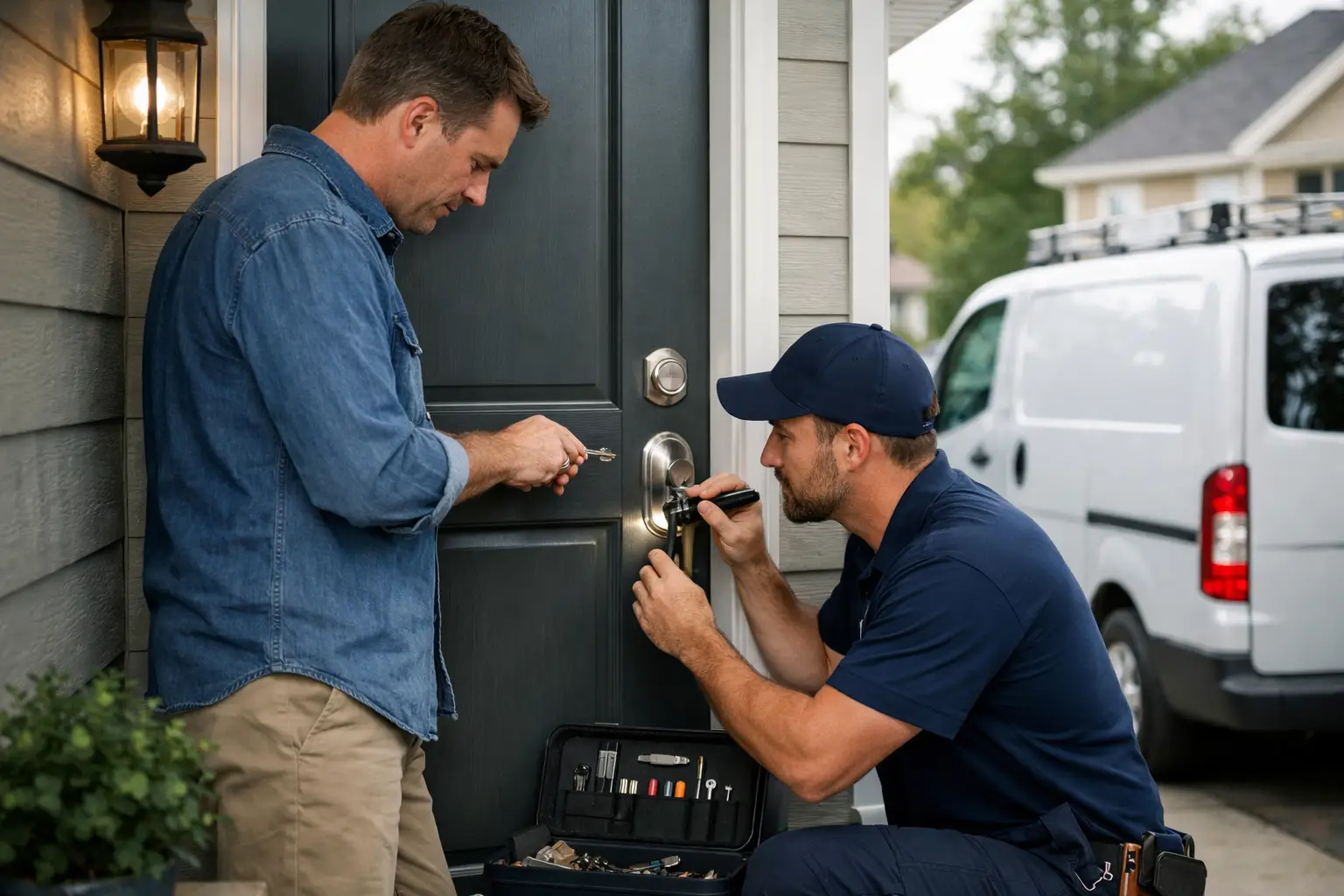
If the key will not turn after a few careful attempts, stop. If the key feels like it might break, stop. If the deadbolt is halfway extended and the door is stuck unsecured, that is also the point to get a professional involved.
A locksmith can tell the difference between an alignment issue, a cylinder problem, and a failing lock body without guessing. In many cases, the fix is faster and less invasive than people expect. It might be a repair, a rekey, a cylinder replacement, or an adjustment to how the lock meets the frame.
This is also where fair pricing matters. Jammed lock calls are urgent, and that urgency is exactly where some companies play games with vague quotes and add-on charges. Ask what the service call covers, whether the quote is for repair or just arrival, and what could change the price once the technician sees the lock. Clear answers up front are a good sign.
Repair or replace?
It depends on why the lock jammed.
If the issue is alignment, worn hinges, or a strike plate problem, the lock may be perfectly salvageable. If the cylinder is dirty or lightly worn, a repair or rekey may solve it. If the key broke inside, extraction and testing may be all that is needed.
If the lock has severe internal wear, visible damage, a history of sticking, or cheap hardware that keeps failing, replacement makes more sense. That is especially true for front doors, where reliability and security matter every day, not just during emergencies.
For rental properties and older homes, replacement can also be the smarter long-term choice if the existing hardware is inconsistent across units or difficult to service. A clean, reliable setup usually saves time and repeat calls.
How to prevent the next jam
The best prevention is paying attention before the lock fully fails. If the key starts sticking, if you have to jiggle the door to lock it, or if the deadbolt scrapes the frame, deal with it early.
Use clean, unworn keys. Lubricate locks with the right product when needed, not constantly and not with whatever spray is nearby. Tighten loose hinges. Watch for doors that drag, shift, or swell with weather changes. And if your front door lock has already had one serious jam, do not assume it is fine just because it worked again once.
A front door lock should work without a fight. If it only opens with a certain wiggle, a shoulder push, or a lucky angle on the key, it is already telling you something.
When your front door lock jammed, the safest move is not always the fastest DIY trick. Sometimes the quickest way back to normal is knowing when to stop, protect the hardware, and get the problem fixed right the first time.