
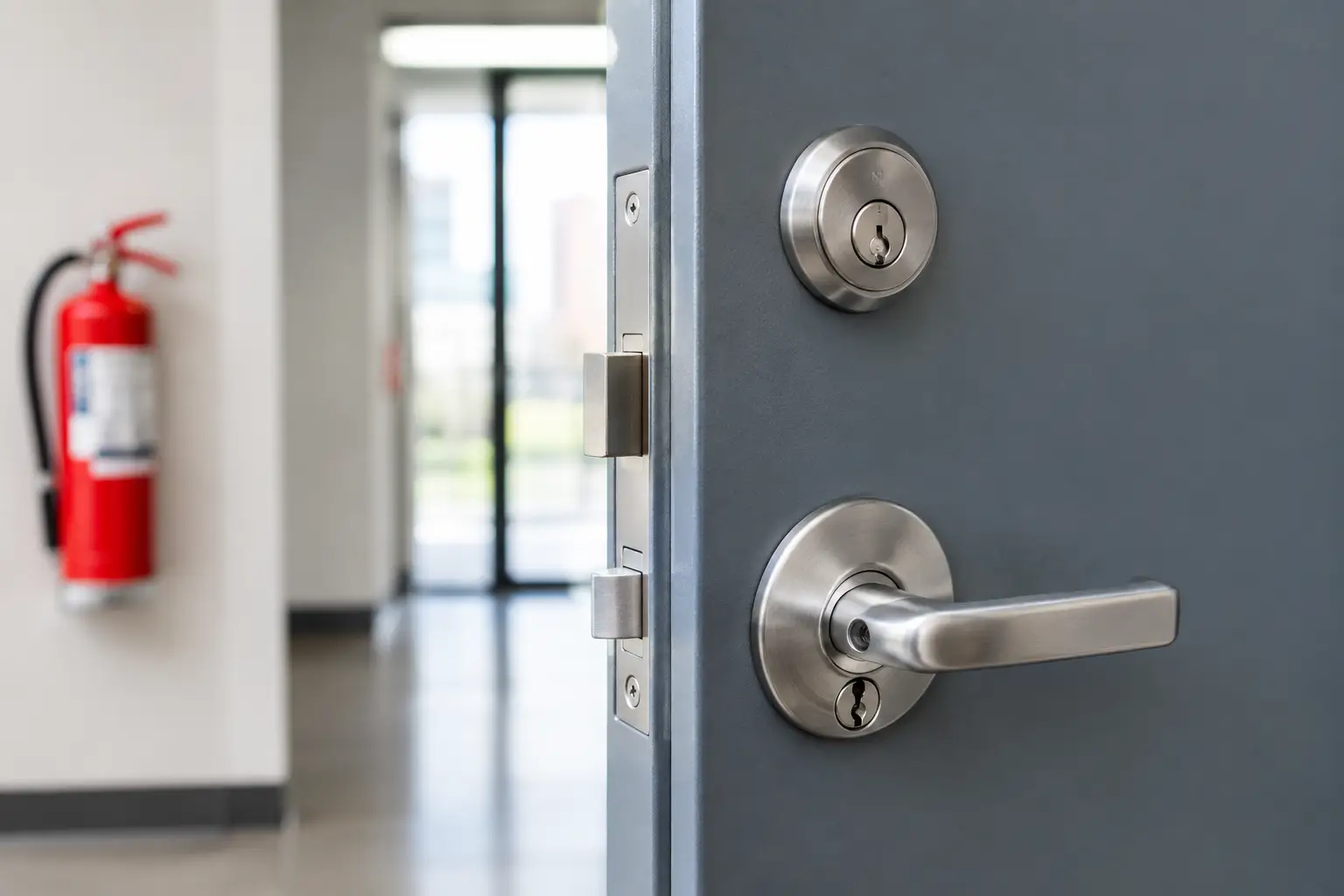
A fire door that will not latch is not just an annoying door problem. It can allow smoke and fire to move through a hallway, stairwell, office, or apartment building faster than intended. Fire door locks must do two jobs at once: help protect the building and still let people get out quickly when they need to.
That balance is where many property owners get into trouble. A lock that seems like a sensible security upgrade can interfere with the door’s rating, its self-closing action, or safe emergency exit. Before changing hardware on a labeled fire door, know what the door is designed to do and what the lock is required to do with it.
What Fire Door Locks Are Supposed to Do
A fire door assembly is more than the slab in the opening. The door, frame, hinges, closer, latch, strike, seals, and locking hardware work as a system. When the door closes and latches correctly, it helps slow the spread of fire and smoke for its rated period.
For many swinging fire doors, positive latching is essential. That means the latch engages the strike when the door closes. A door that merely rests against the frame can be pushed open by pressure from a fire, even if it looks closed from the hallway.
The lock should not prevent the latch from doing its job. Nor should it require a key, special knowledge, or more complicated movement than allowed to exit from the egress side. Exact requirements depend on the occupancy, local code, door location, and the authority having jurisdiction, but the basic safety principle is simple: people inside must be able to leave without getting trapped by security hardware.
A Locked Fire Door Is Not Always a Problem
People often assume a fire door must stay unlocked. That is not always true. A stairwell door, apartment corridor door, rear commercial exit, or secured office door may need controlled access from one side. The issue is not whether the door locks. The issue is whether the hardware is listed for the application, allows required egress, and lets the door close and latch properly.
A classroom-style lock, storeroom function lock, panic hardware, mortise lock, or electrified lock may be appropriate in the right opening. Each has a different purpose. A storeroom lock, for example, can keep the exterior lever locked while allowing free exit from inside. Panic hardware is generally used where code requires a broad push bar for quick exit.
Deadbolts deserve extra caution. Adding one to a fire-rated door can create problems if it is not listed for that specific use, if it requires separate actions to exit, or if it prevents the door from latching as intended. Do not treat a fire door like a standard residential entry door and add hardware based on appearance alone.
Check the Label Before Changing Any Lock
Look along the hinge edge of the door or frame for a permanent label. It may identify the fire rating, manufacturer, and testing information. That label matters because drilling new holes, enlarging existing cutouts, replacing the closer, or installing unapproved hardware can compromise the assembly.
A lock may be marketed as heavy-duty or commercial-grade and still be the wrong choice for a rated opening. The hardware needs to be compatible with the door’s rating and prep. A locksmith should inspect the existing bore holes, backset, strike, latch, hinge condition, and closer before recommending replacement hardware.
If the label is painted over, missing, or unreadable, do not guess. The right next step may involve the building manager, a fire-door inspector, manufacturer documentation, or the local fire authority. A cheap lock change can become expensive if the door must later be repaired or replaced to pass inspection.
The Most Common Problems We See
Most fire-door lock issues start with wear, rushed repairs, or a security change that was not planned around the whole opening. A door can be technically equipped with the right lock and still fail because the latch does not line up with the strike.
Watch for these warning signs:
- The door does not close fully on its own from an open position.
- The latch hits the strike plate instead of entering it.
- The door only latches when someone pulls, pushes, or lifts it.
- A key, thumbturn, or separate deadbolt is needed to exit.
- The closer leaks, slams the door, or leaves it partly open.
- A wedge, hook, magnet, or other object is holding the door open.
A propped-open fire door cannot contain smoke or fire. It also creates a false sense of security: the lock may be in perfect condition, but it is irrelevant if the door never closes.
Misalignment is especially common in busy commercial buildings. Door sag, loose hinges, damaged frames, changing weather, and repeated use can move the latch out of position. Filing a strike plate or forcing the latch may offer a short-term fix, but it can also damage the door, frame, or rated components. The cause needs to be identified before the hardware is altered.
Access Control Needs More Than a Good Lock
Electronic access control can make a building easier to manage, especially for offices, apartments, and shared facilities. But electrified fire door locks require careful planning. The system may need to release on a fire alarm, respond correctly during a power failure, and maintain code-compliant free egress at all times.
This is not a place for improvised wiring or a random online lock kit. The locking device, power supply, access reader, request-to-exit hardware, door position switch, and fire alarm interface may all affect compliance. Requirements vary widely depending on whether the door is an exit, stairwell opening, controlled interior door, or perimeter door.
For a small business, the practical question is often whether a mechanical lock can meet the real need before adding electronics. A properly selected commercial lever or panic device can be reliable, straightforward, and less costly to maintain. Electronic access makes sense when you need audit trails, scheduled access, credential changes, or control across multiple users and doors.
What Property Managers Should Do After a Tenant Change
When keys leave with a former tenant, employee, vendor, or contractor, rekeying is often the fastest way to restore control. On a fire-rated opening, however, rekeying should preserve the existing listed lock hardware rather than trigger an unnecessary replacement.
A qualified locksmith can determine whether the cylinder can be rekeyed, whether the lock is worn out, and whether the door has a separate egress concern that needs attention. Keep a record of who has keys, especially for utility rooms, rear exits, common areas, and equipment spaces. Security improves when key control is clear, not when more keys are copied.
For multi-unit properties in Orange County, it also helps to schedule lock and door adjustments before they become an after-hours emergency. A tenant report that a door sticks or does not latch should be handled promptly. Waiting until the lock fails completely can leave a unit unsecured or make a required exit unreliable.
When to Call a Locksmith Right Away
Call for help if a fire door will not latch, cannot be opened from the egress side, has damaged lock hardware, or was forced during a break-in. The same applies if someone installed a new deadbolt, keypad, or access device without confirming it is appropriate for the opening.
Be ready to describe the door location, whether it leads to a stairwell or exit, whether it is labeled, and what the lock is doing. Photos can help a technician assess the situation, but a proper on-site inspection is still needed before parts are chosen. The right repair may be an adjustment, a closer repair, a strike correction, a cylinder rekey, or replacement with compatible hardware.
Fast & Fair Locksmith approaches these calls the practical way: identify the actual problem first, explain the work, and avoid selling hardware that does not belong on the door. Fast service should not mean cutting corners on life-safety hardware.
A fire door should close, latch, and allow the right people to leave without hesitation. Test that action regularly, keep the opening clear, and address small problems before the door becomes the weakest point in the building.