
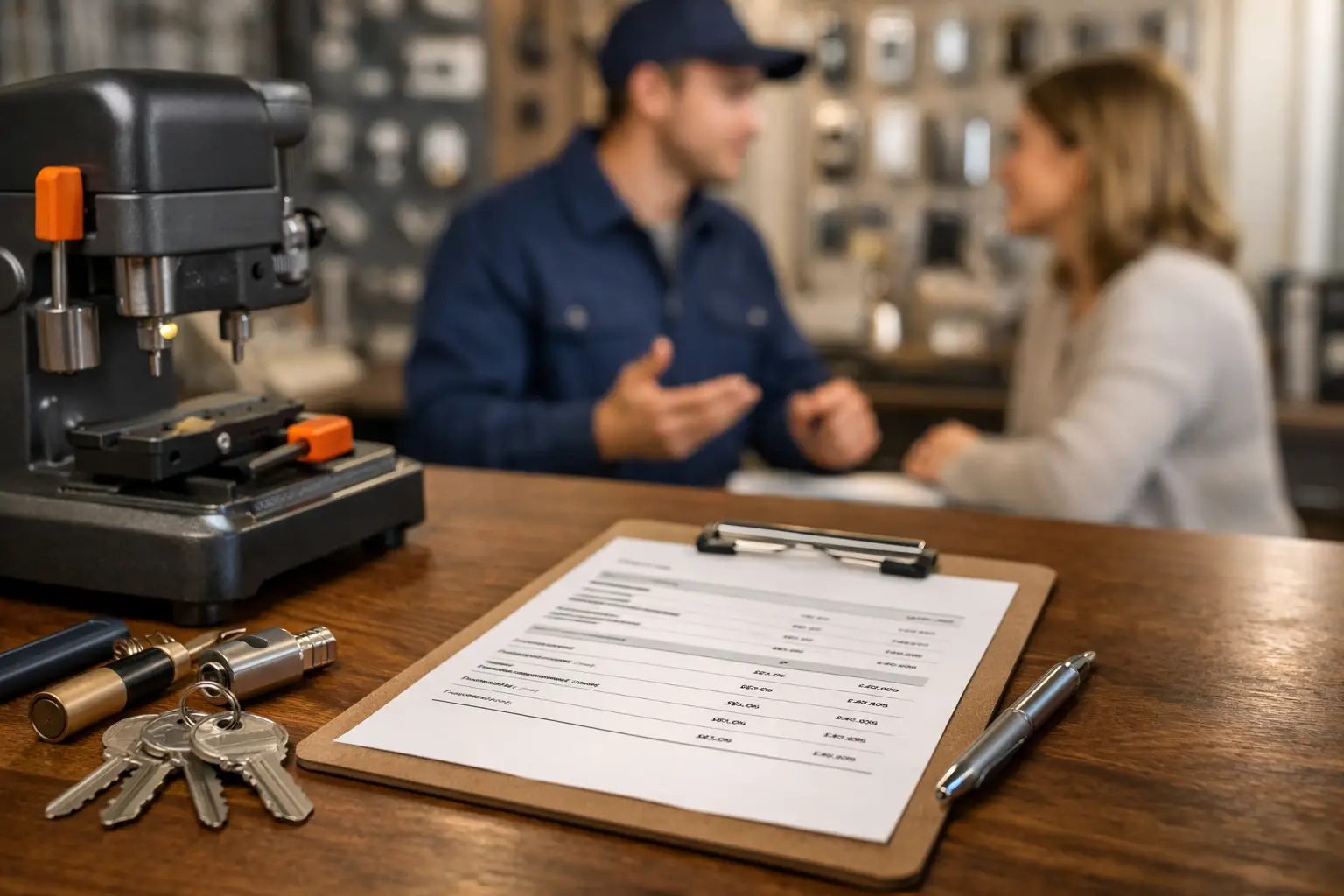
Getting locked out is stressful. Getting the bill and realizing it makes no sense is worse. If you are searching for an example of transparent locksmith invoice, you are probably trying to avoid the classic problem: a low quote on the phone, then a padded bill once the job is done.
A fair locksmith invoice should be plain, specific, and easy to check in under a minute. You should be able to see what service was performed, what parts were used, what labor cost, and whether there were any added fees. No vague charges. No mystery line items. No pressure to pay before you understand the total.
What a transparent locksmith invoice should show
A real invoice is not just a total on a phone screen. It should identify the company, the technician or dispatcher, the date and time of service, and the service address or vehicle location. That basic information matters because it ties the bill to an actual job.
It should also break down the work itself. If you were locked out of a house, the invoice should say lockout service. If a deadbolt was replaced, it should list the hardware separately from labor. If a car key was cut and programmed, those should appear as separate charges unless the company clearly prices them as one package.
Taxes, if applicable, should be visible. Payment method should be recorded. Warranty terms, if any, should be short and clear. If there was a service call or after-hours fee, that fee should be shown before the final total, not buried inside a vague labor charge.
Example of transparent locksmith invoice
Here is what a clean, customer-friendly invoice can look like for a standard residential lockout:
Company: Fast & Fair Locksmith Phone: (xxx) xxx-xxxx Website: https://Fastandfairlocksmith.com Invoice #: 10482 Date: 06/14/2026 Arrival Time: 8:42 PM Service Address: 1234 Example St, San Diego, CA Technician: J. Ramirez
Service Performed: Residential front door lockout - non-destructive entry Customer Authorization: Approved on arrival before work began
Charges: Service call / dispatch: $39.00 After-hours fee: $45.00 Labor - residential lockout: $85.00 Parts used: $0.00 Tax: $0.00
Total: $169.00
Payment Method: Visa ending in 2241 Amount Paid: $169.00 Balance Due: $0.00
Notes: Door opened without drilling. Existing lock remains functional. Price confirmed with customer before service started.
That invoice works because it answers the big questions fast. What was done? When? By whom? For how much? Was drilling involved? Were parts added? Was the customer told the price before the job started? Those details protect both sides.
Why this example of transparent locksmith invoice matters
In locksmith work, the final price can depend on the lock type, time of day, location, and whether the job needs parts or just labor. That is normal. What is not normal is hiding those variables until the work is finished.
A transparent invoice shows how the final number was built. It gives you something you can compare against the quote you received by phone or on site. If the dispatcher said the service call was $39 and the technician later hands you a bill with a $149 "access fee," that is a problem. If the invoice clearly shows a weekend surcharge that was disclosed before work began, that is different. The issue is not that every job costs the same. The issue is whether the pricing was honest.
That is especially important in emergency calls, when people are tired, late, or standing outside in the dark. Bad actors know urgency makes customers less likely to question the paperwork. A clean invoice slows that down. It forces clarity.
What fair line items usually look like
Most legitimate locksmith invoices include a service call or dispatch fee, labor, parts if needed, and sometimes an after-hours charge. Those categories are normal. The problem starts when categories become vague enough to hide markups.
For example, "labor" is fine if it matches the work performed. "Specialized procedure fee" without explanation is not. "Lock hardware" is fine if it identifies the item installed. "Security package" with no model or brand is not.
There is also a difference between a reasonable minimum charge and a bait price. A company may advertise a low service call fee, but that should not be presented as the full job price unless it actually covers the work. If a lockout almost always costs more than the dispatch fee, that should be made clear before the technician is sent.
Red flags on a locksmith invoice
A bad invoice usually looks rushed, vague, or inflated. Sometimes it is just a texted total with no breakdown at all. Other times it includes a list of charges that sound official but tell you nothing.
Watch for line items like "emergency fee," "technician fee," and "labor fee" all stacked together without explanation. That can be legitimate in rare cases, but often it is just the same cost split into multiple charges to make the total look harder to challenge.
Another red flag is missing part details. If a lock was changed, the invoice should identify what was installed. At minimum, you should see the type of lock and quantity. Better yet, brand and model information. If you paid for premium hardware and the invoice says only "new lock - $240," you have no way to verify what you got.
The biggest red flag is a final amount that was never approved. If the technician starts work before giving a clear on-site price, the invoice has already failed the transparency test.
How to compare the quote to the final invoice
The easiest way to protect yourself is to ask two questions before work begins: What is the full expected price range, and what could make it go up? A trustworthy company can answer both in plain English.
Then compare that answer to the invoice. If the invoice includes parts, were parts actually used? If there is a drilling charge, was the lock drilled? If there is programming labor for a vehicle key, was programming performed? Every line should connect to something you saw happen.
It also helps to ask for approval before any change in scope. A lockout can turn into a lock replacement if the lock is damaged. That can be legitimate. But the technician should stop, explain the issue, give the new price, and get your OK before adding parts and labor.
A transparent invoice helps after the job too
Good paperwork is not just about the moment you pay. It matters later if you need reimbursement from roadside assistance, a landlord, a property manager, or an insurance carrier. It also matters if there is any warranty issue.
For property managers and small business owners, clear invoices make recordkeeping easier. If you manage multiple units or storefronts, you need to know which lock was rekeyed, which door got new hardware, and what each visit cost. Vague receipts create headaches later.
This is one reason many repeat customers stick with companies that keep pricing straightforward. Fast service gets attention. Fair documentation builds trust.
What to ask for before you pay
Before you hand over a card, read the invoice. It takes less than a minute. Make sure the company name is there, the work description matches the job, and the numbers add up.
If something is unclear, ask directly. What is this fee? What part was installed? Why is there an extra labor charge? A legitimate locksmith should be able to answer without getting defensive.
If the invoice is handwritten, that alone is not a problem. Plenty of field-service companies still use simple paperwork. The issue is whether the writing is specific enough to understand. Clear beats fancy every time.
The standard is simple
An example of transparent locksmith invoice paperwork should leave no room for guessing. You should know what happened, what you bought, and what you paid for. That is not asking for special treatment. That is the minimum.
When you need a locksmith fast, pricing should not turn into a second emergency. The right company solves the lock problem and keeps the bill just as clear as the service call.