
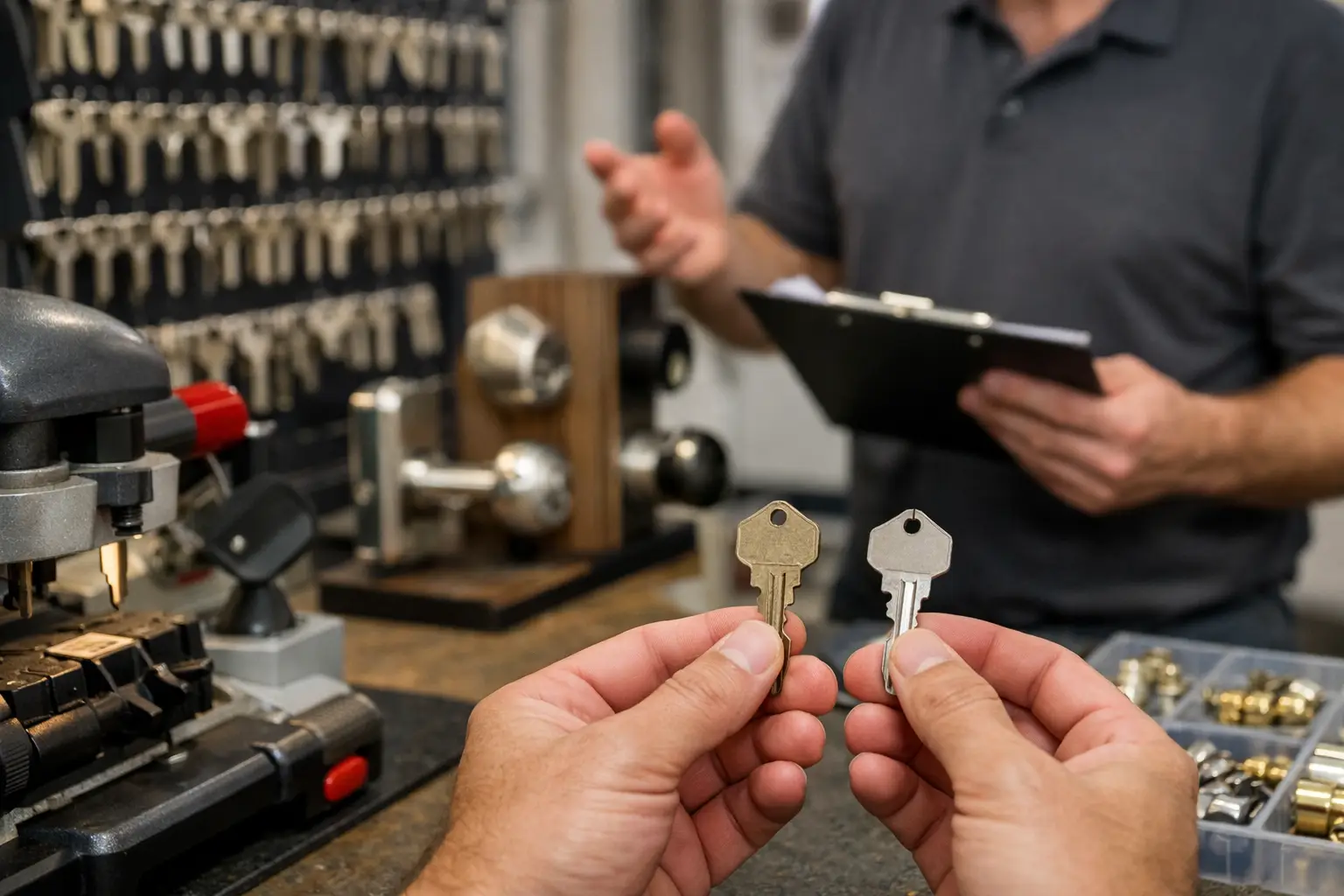
A spare key is supposed to make life easier. It should not leave you wondering who still has access to your home. Duplicate house keys are useful for families, roommates, trusted neighbors, cleaners, dog walkers, and property managers. But there is a clear line between convenient access and loose security.
The right move depends on one question: Do you know exactly who has every working key? If the answer is yes, making a copy is usually simple. If the answer is no, a duplicate key may solve the wrong problem.
When duplicate house keys make sense
Making a duplicate is practical when your current lock is in good condition and access has not changed. A homeowner may want one backup key in a secure place, one for a spouse, and one for a trusted person nearby in case of a lockout. Renters may need a copy for a roommate or an approved household member.
The key word is trusted. Every extra key creates another path into the home. That does not mean you should live with one key and constant lockout stress. It means you should make copies with a plan.
A good starting point is to know how many keys exist, who has them, and what happens if one goes missing. If you cannot answer those questions, consider rekeying before you order more copies.
Common reasons to make a spare
A duplicate key is often the right call when you have moved into a newly built home and control all issued keys, when a family member needs regular access, or when you want a backup before the original becomes worn or damaged. It can also save time when a trusted caregiver needs access while you are away.
For Orange County homeowners with busy schedules, a spare can prevent an inconvenient lockout from becoming an after-hours emergency. Keep it secure, not under a doormat, planter, fake rock, or loose patio item. Those are the first places an intruder will check.
A copied key is not always a good key
Not every duplicate works as well as the original. A poorly cut copy can stick, require force, or fail at the worst possible time. Repeatedly copying a copy can make the problem worse because small inaccuracies carry over.
If a key needs to be jiggled, pushed hard, or turned with extra force, stop treating it as a minor annoyance. The issue may be the key, the lock cylinder, or both. Forcing it can snap the key inside the lock or damage internal components.
A locksmith can cut a clean duplicate from the original key and test it properly. If the original is worn, a technician may be able to cut a more accurate replacement using the lock's key code or by servicing the cylinder. That is often better than making another copy of a key that is already failing.
Watch for restricted or marked keys
Some keys are stamped “Do Not Duplicate.” That marking alone does not always make copying illegal, but it often signals a controlled key system or a property-management rule. Apartment buildings, offices, gated communities, and commercial properties may require authorization before keys are made.
Do not work around those rules. If you are a renter, ask your landlord or property manager. If you manage a property, use a clear key-control process so you know which unit keys are out and who received them.
High-security and restricted keys may also require specialized equipment or authorization. They cost more than a standard house key, but the added control can be worthwhile for properties with frequent turnover or higher security needs.
When rekeying is smarter than duplicate house keys
Rekeying changes the internal pins in an existing lock so old keys no longer work. The lock hardware stays in place, but a new key operates it. For many homes, it is faster and less expensive than replacing every lock.
Rekeying is usually the better choice after a move, a breakup, a roommate move-out, a lost key, an employee or contractor access change, or any situation where you are not sure how many copies are circulating. It also makes sense if you bought a home from someone who handed over only one or two keys. You cannot know whether relatives, neighbors, contractors, or previous occupants kept duplicates.
This is where people often try to save money in the wrong place. Making more keys for an existing lock does not remove old access. If a former tenant, ex-partner, or unknown person may still have a key, copies only increase the number of active keys. Rekey first. Then make controlled duplicates for the people who need them.
Rekeying can simplify your key ring
If your front door, back door, garage entry, side gate, and storage room each use a different key, a locksmith may be able to key compatible locks alike. One properly controlled key can reduce confusion and make emergency access easier.
There are limits. Not every lock brand or cylinder can be matched, and worn or low-quality hardware may not be worth rekeying. A qualified technician should check compatibility before promising a one-key setup.
When lock replacement is the better answer
Rekeying does not fix a lock that is damaged, outdated, or poorly installed. Replace the hardware when the deadbolt is loose, the latch does not align with the strike plate, the key repeatedly sticks, or the lock shows signs of forced entry.
Replacement may also be the right choice if you want a higher-security deadbolt, better door reinforcement, or a smart lock system. A smart lock can be useful for temporary access codes, but it is not automatically the best fit for every home. It needs reliable power, proper setup, and a clear plan for backup entry if batteries fail or the app is unavailable.
For a rental or a property with frequent turnover, traditional rekeyable locks can be a straightforward, dependable option. The best security choice is the one that fits the door, the people using it, and the level of control you actually need.
Keep spare keys secure without making them useless
A spare key only helps if you can access it when needed. Hiding it outside in an obvious location trades a lockout risk for a break-in risk. Better choices include leaving a key with a trusted nearby person, keeping one in a secure lockbox installed in a discreet but accessible location, or carrying a spare in a carefully chosen personal bag.
Be cautious about labeling keys. A key tag with your full address turns a lost key into an easy invitation. If you need a label, use a private code that only you understand.
For landlords and small business owners, key control needs more than memory. Keep a simple record of who received keys, when they were issued, and when they were returned. This is especially useful after tenant changes, staff departures, vendor access, or maintenance work.
What fair locksmith service should look like
Key duplication, rekeying, and lock replacement should not come with vague answers or surprise charges. Before work begins, ask what service is recommended, why it is needed, what it includes, and what the total price will be. A legitimate locksmith should be willing to explain the difference between a simple duplicate, a rekey, and a replacement.
Be careful with unusually low quotes that change after someone arrives. The price should be clear before the work starts, not after the lock is taken apart. FAST & FAIR LOCKSMITH is built around the opposite approach: fast response, straightforward options, and fair pricing without pressure.
Make the access decision before an emergency does
The best time to sort out your keys is before you are standing outside in the dark, late for work, or dealing with a tenant who cannot get in. Count your keys, decide who truly needs one, and rekey if old access is uncertain. A well-cut spare key is convenient. A controlled key plan is peace of mind.