
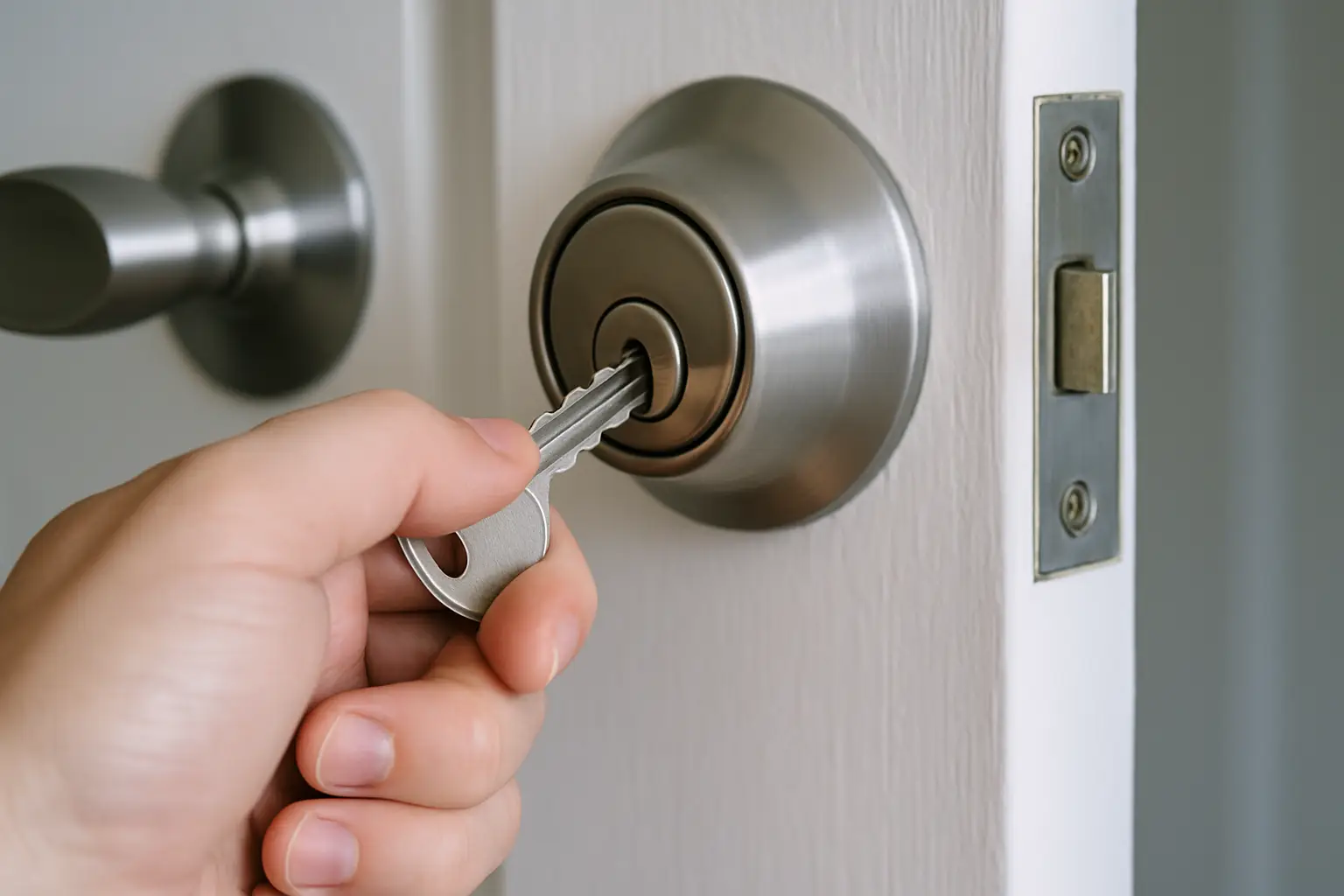
You’re standing at the door with groceries, a kid, or a meeting starting in five minutes - and your key won’t turn. Not “it’s a little stiff” won’t turn. Full stop. When a door lock not turning key happens, the right next move matters. The wrong move can snap the key, damage the lock, or turn a quick fix into a full replacement.
Here’s the straight, no-nonsense way to troubleshoot it safely, figure out what’s actually wrong, and decide when it’s time to call a pro.
Door lock not turning key: first, don’t force it
If you take one thing from this page, take this: forcing a key is how people break keys off in locks.
A lock that won’t turn is usually telling you something - misalignment, dirt, a worn key, a failing cylinder, or a binding deadbolt. Muscle doesn’t fix those. It just adds a second problem.
Instead, pause and check two basics: is this the correct key, and is the door fully closed? It sounds obvious, but in real calls we see wrong keys and half-latched doors constantly, especially on similar-looking rentals, offices, and multi-unit properties.
Quick checks you can do in 60 seconds
Try the key in the other direction, gently
Some locks bind in one direction when internal parts are worn. Put light turning pressure on the key, then ease it back to center and try again. You’re feeling for movement, not trying to “power through.”
Check if the door is pushing or pulling against the bolt
If the door is sagging or the frame is tight, the deadbolt can press hard against the strike plate. That pressure can make the key feel stuck even if the cylinder is fine.
Put your free hand on the door and pull it toward you (or push it in) while you turn the key. If it suddenly turns, you just confirmed an alignment issue, not a key issue.
If it’s a knob lock, try lifting or pulling the handle
Spring latch mechanisms can bind too. Lift the handle slightly while turning the key. If it turns, the latch or handle set may be worn, loose, or misaligned.
The most common causes (and what they feel like)
The key is worn, copied from a worn copy, or slightly bent
A tired key can still slide in, but it won’t properly lift pins or engage the plug. It often “sort of” turns, then stops like it hit a wall.
If you have a spare key that’s less used, try it. If the spare works smoothly, stop using the worn key. Get a fresh cut from the original key code if possible. Copying a copy can make the problem worse.
A bent key is also a big deal. Even a subtle bend changes how the cuts line up inside the cylinder. If the key looks bowed on a flat surface, don’t keep testing it. That’s how it snaps.
The lock is dry, dirty, or gritty inside
Dust, pocket lint, metal shavings from old keys, and outdoor grime build up. In coastal areas like San Diego, salt air can speed up corrosion too.
If the key goes in but feels scratchy, or it turns a tiny bit then binds, internal friction is likely. A light, lock-safe lubricant can help (more on that below). If lubrication helps only for a day and then it’s back, the cylinder may be wearing out.
The deadbolt is misaligned with the strike plate
This is the classic “works fine when the door is open” situation.
Test it: with the door open, try turning the key to throw the deadbolt. If it turns smoothly with the door open but binds when closed, the door and frame aren’t lining up. Common reasons include loose hinges, a settling building, a warped door, or a strike plate that’s shifted.
Sometimes you can get by temporarily by pulling the door toward the frame while turning. The real fix is adjusting the alignment so the bolt slides freely into the strike.
The cylinder or internal parts are failing
If the key used to work, then started sticking more often, then finally stopped - that’s a wear pattern. Pin tumbler components wear down, springs weaken, and plugs can develop play.
You might feel the key rotate a few degrees then “jam” in the same spot every time. Or the key turns but the bolt doesn’t move (a tailpiece or cam issue). At that point, continuing to test can make it fail in the locked position.
Cold, heat, or moisture changed the door fit
Temperature swings make doors and frames expand and contract. A lock that’s fine at noon can bind at night. If the issue comes and goes depending on weather, you’re likely dealing with alignment, not a bad key.
Someone tried the wrong key or forced it earlier
If a roommate, tenant, employee, or previous visitor forced the wrong key, pins can get damaged or jammed. If the key now inserts unusually tightly, or it won’t insert all the way, the cylinder could be compromised.
What to try at home (safe steps)
1) Relieve pressure on the bolt
Before sprays or tools, reduce mechanical pressure.
Close the door gently, then pull it toward you while turning the key. If that doesn’t work, push it in while turning. Try lifting the handle slightly at the same time.
If it turns under pressure, you can usually get in, but you should still address the alignment. Otherwise it will keep happening - usually at the worst time.
2) Use the right lubricant, not the “garage grab”
If the lock is gritty or dry, a small amount of a dry graphite or lock-specific PTFE lubricant can help. Use a short burst, insert the key, and slide it in and out a few times. Then try turning gently.
Avoid heavy oils and general-purpose sprays that leave residue. They can feel like a quick win, but they attract dust and gum up cylinders over time. If you’ve already used an oily spray and the lock now feels sticky, that’s a sign it needs cleaning or professional servicing.
3) Try a different key - but don’t keep cycling a stuck lock
If you have a spare, test it once or twice. If it doesn’t work, stop. Repeated twisting attempts can trap the key or break it.
4) If the key turns slightly, don’t “rock it” aggressively
Gentle movement is fine. Aggressive rocking is how pins and wafers get chewed up. If you feel solid resistance, you’re past the DIY line.
What not to do (because it makes it worse)
A jammed lock creates panic, and panic creates bad ideas. Skip these:
- Don’t force the key with pliers or a wrench. That’s a broken-key call waiting to happen.
- Don’t hammer the key in. You can damage the pins or jam debris deeper.
- Don’t keep spraying random lubricants until it “turns.” You’re building sludge inside the cylinder.
- Don’t take the lock apart while the door is locked unless you know the exact hardware. Some sets come apart in a way that traps the latch or drops parts inside the door.
How to tell if it’s the lock or the door
A simple test separates most cases:
If the key won’t turn even with the door open, suspect the key or the cylinder.
If the key turns with the door open but not when the door is closed, suspect alignment - the bolt is binding against the strike plate or frame.
That distinction matters because alignment issues are often fixable without replacing the lock. Cylinder failures often mean repair, rekey, or replacement.
When it’s time to call a locksmith
Call sooner if any of these are true:
You’re locked out, the key is starting to twist, or it feels like it could snap. Also call if the key turns but nothing happens, if the key won’t come out, or if the lock is on a business door where you can’t afford downtime.
A good locksmith will diagnose fast: key condition, cylinder condition, door alignment, and the exact failure point. From there the fix might be as simple as cleaning and lubricating the cylinder, rekeying to a fresh set of pins and keys, adjusting the strike plate, or swapping the cylinder so you keep the same hardware.
If you’re in the San Diego area and you want rapid response with no games on pricing, FAST & FAIR LOCKSMITH is built for exactly this kind of call: on-site help, straight answers, and fair treatment. You can reach them at https://Fastandfairlocksmith.com.
If you get it working, don’t ignore the warning sign
A lock that just “came back to life” is often on the edge. If you had to jiggle the door, use lubricant, or switch keys to get inside, you’ve learned something useful: it’s not reliable right now.
Plan the fix on your terms instead of waiting for it to fail at 11:30 pm. That might mean tightening hinges, adjusting the strike, cutting a fresh key, or replacing a tired cylinder before it turns into a lockout.
The best outcome is boring: your key turns smoothly every time, your door closes cleanly, and you never have to think about it again.