
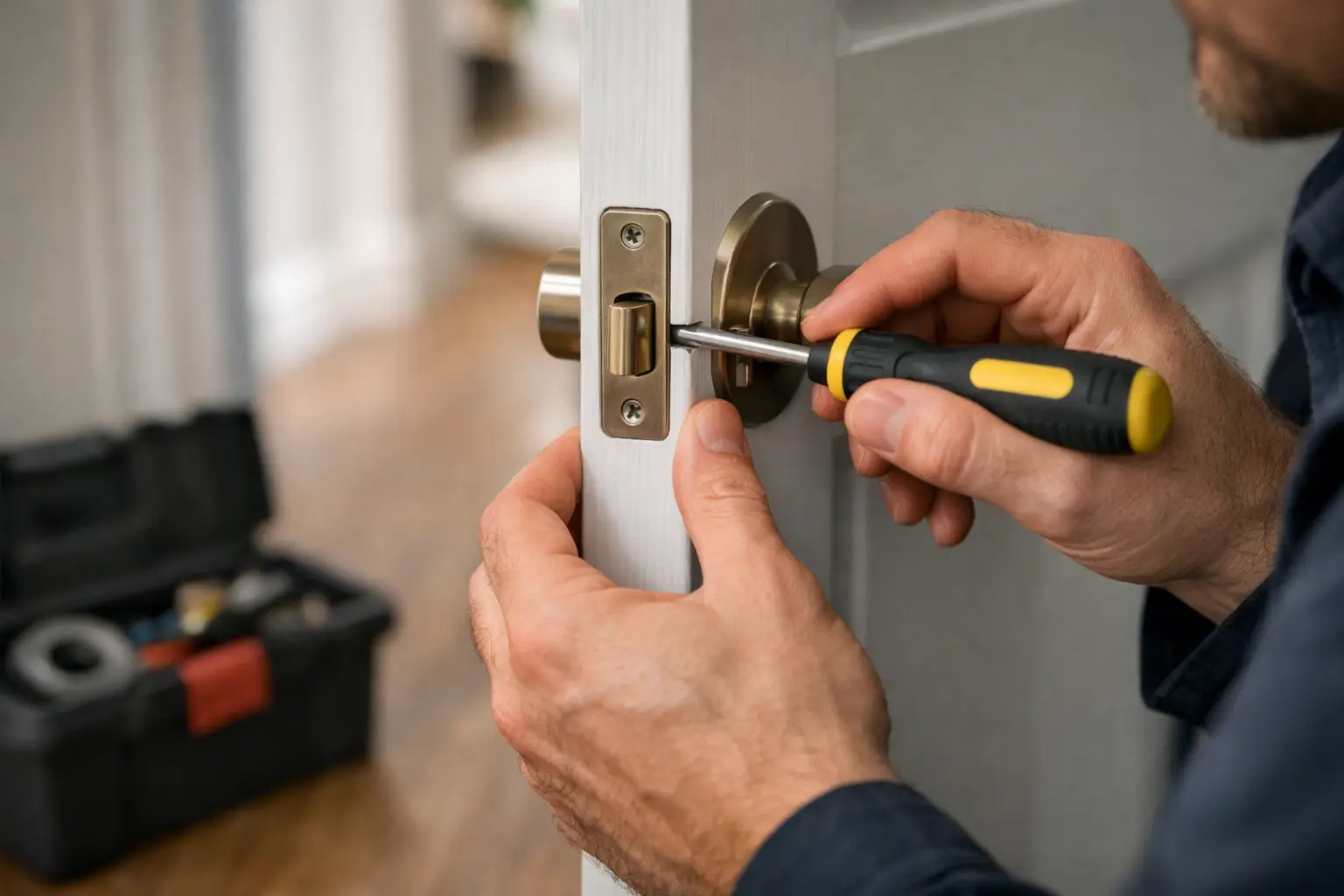
A door that won’t stay shut is more than annoying. If you’re searching for a door latch not catching fix, you’re usually dealing with one of two problems - the latch isn’t lining up with the strike plate, or the door hardware has shifted enough that the latch can’t seat properly.
The good news is that many latch problems are simple. The bad news is that people often waste time replacing the wrong part. A new lock won’t fix a sagging door frame, and tightening random screws won’t help if the strike plate opening is too high, too low, or too shallow.
Start with what the latch is actually doing
Before you grab a screwdriver, close the door slowly and watch the latch meet the strike plate. Don’t force it. You want to see whether the latch hits above the hole, below it, or dead-on but still won’t catch.
If the latch hits the strike plate and bounces off, alignment is usually the issue. If it enters the hole slightly but won’t hold, the opening may be too shallow or blocked by paint, debris, or a warped plate. If the latch doesn’t extend fully at all, the problem may be inside the lockset itself.
This quick check matters because the fix depends on the failure. A misaligned door and a failing latch look similar from across the room, but they are not the same repair.
The most common door latch not catching fix
Most of the time, the fix is basic alignment. Doors move over time. Hinges loosen, wood swells, weather changes the fit, and repeated use pulls things slightly out of position. It doesn’t take much. Even a small shift can stop the latch from catching.
Start with the hinges. Open the door and check whether any hinge screws are loose. Tighten them firmly, especially on the top hinge. That hinge carries a lot of the door’s weight, and when it loosens, the door can sag just enough to throw off latch alignment.
After tightening, test the door again. If it catches now, you found the problem. If it improved but still doesn’t latch cleanly, the door may still be sitting a little high or low.
Look at the gap around the door. If the top gap is uneven, or the latch side rubs the frame, sag is likely part of the issue. In many cases, longer hinge screws into the framing can pull the door back into better alignment. But if the frame is warped or the screw holes are stripped out, that can turn into a bigger repair fast.
Check the strike plate before replacing the lock
The strike plate is the metal plate on the frame where the latch enters. It takes a lot of abuse, and small problems there can stop the whole door from working right.
Remove the strike plate and inspect it. Sometimes the opening is too tight, clogged with old paint, packed with dust, or slightly bent. If the latch is almost catching, a small obstruction may be all that’s stopping it.
Reinstall it and test again. If the latch is landing just above or below the opening, the strike plate may need to be repositioned. That sounds simple, and sometimes it is. But moving it even a little can leave exposed old screw holes, weak wood, or a messy fit if the frame is already worn.
If you own the property and you’re comfortable making careful adjustments, slight repositioning may solve it. If this is a rental, a storefront, or a door that needs to stay secure today, it may be smarter to have a locksmith handle it cleanly.
When the latch itself is the problem
Not every door latch not catching fix is about the frame. Sometimes the latch mechanism is worn out, sticky, or damaged.
Press the latch with your thumb and let it spring back. It should move smoothly and extend fully. If it sticks, feels weak, or doesn’t return all the way, the latch may not have enough travel to catch the strike plate.
That can happen from age, dirt inside the mechanism, internal wear, or damage from the door being slammed. In that case, alignment tweaks won’t solve much because the latch isn’t doing its job.
You may be able to fix a sticking latch with a proper cleaning and adjustment, but if the internal spring is failing, replacement is usually the better answer. This is where people often buy the wrong hardware, then realize the issue involves the door prep, backset, or lock fit. If you need the door working fast, guessing gets expensive.
Swelling, settling, and seasonal changes
Wood doors and frames are not perfectly stable. Humidity can make a door swell. Older homes settle. Commercial doors see heavy daily use and frame stress. That’s why a latch problem can seem to appear out of nowhere.
If the door only acts up during certain weather, swelling may be part of the problem. If the latch catches sometimes but not consistently, the alignment may be borderline and changing with temperature or moisture.
That matters because filing, drilling, or shifting hardware too aggressively can create a bigger issue later. A quick fix that works in dry weather might leave the door loose or rattling once conditions change. The right repair depends on whether the movement is temporary or a sign of a deeper fit problem.
DIY or call for help?
A few simple checks make sense. Tighten hinge screws. Inspect the strike plate. Test the latch motion. Those steps are low-risk and often enough to spot the cause.
Beyond that, it depends on the door and what’s at stake. If this is an interior bedroom door, you have more room to experiment. If it’s a front door, office entry, apartment unit, or side door that protects your property, security matters more than trial and error.
A door that barely latches is not secure. It can pop open with pressure, fail to lock properly, or leave you thinking the door is safe when it isn’t. That is where a professional repair saves time and avoids a bad patch job.
At Fast & Fair Locksmith, this is the kind of problem that should be handled without games - quick diagnosis, clear pricing, and a repair that actually holds.
Signs you need a locksmith now
If the door won’t latch at all, the deadbolt no longer lines up, the frame looks damaged, or the lock feels loose in the door, it’s time to stop troubleshooting and get it fixed properly.
The same goes for metal doors, commercial hardware, multi-point locks, or doors that have already been “adjusted” a few times. Those jobs can get worse fast if the wrong holes are drilled or the hardware is forced into place.
Property managers and business owners should be especially careful here. A latch issue is rarely just an inconvenience. It can turn into a tenant complaint, a failed secure door, or a service call after hours when the door finally stops working altogether.
What a proper repair should include
A real fix is not just making the door close once. It means the latch seats cleanly, the handle operates normally, the lock aligns as it should, and the door closes without pushing, lifting, or slamming.
If hardware needs replacement, the new parts should fit the door correctly. If alignment is the issue, the adjustment should be done in a way that preserves security and doesn’t leave the frame chewed up. If the frame or door is the problem, you should be told that plainly instead of being sold a lock you don’t need.
That last point matters. A lot of service industries lose trust when the quote changes mid-job or the technician pushes a full replacement before checking the basics. A straightforward latch repair should come with a straightforward explanation.
A stuck latch is annoying. A bad repair is worse.
There’s nothing wrong with trying the obvious first. But if you’ve tightened the hinges, checked the strike plate, and the door still won’t catch, the next step should solve the problem for real, not just get you through the next two days.
A door is supposed to close, latch, and stay secure without a trick. If yours doesn’t, treat it like the security issue it is and get it fixed before it turns into a lockout, a break-in risk, or a bigger repair bill.