
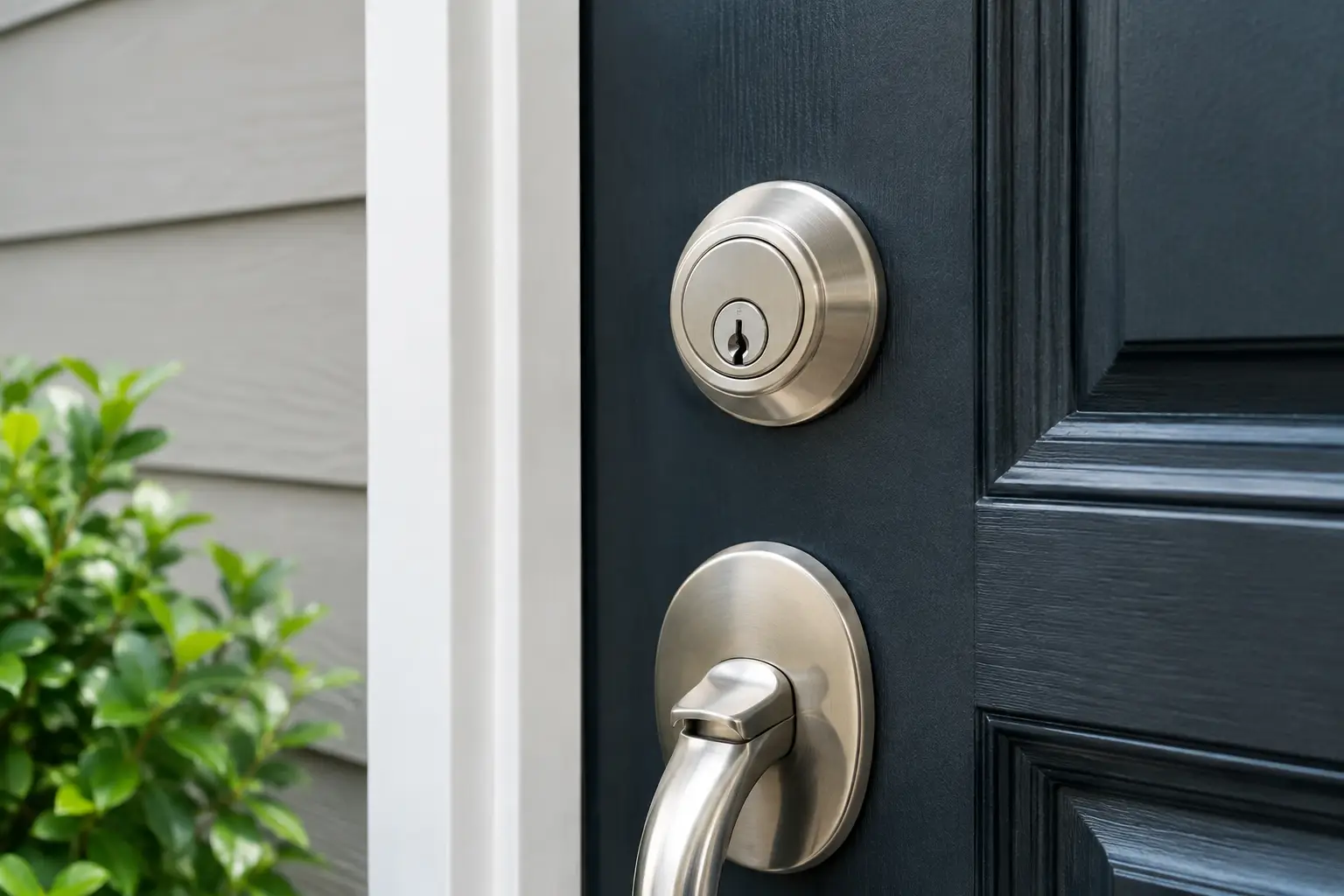
A front door can look secure and still have a weak point hiding in plain sight. Deadbolt locks are one of the most effective upgrades for a home, apartment, office, or small storefront, but the lock is only part of the job. A strong deadbolt installed in a weak door frame can still leave you with a security problem.
The right choice depends on the door, who needs access, and whether you are solving an urgent issue or planning ahead. Here is what actually matters before you buy, replace, or rekey a deadbolt.
What Deadbolt Locks Do Better Than Knob Locks
A standard locking doorknob has a spring latch. It can keep a closed door from opening normally, but it is not designed to provide the same resistance as a deadbolt. A deadbolt uses a solid metal bolt that extends into the door frame. It stays in place until a key, thumbturn, or electronic control retracts it.
That difference matters when force is applied to the door. A properly installed deadbolt places the locking point deeper into the frame, making the entry door much harder to force open than one protected by a knob lock alone.
Deadbolts are most useful on exterior doors, including front, back, garage-entry, and side doors. They can also make sense for certain offices, storage rooms, and rental units. They are not a universal answer, though. A hollow-core interior door, damaged jamb, loose hinges, or glass panel next to the lock can change what security upgrade makes sense.
Choose the Right Type of Deadbolt
The best deadbolt is not always the most expensive one. Start with the access needs of the people using the door.
Single-cylinder deadbolts
A single-cylinder deadbolt uses a key outside and a thumbturn inside. For most homes, this is the practical standard. You can lock the door from inside without searching for a key, which matters during an emergency.
It is also convenient for families, renters, and anyone who wants a simple lock that works without batteries, apps, or codes. If the door has a window close enough for someone to reach through and operate the thumbturn, talk to a locksmith about the safest setup for that opening.
Double-cylinder deadbolts
A double-cylinder deadbolt requires a key from both sides. It can prevent someone from reaching through nearby glass to turn the lock. The trade-off is serious: anyone inside needs a key to unlock the door.
That can create a fire-safety concern and may conflict with local building or fire requirements. Do not install one simply because it sounds more secure. Check the door layout and applicable rules first.
Keypad and smart deadbolts
Electronic deadbolts can be a good fit for busy households, rental properties, and small businesses. A keypad lets you use codes instead of handing out physical keys. Some smart models allow temporary codes, access logs, and remote management.
Convenience has a cost. Batteries need attention, electronics can fail, and not every smart lock is built to the same standard. Choose a model with a reliable physical key override and make sure the installation is correct. A smart lock that binds against the strike plate will not become reliable because it has an app.
The Door Frame Matters as Much as the Lock
People often focus on the deadbolt finish, brand, or keypad features. The real weak point is frequently the strike plate and the wood behind it.
When a deadbolt locks, its bolt enters a hole in the door frame. If that opening is shallow, the strike plate is thin, or the screws barely reach past the trim, the frame may split before the lock fails. A proper installation uses a reinforced strike plate and long screws that anchor into the wall framing, not just the surface of the jamb.
Door alignment matters, too. If you must lift, shove, or pull the door to turn the deadbolt, something is off. Weather changes, settling, worn hinges, and previous poor installation can all cause misalignment. Forcing the key or thumbturn may eventually damage the lock, but replacing the lock alone will not fix the underlying issue.
Check the door itself. Exterior doors should be solid and in good condition around the lock area. Cracked wood, loose hardware, rot, or oversized old holes can prevent a new deadbolt from performing as intended. In some cases, repair or reinforcement should happen before a replacement lock goes in.
Look for a Deadbolt With a Proven Security Rating
Security ratings help cut through packaging claims. Many residential deadbolts are graded under ANSI/BHMA standards, commonly as Grade 1, Grade 2, or Grade 3. Grade 1 is generally the highest level for heavy-duty residential use, Grade 2 is a strong choice for many homes, and Grade 3 is more basic.
A higher grade does not mean every home needs the same lock. A Grade 2 deadbolt installed correctly on a solid door can be a smart, cost-effective choice. Grade 1 may make more sense for a high-use entry, a property with more demanding security needs, or a small commercial setting.
Avoid making the decision based only on appearance. A sleek finish and a low price do not tell you much about bolt strength, cycle testing, strike hardware, or resistance to wear. Ask what is included with the lock and whether the existing door preparation will support it.
Replace, Rekey, or Repair?
These services solve different problems, and choosing the right one can save time and money.
Rekeying changes the internal pins so old keys stop working while the existing lock hardware remains in place. It is often the right answer after moving into a home, after a tenant changes, when a key is lost, or when you do not know who may still have a copy.
Replacing the deadbolt makes sense when the lock is worn, damaged, outdated, incompatible with your key system, or not providing the level of security you want. It can also be the better move after a break-in attempt, especially if the bolt, cylinder, strike, or door frame has visible damage.
Repair may be enough if the issue is alignment, loose mounting screws, a sticking latch, or a worn strike plate. A deadbolt that suddenly stops working should not be ignored. Do not keep twisting harder or spraying random lubricant into the keyway. That can turn a manageable repair into a locked-out situation.
If you are uncertain, ask for a clear explanation of the problem before authorizing work. A trustworthy locksmith should tell you whether the lock can be repaired, rekeyed, or needs replacement, along with the price difference. Fast & Fair Locksmith is built around that straightforward approach: show up quickly, explain the options, and avoid surprise charges.
Common Deadbolt Mistakes That Reduce Security
A good lock can be undermined by small installation and maintenance mistakes. Watch for these four issues:
- Using short screws in the strike plate that only grip the door trim.
- Installing the deadbolt where the bolt does not fully enter the strike opening.
- Leaving a spare key in an obvious spot outside the home.
- Keeping the same key after moving in, ending a tenancy, or losing keys.
There is another common mistake: assuming a deadbolt is a set-it-and-forget-it item. Test it a few times each year. The key should enter smoothly, the bolt should extend fully, and the door should lock without force. Address small changes early, especially before they become an after-hours lockout.
When to Call for Immediate Help
Call a locksmith promptly if the deadbolt is jammed with the door locked, the key broke in the cylinder, someone tried to force the door, or you need to secure a property after a move-out or lost-key situation. Those are not problems to postpone with temporary fixes.
For Orange County homeowners and property managers, speed matters after a security issue, but so does knowing the price before work begins. Ask for the service call details, the expected scope of work, and any replacement hardware costs. Clear answers upfront help you avoid the bait-and-switch pricing that gives the locksmith industry a bad name.
Your deadbolt should work quietly, lock firmly, and give you confidence when you close the door. If it does not, get it checked before the next problem happens at the worst possible time.