
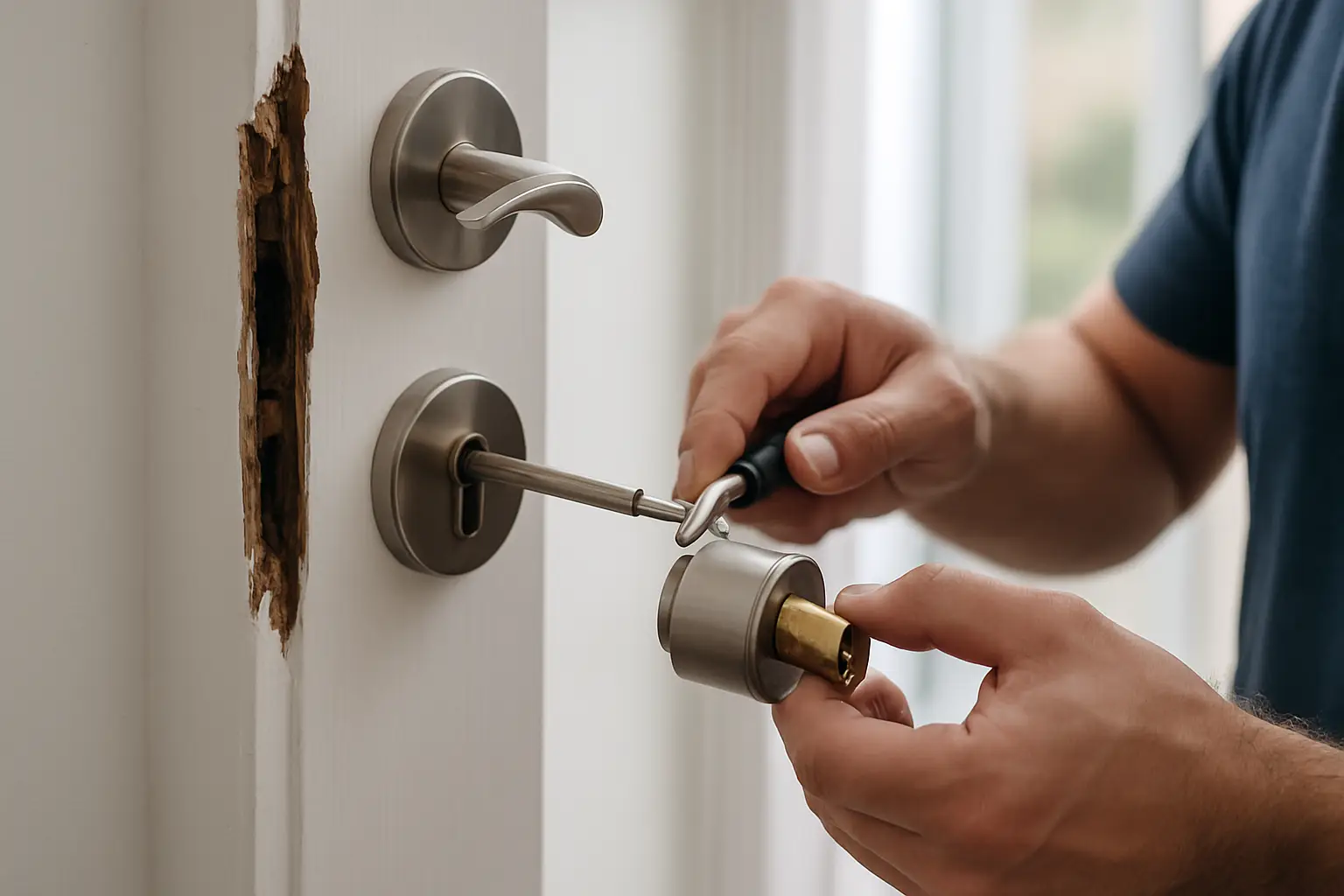
You come home and something feels off - the door doesn’t sit right, a window is cracked, or a drawer is open that never gets opened. After a break-in, your brain jumps straight to the question that matters: can they get back in?
If you’re thinking about whether to change locks after break in, you’re already doing the right thing. The goal is simple: shut down whatever access the burglar used and make sure no one else can use it again - tonight, not next week.
First: make the home safe before you touch the locks
Before you start swapping hardware, take 10 minutes to make sure you’re not skipping a step that matters for your safety and for insurance.
If you think the intruder could still be nearby or inside, leave and call 911. If the break-in already happened and the person is gone, call the police non-emergency line so there’s a report on file. Insurance usually wants that report number.
Next, take quick photos. Door frame damage, pry marks, broken glass, the lock itself - get it all. If the burglar took keys, wallets, or anything with your address on it, treat that as a bigger access problem than just a forced door.
If a door won’t latch or the frame is split, don’t rely on “it kind of closes.” Secure it temporarily with a portable door barricade, a brace, or even screws into the strike plate if you have to. The priority is keeping the door shut and the opening covered until permanent repairs happen.
Do you really need to change locks after break in?
Sometimes yes, immediately. Sometimes rekeying is the smarter, faster, cheaper move. The right answer depends on how the break-in happened and what condition your hardware is in.
Change the locks if the hardware is damaged or compromised
If the lock was drilled, the cylinder is smashed, the key won’t turn smoothly, or the latch/bolt doesn’t line up anymore, replacing is usually the cleanest fix. The same goes for a door where the strike area is chewed up or the deadbolt is loose in the door. A “working” lock that’s been forced can fail when you need it most.
Also replace if the lock is low quality and easy to attack. If you’ve got an old, bargain deadbolt with lots of play in it, a break-in is the moment to stop gambling.
Rekeying can be enough when the lock is fine but keys are a risk
Rekeying means the lock stays in the door but the internal pins are changed so the old key no longer works. You get new keys, and anyone who has a copy of the previous key is locked out.
Rekeying is a great fit when the door hardware is intact and you want control back fast. It’s also a common move after a burglar grabs a spare key, a purse, or a set of keys from inside the home. If there’s any chance your keys were taken or copied, you don’t want that key opening your front door again.
It depends: forced entry doesn’t always mean the lock is the weak link
Many break-ins aren’t about “picking the lock.” They’re about speed. A burglar may kick the door, pry the frame, or slip in through a window. In those cases, swapping the lock alone doesn’t fix the real vulnerability.
If your frame is soft, your strike plate is held by tiny screws, or your door has a lot of flex, you can install the best deadbolt on the market and still lose to a hard kick. After a break-in, security needs to address both the lock and the structure holding it.
What to secure right away (beyond the lock)
If you’re trying to stop a repeat incident, focus on the spots that burglars hit because they’re fast.
Start with the door jamb and strike plate. A reinforced strike plate and longer screws that bite into the studs can make a huge difference. If the frame is split, repair or replace the damaged section - otherwise the new lock is basically mounted to broken wood.
Then look at the deadbolt itself. A solid single-cylinder deadbolt (key outside, thumb turn inside) is standard for most homes. If you have glass close to the lock, you may need to think carefully about whether that thumb turn is a risk. The trade-off with a double-cylinder deadbolt (key on both sides) is security versus fire safety and convenience. Some people like the added control, but you never want to create an exit problem in an emergency.
Don’t ignore the “side doors” and garage entry doors. Burglars often check them because they’re less visible. If you change one lock but leave a back door keyed alike with an old key, you haven’t really closed the loop.
If you rent, pause before replacing everything
If you’re a renter, you still deserve to feel safe right now. But your lease may require the landlord to approve lock changes or require that they maintain master-keyed systems.
Call the property manager as soon as possible and document the break-in. Ask whether they prefer rekeying, a full replacement, or a specific hardware brand. If you replace locks without permission, you might end up paying twice - once for your replacement and again for their required hardware.
That said, if the lock is damaged and the door won’t secure, it’s an emergency repair situation. The main point is to coordinate quickly so you’re not stuck waiting days with a compromised door.
Don’t accidentally overpay for “emergency lock replacement”
After a break-in, people are vulnerable. That’s when shady locksmith pricing shows up: big quotes over the phone, then surprise add-ons once the tech arrives.
You should be able to get straightforward answers before anyone starts work. Ask what the service call covers, what the labor range is, and what hardware price range you’re authorizing. If the estimate is fuzzy, or the person won’t commit to a range until they’re already onsite, you’re taking a risk.
A fair locksmith won’t pressure you into “upgrades” you didn’t ask for. They’ll tell you what’s necessary to secure the door tonight, and what can wait until daylight or until the door/frame gets repaired.
If you’re in the San Diego area and you want fast arrival and straight pricing, FAST & FAIR LOCKSMITH is built for exactly this kind of call.
What to expect when you call a locksmith after a break-in
A good onsite visit is quick, practical, and focused on getting you back to a secure, working door.
First, the technician should inspect the lock and the door frame together. If the frame is damaged, they should say that clearly and explain what can be reinforced now versus what needs carpentry later.
If the lock can be rekeyed, they’ll confirm the brand and condition, then cut new keys and verify the old keys no longer work. If the lock needs replacement, they’ll remove the damaged hardware, install a new lock, and test alignment so the deadbolt throws cleanly without sticking.
If you want one key for multiple doors (keyed alike), say so upfront. It can be done in many cases, but not all hardware is compatible. The key is making the plan before the parts go on.
Smart lock or traditional lock after a break-in?
This is where it really depends on your situation and your tolerance for tech.
A traditional deadbolt is simple and reliable. Fewer failure points, no batteries to worry about, and most people understand it instantly.
A smart lock can add convenience and control, especially if you’re worried about copied keys. Many models let you change codes, track access, and remove a user without rekeying. The downside is you’re adding batteries and electronics to a door that needs to work every time.
If you go smart, pair it with a strong physical deadbolt and make sure you’re using quality hardware. A smart lock on a weak door is still a weak door.
The “hidden” lock change people forget: interior access
If the burglar got in and spent time inside, think about what they could have accessed beyond the front door.
If your home office has sensitive information, if you keep valuables in a closet, or if a roommate situation means not everyone should have access, an interior keyed knob or a locking lever can make sense. This is especially true after a break-in where you’re unsure what was copied, photographed, or rummaged through.
It’s not about turning your house into a vault. It’s about making sure one compromised entry doesn’t automatically compromise everything.
How fast should you act?
If the lock or door is damaged, same day. Not because you’re panicking - because the next attempt is often opportunistic. A burglar may come back if they think the house is easy, or if they believe you’ll replace stolen items quickly.
If there’s no damage and you’re confident no keys were taken, you might schedule it for the next day. But if there’s any doubt about keys, access, or whether the intruder used a method that could work again, handle it immediately.
A quick decision rule that keeps you safe
If you can’t say with confidence that (1) the door closes solidly, (2) the deadbolt throws smoothly, and (3) only you control the keys, treat it as an urgent lock problem.
You don’t need to buy the most expensive hardware in town. You need a door that shuts, a lock that holds, and a key plan you control. That’s what stops the “second visit.”
A break-in is a violation. Getting your security back shouldn’t be complicated, and it shouldn’t come with mystery pricing. Get the door secured, make the key situation yours again, and then take a breath - not because everything feels perfect, but because your home is back under your control.