
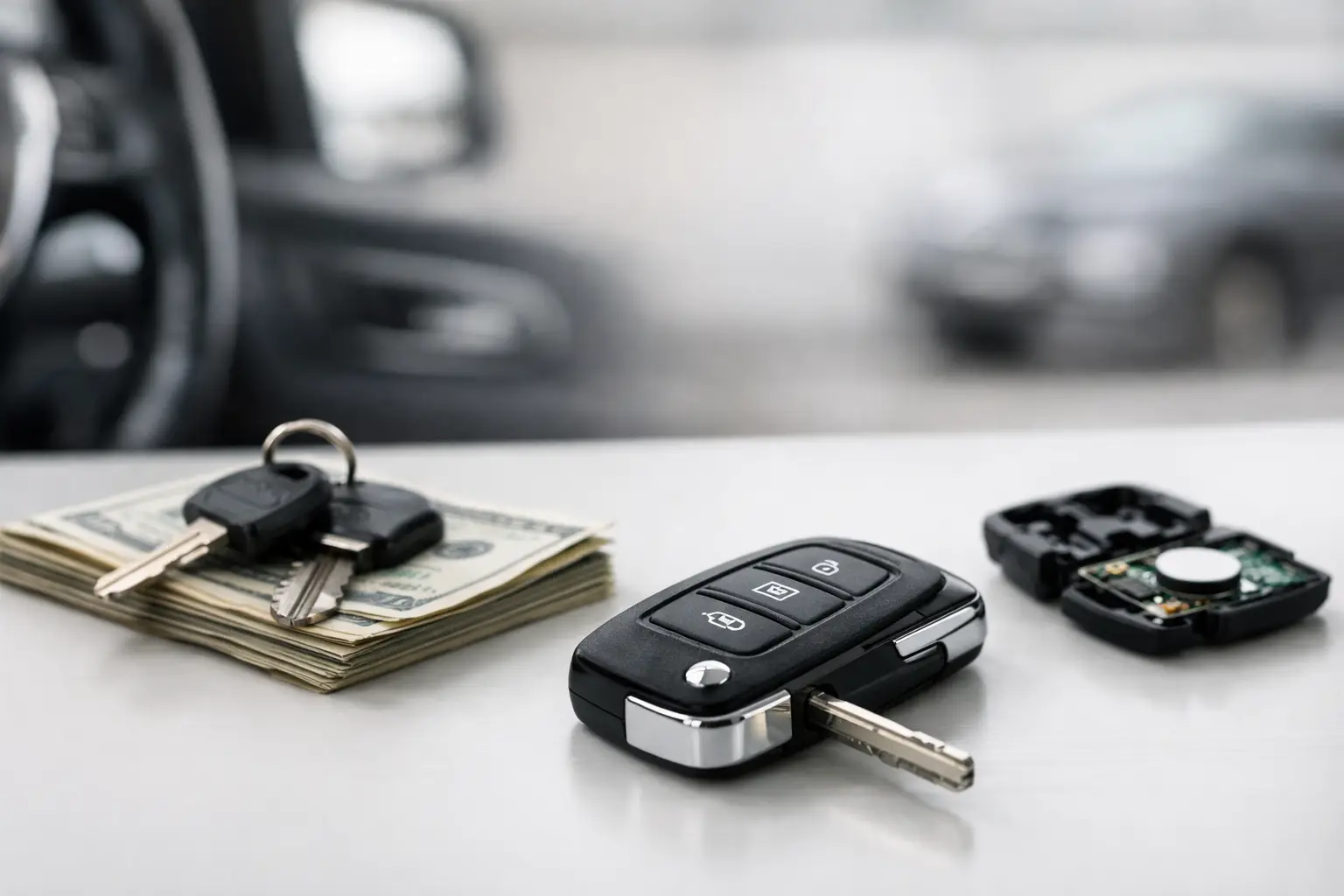
A lost fob can stop your day before it starts. You cannot unlock the car, start it, or get to work, and the first price you hear may sound far higher than expected. Car key fob replacement cost is not one flat number because a basic remote and a push-button-start smart key are completely different jobs. The fair answer starts with identifying what your vehicle actually uses, then quoting the key, programming, and service separately.
Car Key Fob Replacement Cost by Type
For a basic remote that locks and unlocks the doors but does not start the vehicle, replacement is often the least expensive option. The fob itself may cost roughly $25 to $100, and programming can add $50 to $125. A typical completed job often lands around $75 to $200, depending on the make, model, and whether the technician comes to you.
A transponder key costs more. This is a physical key with a security chip inside. The blade must be cut correctly, and the chip has to be programmed so the vehicle's immobilizer recognizes it. Many transponder-key replacements fall in the $125 to $300 range. Some older vehicles are less expensive; certain imports and specialty models can cost more.
Smart keys and proximity fobs are usually the highest-cost common replacement. They communicate with the vehicle when the fob is nearby, allowing push-button start and keyless entry. A replacement smart fob, cutting an emergency key blade if needed, and programming commonly run about $200 to $500. Late-model luxury vehicles, high-security systems, and restricted key platforms can reach $500 to $800 or more.
These are useful working ranges, not a quote. A fair locksmith should tell you what is included before dispatching or before work begins: the fob, the key cutting if applicable, programming, mobile service, and any after-hours charge.
What Changes the Car Key Fob Replacement Cost?
The vehicle matters more than the logo on the fob. Model year, trim level, ignition type, and security system all affect the process. Two cars from the same manufacturer can use entirely different fobs and programming procedures.
Whether you have a working key also makes a real difference. If one programmed key is still available, a technician may be able to add a replacement more quickly. If every key is lost, the vehicle may need a new key generated from its key code, additional security access, and a longer programming process. That adds labor and can raise the price.
Your location and timing can affect the total too. A mobile technician is bringing the equipment to your vehicle, which saves you the cost and hassle of a tow. Emergency, weekend, and late-night calls may include a service charge. There is nothing wrong with an after-hours charge when it is disclosed clearly. The problem is a low phone quote that becomes a much larger bill after the technician arrives.
Availability is another factor. Common fobs are easier to source. A rare, newly released, or dealer-restricted fob may need to be ordered, and some vehicles require factory-level tools or online authorization to program correctly.
Why programming is not an optional add-on
A fob can look identical and still fail to work with your car. The frequency, chip type, part number, and software compatibility must match. Programming pairs the replacement with the vehicle and, in many cases, removes lost or stolen fobs from the system.
That last step matters. If a fob was stolen rather than simply misplaced, ask for the old fob to be erased from the vehicle memory when possible. Replacing the hardware without addressing access can leave a security gap.
Locksmith, Dealer, or DIY?
A dealership can provide an original equipment fob and has access to manufacturer systems. That may be the right route for certain restricted models or warranty situations. The trade-off is often higher parts pricing, appointment delays, and the need to get the vehicle to the dealer if it cannot be driven.
A qualified automotive locksmith can usually come to the vehicle, cut and program many keys on-site, and finish the job faster. For a lockout, an all-keys-lost situation, or a car stranded in a parking lot, mobile service is often the practical choice. Ask whether the technician has experience with your exact make, model, and year before authorizing the work.
Buying a fob online can appear cheaper, but it is not always a bargain. The part may be used, incorrect, poorly made, or already locked to another vehicle. Some used smart keys cannot be programmed again without special resetting equipment, and some cannot be reused at all. You may still need professional cutting and programming, so compare the completed cost rather than the sticker price of the fob alone.
DIY programming works on a limited number of vehicles. Some older models allow an owner to program a remote by following a sequence of ignition and door-lock steps. Most modern transponder and smart keys require professional diagnostic equipment. Repeated failed attempts do not usually save money and can turn a simple replacement into a longer service call.
How to Get a Fair Quote Before Work Starts
You do not need to know the exact key part number before calling. You do need to provide accurate details. Have the year, make, model, and trim available, along with the vehicle identification number if possible. Tell the dispatcher whether the car has a traditional ignition, a remote start, or push-button start, and whether any working keys remain.
Ask for the total expected range, not just the price of the fob. A clear quote should address the mobile service fee, the replacement key or fob, key cutting, programming, taxes, and any emergency charge. If the job cannot be priced exactly until the technician verifies the vehicle, ask what could cause the price to change and request approval before extra work is performed.
Be cautious with unusually low advertised prices. A $20 or $30 quote may cover only a generic shell, only the service call, or nothing close to a programmed key that starts the car. Fair pricing is not always the lowest number. It is a clear number that matches the work being done.
Before a technician begins, confirm that they will test every function. On a smart fob, that means lock, unlock, trunk release if equipped, panic button, and vehicle start. If the key has an emergency blade, test the door lock as well. A programmed fob is only useful if it performs the functions you rely on.
When a Replacement May Not Be Needed
Not every dead fob needs to be replaced. A weak coin-cell battery can cause reduced range, intermittent buttons, or a no-key-detected message. Replacing the battery is inexpensive, though the fob should be opened carefully to avoid damaging the circuit board or seal.
Physical damage is another possibility. A worn button pad, cracked case, or loose battery contact may be repairable. If the vehicle does not respond to either of your fobs, the issue could be the car battery, antenna, receiver, or another vehicle-side electrical problem rather than the fob itself.
A quick diagnosis protects you from paying for the wrong fix. A reputable technician will not sell a full replacement just because a battery, repair, or vehicle check is the real answer.
Plan Ahead if You Still Have One Working Key
The least stressful time to replace a fob is before the last one disappears. Adding a spare while you still have a working key is often simpler and less costly than starting from zero during an emergency. Keep the spare somewhere secure, not inside the vehicle, and label it only in a way that does not reveal your home address.
If you are locked out or down to no working keys in Orange County, focus on a provider that can give you a direct answer on arrival time and pricing. Bring your photo ID and vehicle registration or proof of ownership when possible. Those checks protect your vehicle and help the job move faster.
The right replacement is the one that works correctly, protects access to your car, and comes with no surprise bill after the fact. Get the details up front, approve the total before work starts, and keep a tested spare for the next time life moves faster than your keys do.