You are standing beside your car with a key that snapped, disappeared, or suddenly will not turn. The immediate question is: can locksmiths replace ignition keys? In most cases, yes. A qualified automotive locksmith can cut and program many replacement vehicle keys where the car is parked, often without the delay and higher overhead of a dealership visit.
The right solution depends on the vehicle, the type of key, and whether the ignition itself is still working. A missing key is one problem. A worn-out ignition cylinder, damaged key blade, or anti-theft system issue is another. Knowing the difference helps you get the repair you need without paying for work you do not.
Can locksmiths replace ignition keys on-site?
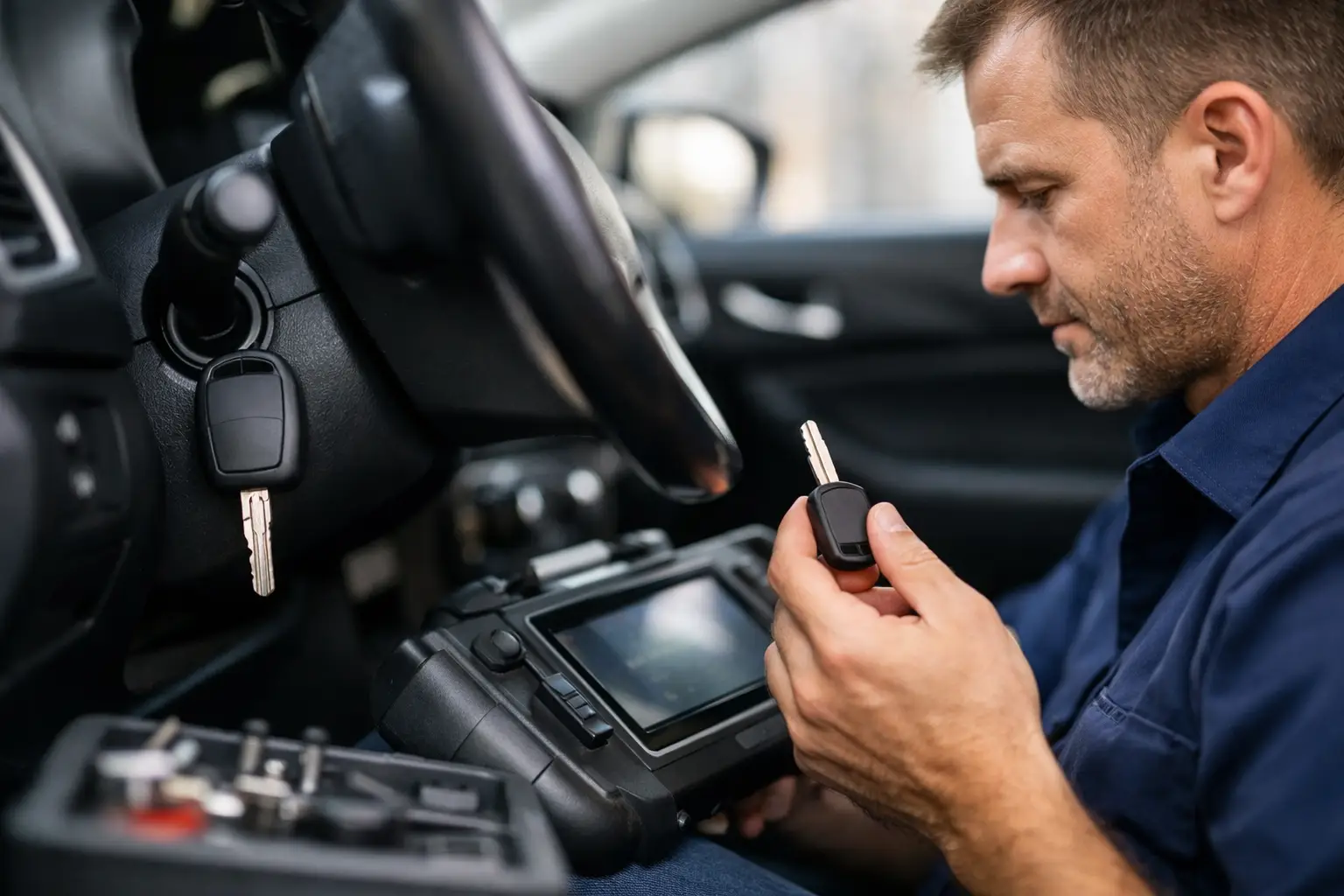
Yes. Mobile locksmiths regularly replace ignition keys for cars, trucks, SUVs, vans, and many motorcycles. They can usually create a new key from the vehicle's lock, an existing key, or verified key-code information. For electronic keys, they may also program the chip, remote, or smart fob so the vehicle will start.
On-site service matters when the car cannot be driven. If your only key is lost in a parking lot, the key broke in the ignition at home, or your fob stopped working at work, towing the vehicle to a dealer adds time and expense. A properly equipped locksmith comes to the vehicle with key-cutting and programming equipment.
Not every vehicle is identical. Some late-model luxury vehicles and certain restricted systems require dealer access, special components, or additional security authorization. An honest locksmith should tell you that upfront, rather than promising a cheap fix and changing the price after arrival.
The type of ignition key makes a difference
Older vehicles with standard metal keys are usually the most straightforward. A locksmith can cut a new blade, test it in the door and ignition, and get you moving quickly if the locks and ignition are in good condition.
Most vehicles made in the last few decades use a transponder key. It has a small electronic chip inside the key head. The blade may turn the ignition, but the engine will not start until the vehicle recognizes the chip. Replacing this kind of key requires two steps: cutting the key correctly and programming it to the vehicle's immobilizer system.
Remote-head keys combine a transponder key with lock and unlock buttons. Smart keys or proximity fobs let you start the car with a push button while the fob is inside the vehicle. These can also be replaced by many automotive locksmiths, but the job may involve more diagnostic work, specialized equipment, and a higher-cost fob.
A locksmith may be able to help with:
- Standard metal ignition keys
- Transponder or chip keys
- Remote-head keys with buttons
- Smart keys and proximity fobs
- Key fobs that need programming or replacement
The year, make, model, and trim level determine what is possible and what equipment is needed. Two vehicles from the same brand can use entirely different key systems.
Replacing a key is not always the same as repairing the ignition
A key that will not turn does not automatically mean you need a new key. It may be worn, bent, copied from a worn key, or cut incorrectly. If you still have a working spare, comparing the two keys can reveal the problem.
But the ignition cylinder can also wear down. Inside are small pins or wafers that match the cuts on your key. Over years of use, those parts can become damaged or stick. Common warning signs include a key that needs to be jiggled, a key that turns only after several tries, or a key that gets trapped in the ignition.
If the ignition cylinder is failing, simply cutting another key may not solve it. A locksmith can inspect the key and ignition, then explain whether the better repair is a new key, ignition repair, ignition-cylinder replacement, or rekeying the replacement cylinder to match your existing door key.
That last point matters. Some repair shops replace an ignition cylinder and leave you carrying one key for the door and another for the ignition. Sometimes that is necessary, but often a locksmith can key the new ignition to your current vehicle key. Ask before the work begins.
What a locksmith needs before making a replacement
A legitimate automotive locksmith will ask for identification and proof that you own or are authorized to use the vehicle. That can include a driver's license, registration, title, insurance document, rental agreement, or fleet authorization. This protects vehicle owners and keeps criminals from using locksmith services to gain access to cars they do not own.
When you call, have the vehicle year, make, model, and location ready. If possible, share whether you have a working key, a broken key, no key at all, or a key that starts the car but has a dead remote. Clear details help the technician bring the right blanks, fobs, and programming tools.
For a lost-all-keys situation, the locksmith may retrieve key information from the vehicle, a manufacturer database, or the locks themselves. The process can take longer than duplicating an existing key, especially on newer vehicles with higher security systems. It is still often more convenient than arranging a tow and waiting at a dealership.
What affects the cost of a replacement ignition key?
There is no single fair price for every vehicle key. A basic metal key costs far less than a proximity fob with advanced programming. The best way to avoid surprises is to get a clear quote based on your exact vehicle and situation before authorizing work.
The main factors are the key type, availability of the blank or fob, programming requirements, whether all keys are lost, the condition of the ignition, and the service time. After-hours calls can also cost more because a technician is being dispatched outside regular hours.
Be cautious with vague advertisements that lead with an unrealistically low price. A quote for a basic key is not a quote for a programmed transponder key, a smart fob, or ignition repair. Ask whether the stated price includes the service call, key cutting, programming, parts, taxes, and any additional charges if the ignition is damaged.
Fast & Fair Locksmith believes the quote should make sense before work starts. A customer dealing with a stranded car needs a solution, not a confusing bill and a list of last-minute add-ons.
When a dealership may be the better choice
A locksmith is often the faster, more practical option, but not always. A dealership may be required when a vehicle uses highly restricted key technology, needs factory software that is not available to independent providers, or has an open recall or warranty issue related to the ignition or anti-theft system.
Dealers can also be a good choice if you are already scheduling factory service and the car is drivable. The trade-off is that you may need to tow the vehicle if all keys are gone, wait for an appointment, and pay dealership parts and labor pricing.
For most everyday key emergencies, a mobile locksmith can save that extra step. The key is choosing a provider who verifies the vehicle details, explains the options plainly, and does not treat urgency as a reason to inflate the bill.
Do not force a stuck key or ignition
If the key will not turn, do not force it. Excess pressure can snap the blade inside the cylinder or damage internal ignition parts. Check that the steering wheel is not locked under pressure. Gently move the wheel left and right while lightly turning the key. If that does not work, stop.
For push-button vehicles, a weak key-fob battery may be the issue. Many cars have an emergency starting procedure that allows the fob to be held near a designated spot. Your owner's manual can identify that location. If a fresh battery does not help, the fob may need programming or the vehicle may have a different electrical problem.
Keep a working spare key when you can, especially before a long trip or after buying a used vehicle with only one key. But if you are already locked out or stuck with a failed ignition key, focus on a verified, on-site diagnosis. The fastest fair fix is the one that addresses the real problem and gets you safely back on the road.