
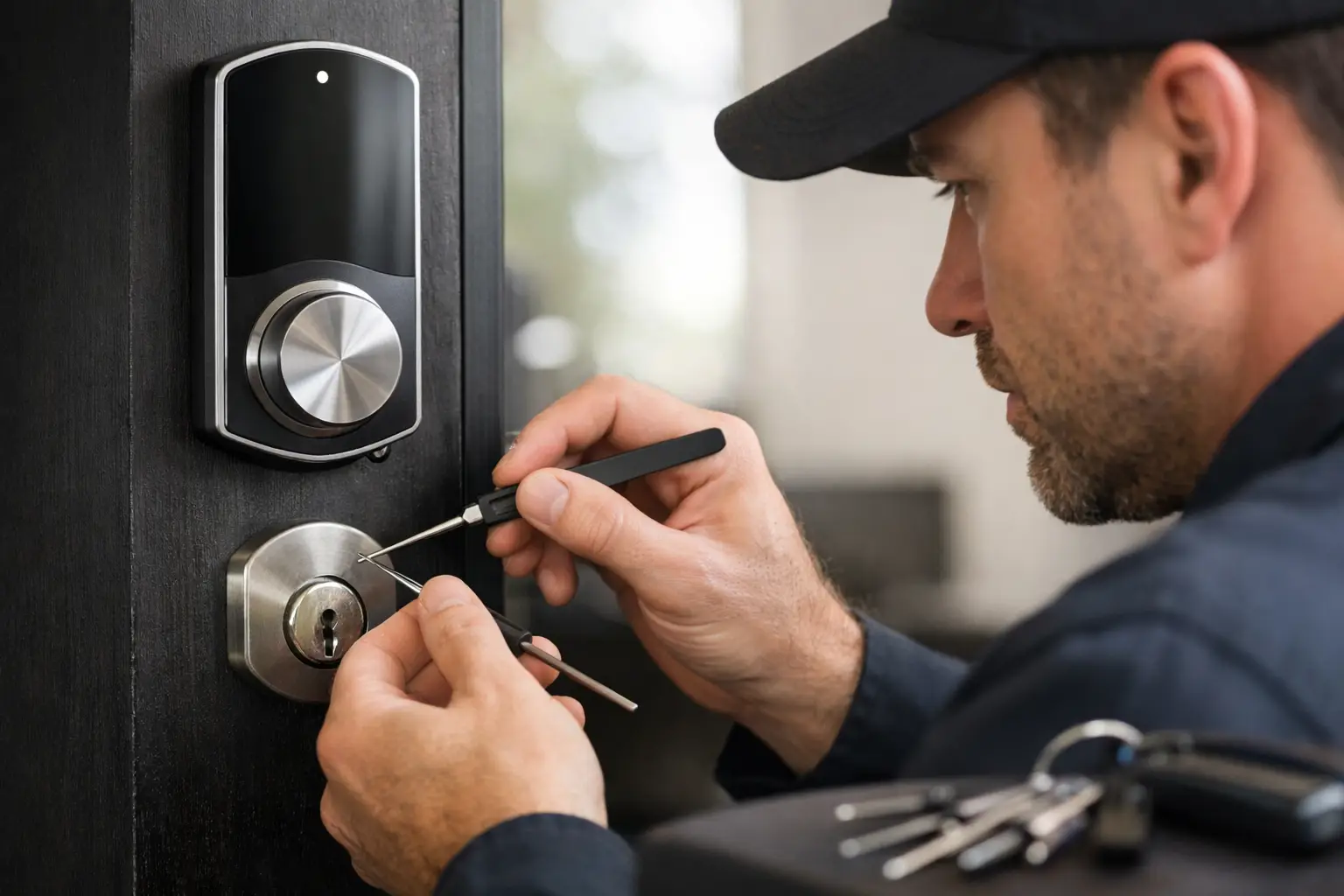
You are standing outside your door, your phone app is spinning, the keypad is dead, and the backup key is nowhere to be found. At that moment, the question gets very real: can locksmiths open smart locks? Yes - often they can. But smart locks are not all built the same, and the right fix depends on whether the issue is mechanical, electronic, network-related, or tied to the lock’s setup.
That matters because a lot of people hear “smart lock” and assume only the manufacturer or an IT-style specialist can help. Not true. A qualified locksmith can usually diagnose the problem on-site, open the door when you have legal access, and tell you whether the lock can be repaired, reset, rekeyed, replaced, or needs a full hardware change.
Can locksmiths open smart locks in real situations?
In many cases, yes. A smart lock still sits on a real door with real hardware. Even when access is controlled by an app, keypad, fob, fingerprint reader, or Bluetooth connection, the lock itself often includes standard mechanical parts such as a latch, deadbolt, cylinder, strike alignment, and mounting hardware. Locksmiths work with those parts every day.
Some smart lock problems are not really “smart” problems at all. A sagging door, a misaligned strike plate, a sticky deadbolt, a worn cylinder, or a jammed latch can make an electronic lock fail even when the app looks fine. In those cases, a locksmith may be able to open the door and fix the root cause without replacing the entire unit.
Other cases are more technical. Dead batteries, failed keypads, motor issues, software lockups, disconnected hubs, damaged wiring on commercial systems, and bad programming can all affect how a smart lock behaves. A good locksmith knows where the line is between a lock problem, a hardware problem, and a system problem.
What a locksmith can usually do with a smart lock
The answer depends on the lock model and the failure, but locksmiths commonly handle lockouts, non-destructive entry when possible, mechanical bypass on approved jobs, cylinder work, hardware replacement, door alignment correction, and smart lock swaps. If the lock has a physical keyway, they may also cut or duplicate keys, rekey the cylinder, or replace the keyed portion while keeping the smart features if the design allows it.
For residential jobs, that often means getting a homeowner back inside quickly and then deciding whether the lock is worth saving. For rental properties and small businesses, it may mean restoring access, changing credentials, and making sure former users can no longer get in.
What locksmiths should not do is promise magic over the phone. No honest company can guarantee a specific method before seeing the lock, the door, and the failure. That is where bad actors start with one price and end with another. Straight answers matter more than flashy claims.
When opening a smart lock is simple and when it is not
A battery failure is often the easiest example. Many smart locks give warning signs before they die, but people miss them. Some models have emergency power contacts or a hidden key override. If that feature exists and the lock has not been damaged, entry can be fairly straightforward.
A keypad failure can be a little more complicated. If the electronics are dead but the mechanical side is intact, a locksmith may still have options. If the key override is missing, broken, or previously forced, the job gets harder.
The toughest situations usually involve high-security smart locks, commercial access control hardware, or locks integrated with alarms and building systems. Those are not impossible, but they may require more time, model-specific knowledge, and in some cases coordination with building management or the access control provider.
That is the real answer most customers need: yes, a locksmith can often open a smart lock, but the speed, method, and cost depend on what failed.
Can locksmiths open smart locks without damaging them?
Often, yes. Non-destructive entry is usually the first goal. A professional locksmith will generally try the least invasive method first because it protects your door, frame, and lock hardware and usually saves you money.
But “without damage” is not a promise anyone should make before inspection. Some lockouts involve failed internal parts, stripped mechanisms, or previous DIY attempts that changed the job completely. If a lock has been drilled, glued, forced, or badly installed, preserving it may not be realistic.
This is where fair service matters. You should be told what the likely options are before work starts, what may need to be replaced, and what the price covers. If someone shows up and immediately jumps to destructive entry without explaining why, that is a red flag.
Smart lock types change the answer
Not every smart lock gives a locksmith the same path.
A keypad deadbolt with a traditional key cylinder is usually the most serviceable. There is a mechanical component to work with, and many issues come down to alignment, worn parts, battery problems, or a failed electronic module.
A keyless smart lock with no physical key override can be more restrictive. If the electronics fail completely, access options may narrow. That does not mean impossible, but it does mean the method may depend heavily on the brand and the lock’s internal design.
Commercial smart locks and access control doors can involve credential programming, electric strikes, magnetic locks, crash bars, and building code requirements. Those jobs need a locksmith who understands both door hardware and authorized access procedures.
Apartment and condo smart locks also come with another layer: permission. Even if the opening method is straightforward, a locksmith should confirm who has the right to authorize entry.
Proof of access is part of the job
A legitimate locksmith is not there to “beat” a smart lock for just anyone. They are there to help authorized people regain access. That means you may be asked for ID, a lease, property records, manager approval, or another form of proof tied to the address.
That can feel inconvenient during a lockout, but it protects you. The same standards that slow down a stranger are the standards that protect your home, office, or rental unit. If someone offers to open a lock with no questions asked, that is not a sign of speed. It is a sign to be careful.
Repair, replace, or switch back to a standard lock?
Sometimes the best fix is not opening the lock. It is deciding what happens next.
If the smart lock failed because of dead batteries, poor alignment, or a worn keyed cylinder, repair may make sense. If the lock has repeated app issues, unreliable connectivity, a failing motor, or cheap internal parts, replacement may cost less in the long run than one more service call.
For some customers, especially landlords and small business owners, reliability beats extra features. A smart lock can be convenient, but convenience is not worth much if it creates repeat lockouts. In other cases, a newer smart lock from a better manufacturer solves the problem just fine.
A good locksmith should walk you through the trade-off. Better convenience, more user control, and audit features on one side. Simpler hardware, fewer failure points, and easier service on the other.
How to know you are calling the right locksmith
Ask direct questions. Do you work on smart locks? Have you handled this brand before? Will you try non-destructive entry first? What is your service call charge, and what could change the final price? What proof of occupancy or authorization do you need?
The answers should be clear, not slippery. If the pricing sounds vague, if the company will not discuss methods at all, or if the quote feels suspiciously low, be careful. Smart lock jobs can be honest and straightforward, but they can also attract bait-and-switch pricing because customers are stressed and in a hurry.
That is exactly why many people prefer a local company with a real service reputation. In the San Diego area, for example, fast arrival only matters if the pricing stays fair after the tech gets there.
The bottom line on smart lock lockouts
Smart locks are not a mystery box that leaves you helpless outside your own door. They are still door hardware, and in many cases a qualified locksmith can open them, fix the cause, and get your access back under control. The catch is simple: the exact path depends on the lock type, the way it failed, and whether there is a mechanical backup.
If you are dealing with a smart lock problem, skip the guesswork and skip the hard sell. Call someone who will tell you what can likely be done, what cannot be promised yet, and what it will cost before the job moves forward. Fast is good. Fair is better when you are standing outside waiting.