
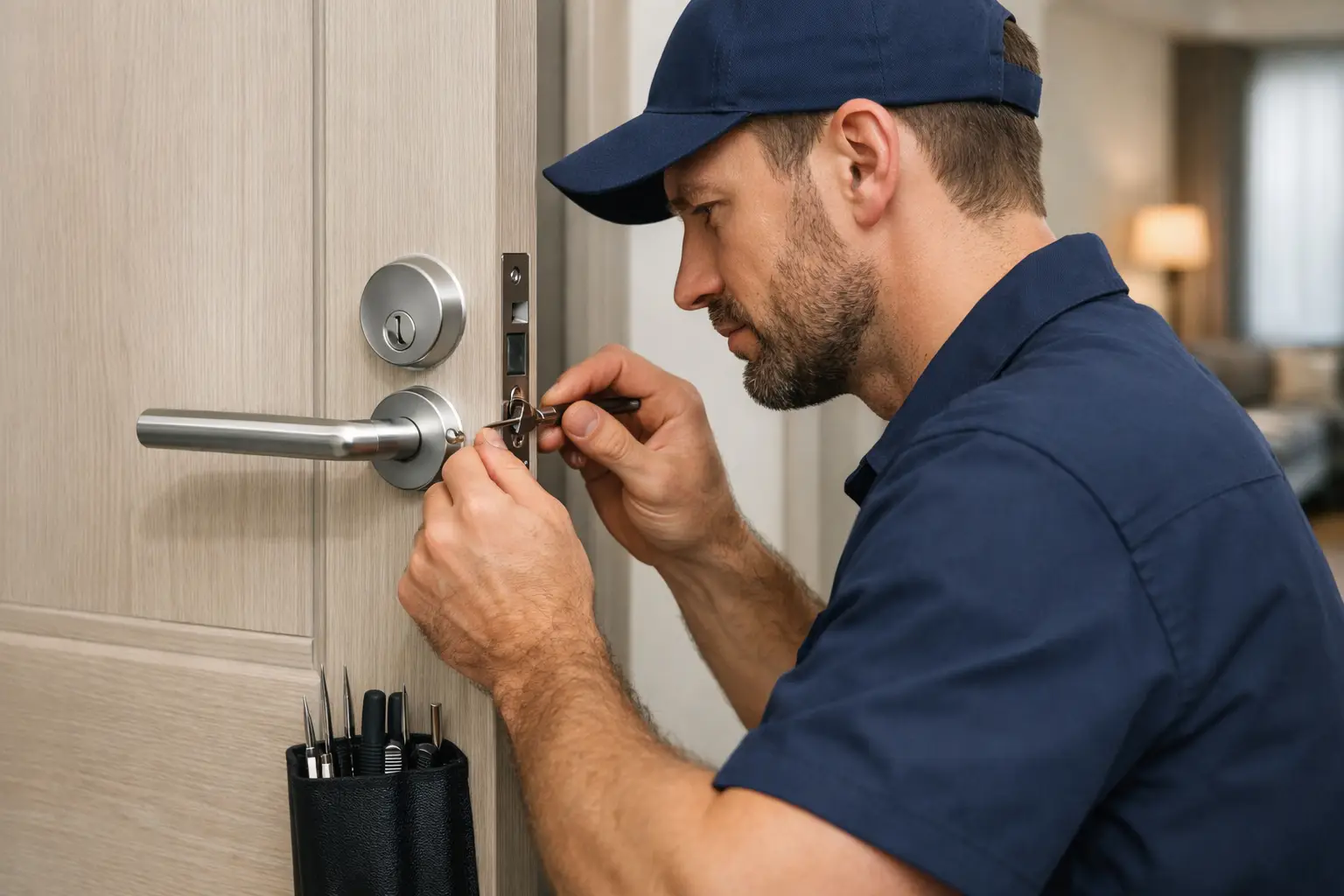
A locked apartment door can turn a normal day into a mess fast. Your keys may be on the kitchen counter, your key may have snapped, or the lock may have stopped working altogether. So, can locksmiths open apartment doors? Yes, a qualified locksmith can usually help, but they must first confirm that you have the legal right to enter the unit.
That step protects you, your neighbors, and the property owner. A legitimate locksmith is there to restore access for an authorized resident, not to defeat apartment security for whoever happens to be standing outside the door.
Can Locksmiths Open Apartment Doors for Renters?
In most cases, yes. If you are the tenant, an authorized occupant, or the property manager, a locksmith can assess the lock and help you get back inside. The exact process depends on the type of lock, the building's rules, and the proof of occupancy you can provide.
An apartment lockout is not always as simple as showing a driver's license. Your ID may list an old address. You may have moved in recently. You may be locked out with your wallet, phone charger, and lease paperwork sitting inside. A professional locksmith understands that these situations happen.
Still, expect questions. You may be asked for a photo ID, a lease, mail addressed to the unit, a resident portal record, or confirmation from your landlord or building manager. If your documentation is inside, a locksmith may be able to verify your identity after you regain entry, contact management, or use other reasonable verification steps based on the situation.
The answer can change when the person requesting service is not listed on the lease. A roommate, guest, former tenant, or someone claiming to be a resident may need the leaseholder or property manager to confirm authorization. That can feel inconvenient during an emergency, but it is the right call.
Why Proof of Occupancy Matters
Apartment buildings have shared hallways, close neighbors, and multiple parties with legal rights. The renter has a right to access their home. The landlord has an interest in protecting the unit. Other residents deserve to know that people cannot gain entry just by calling a locksmith.
A trustworthy technician will not ignore those concerns just to finish a job quickly. Fast service should never mean careless service.
This verification also helps prevent a costly mistake. If someone gains access without authorization, the resident and property owner may face security risks, damage claims, and conflict over a lock change. Taking a few minutes to confirm the situation is usually far less painful than dealing with the fallout later.
When the Landlord or Property Manager Must Be Involved
Some apartment communities require residents to contact on-site management, security, or an approved vendor before an outside locksmith works on a door. This is especially common in buildings with restricted keyways, electronic fobs, key cards, master-key systems, or controlled-access entrances.
Management may need to provide approval because a lock change could affect building security, fire-code requirements, or the property's master key system. If your unit uses a specialized key, replacing the cylinder with a standard lock without permission may create a new problem for maintenance staff and future emergency access.
There are also lease rules to consider. Many leases allow a tenant to call for emergency lockout help but require notice if the lock is rekeyed or replaced. Others state that the tenant is responsible for the cost of a lost key or after-hours lockout. Read the lease when things are calm, not only when you are standing in the hallway at midnight.
If management is unreachable and there is an urgent safety concern, such as a child alone inside, food burning, or a medical issue, call emergency services first. A locksmith can address an access problem, but emergency responders should handle an immediate threat to life or safety.
What a Professional Locksmith Will Do
The goal should be to restore access with as little disruption as possible. Before starting work, a qualified locksmith evaluates the door, lock, and authorization information. They should explain the available options and give you a price before work begins.
Sometimes the lock can be opened without replacing it. Other times, a damaged lock, broken key, malfunctioning deadbolt, or worn hardware makes repair or replacement the sensible choice. A locksmith should tell you why that work is needed instead of treating a lockout as an excuse to sell a new lock.
If a replacement is necessary, ask whether the new hardware is compatible with your lease and building requirements. For a renter, the cheapest option is not always the best option if it creates an issue with management later. For a property manager, matching the building's existing key system may matter more than a quick one-off replacement.
Watch for Red Flags Before You Hire
Lockouts create pressure, and dishonest operators count on it. Be careful with vague promises, suspiciously low advertised prices, and anyone who refuses to discuss pricing until the job is already underway.
A fair locksmith should be clear about the service call, labor, parts if needed, and any after-hours charge. The final price can vary if the lock needs repair or replacement, but the technician should explain the reason before doing additional work. You should not be surprised by a sudden pile of fees after the door is open.
It is also a red flag if a technician does not ask for any proof that you belong at the apartment. Responsible locksmiths protect property. They do not treat verification as optional.
Before dispatch, ask what the service call includes, whether there is an after-hours fee, and how pricing changes if the lock is damaged or must be replaced. Get the company name, and make sure the technician arrives in a way that matches the company you called. These simple questions can help you avoid a bait-and-switch situation when you are most vulnerable.
If You Are Locked Out Right Now
Start with the least complicated option. Check whether a roommate, trusted neighbor, or nearby family member has a spare key. If your building has a concierge, leasing office, or on-call maintenance line, contact them. They may be able to verify you and provide access under the building's policy.
If that is not an option, call a local locksmith and be ready to describe the apartment door, your location, and the proof of occupancy you can show. Mention any building restrictions or electronic access systems before the technician arrives. Clear information helps avoid delays and prevents work that management may not approve.
Do not force the door, remove hinges, or try improvised methods. Those attempts can damage the frame, hardware, weather stripping, or door itself. What began as a lockout can quickly become a repair bill and a lease violation.
After You Get Back Inside
Take a minute to prevent the next lockout. Keep a spare key with someone you trust, use a secure key safe only if your property rules allow it, or ask management whether they offer a resident key-holding option. If the lock was sticking before the lockout, have it repaired rather than waiting for it to fail completely.
For tenants who have lost keys, ask whether rekeying is appropriate. Rekeying changes which key works without necessarily replacing the entire lock, but it must fit the landlord's policy and the building's key system. Property managers can also use a lockout as a chance to review whether worn locks, poorly labeled keys, or outdated access procedures are creating repeat problems.
Fast & Fair Locksmith serves the San Diego area with the straightforward approach a lockout deserves: verify access, explain the work, and be clear about the price before the job moves forward.
When you are stuck outside your own apartment, the right help is not just the fastest person to answer the phone. It is a locksmith who treats your security, your lease, and your budget with equal respect.