
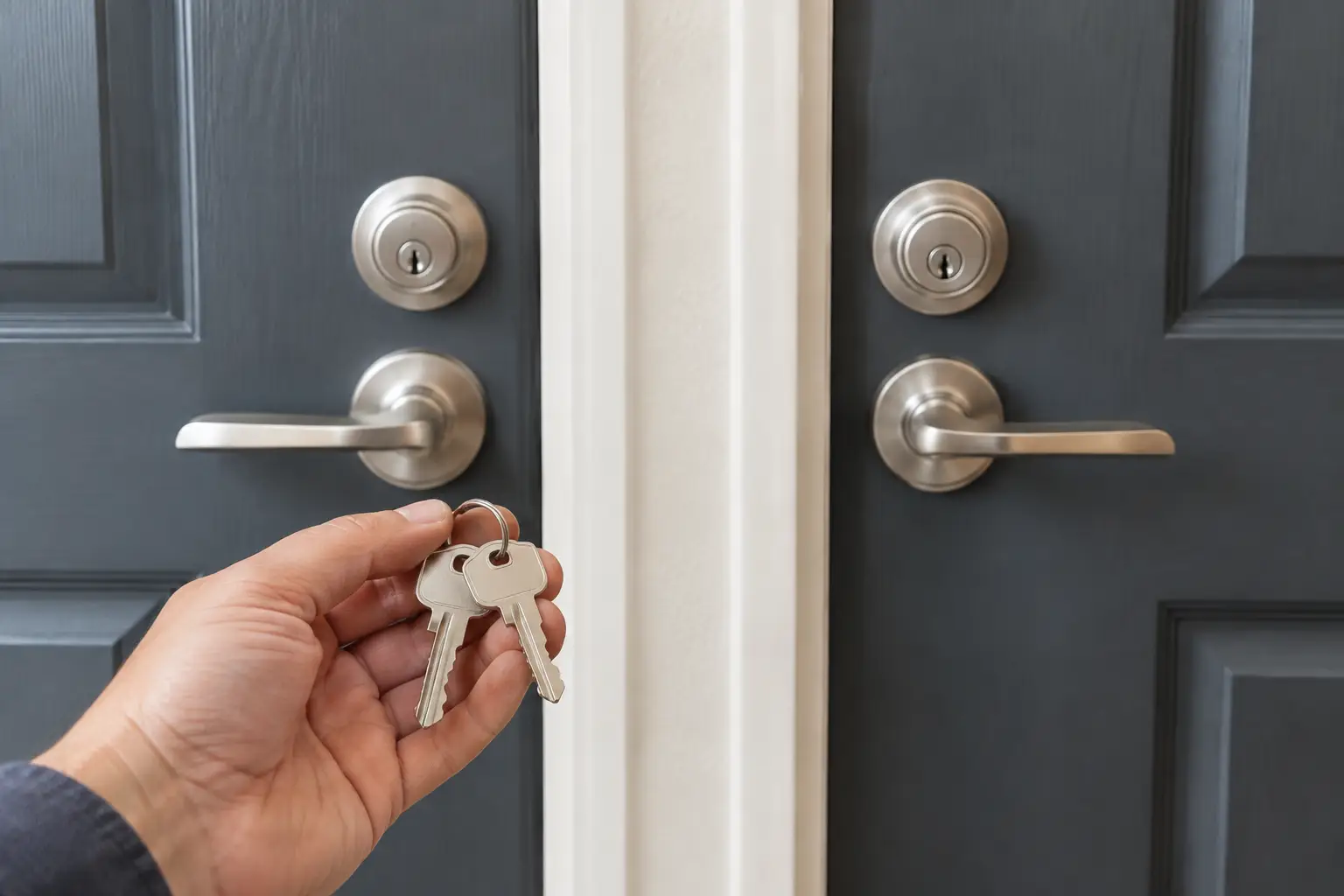
One key for the front door and garage entry sounds simple because it is. But can locks be keyed alike for two doors without making your property less secure? Usually, yes - as long as the locks are compatible, in good condition, and set up by a qualified locksmith.
Keying locks alike is one of the most practical ways to reduce key clutter at a home, rental, office, or storefront. It can also prevent the familiar problem of carrying a ring full of keys and still grabbing the wrong one at the door. The right setup gives you convenience without cutting corners on security.
Can Locks Be Keyed Alike for Two Doors?
Yes. Two compatible locks can often be rekeyed so the same key operates both doors. Rekeying changes the internal pin configuration of a lock cylinder. The exterior hardware can stay in place if it is working properly, but the old key will no longer turn the lock.
For example, a homeowner may want the front-door deadbolt and the side-door deadbolt to use one key. A small business owner may want the office entry and rear employee entrance keyed alike. A property manager may want each unit to have its own key while keeping common-area locks on a separate key system.
The word “compatible” matters. Locks typically need to use the same keyway or be capable of accepting a cylinder that does. Two locks from the same brand and keyway are often easy to key alike. Different brands may still work together, but that depends on their cylinders, key blanks, and hardware design.
A locksmith can inspect the locks before promising a result. That prevents wasted money on a rekey that cannot be done properly or a key that works only inconsistently.
When Keying Two Doors Alike Makes Sense
For most households, keying exterior doors alike is a smart, low-hassle choice. You have fewer keys to manage, family members have an easier time, and you can quickly tell whether everyone has the right access. It is especially useful after moving into a new home, when you should not assume every previous key has been accounted for.
It also makes sense for rental properties. After a tenant moves out, rekeying the unit protects the incoming tenant without requiring a full lock replacement. If the entry and patio doors are keyed alike, the new tenant receives one primary key rather than multiple keys for everyday access.
For commercial properties, the answer is more situational. A one-key setup may be fine for two public-facing doors, but not every door should have the same access level. A rear delivery door, office, stockroom, cash room, or server closet may need separate control. Convenience is valuable, but it should not erase sensible access boundaries.
What Can Prevent Locks From Being Keyed Alike?
The most common issue is that the locks use different keyways. A keyway is the shape of the key slot and the matching profile of the key. If one lock accepts a Kwikset-style key and another accepts a Schlage-style key, they generally cannot be rekeyed to use one ordinary key without changing cylinders or hardware.
Some locks are also worn, damaged, or low quality. If a key sticks, requires force, or turns only after repeated attempts, keying it alike will not fix the underlying problem. Rekeying a failing lock can leave you with the same frustrating door, just a different key.
High-security locks, restricted key systems, smart locks, and certain commercial hardware may have special requirements. Their keys may be controlled, patented, electronic, or designed for a master key system. These are not reasons to avoid keying alike. They are reasons to have the work evaluated correctly before anyone starts changing pins or ordering parts.
Another limitation is lock type. A deadbolt and a door knob can often be keyed alike, but the door knob may not provide meaningful exterior security by itself. On an exterior door, the deadbolt is usually the more critical lock. A locksmith should look at the whole door, including the strike plate, frame condition, latch alignment, and door fit, not just make a key work.
Rekeying vs. Replacing the Locks
Rekeying is usually the best answer when your existing locks are reliable and you simply need new keys or matching access. It is generally faster and less expensive than replacing every lock. It is also the right move when keys were lost, a roommate moved out, employees changed, or you just moved into a property.
Replacement makes more sense when the hardware is damaged, outdated, poorly installed, or not compatible with the keying plan. It can also be the better choice when you want upgraded security, such as a better deadbolt, a reinforced strike, or a lock with a protected keyway.
Do not replace locks just because someone tells you it is the only option. And do not rekey a lock that is clearly failing just to save a few dollars today. A fair locksmith explains both options, shows you the issue when possible, and gives you a clear price before the work begins.
One Key Is Convenient, but Consider the Trade-Off
A keyed-alike setup has one obvious downside: if one key is lost, every door that key operates is affected. That does not make the setup unsafe. It simply means you should act quickly when a key goes missing, especially if it was lost with identifying information or taken by someone who should no longer have access.
For a home, that may mean rekeying both exterior doors. For a business, it may mean changing the affected cylinders or reviewing whether a master key system would provide better control. The goal is to match access to real life, not to give every person a key that opens every space.
This is where a master key system can be useful. Employees might have keys that open only their assigned areas, while a manager key opens several doors. That setup requires planning and precise pinning. It should be documented so future rekeys do not create confusion or accidentally compromise access control.
Questions to Ask Before You Rekey Two Doors
Start by deciding which doors truly need shared access. Front and side entries may be logical. A front door and detached garage may be logical. A private office and supply closet may not be.
Then consider who has keys, whether any copies may be unreturned, and whether the locks are operating smoothly. If there has been a recent move, breakup, eviction, employee departure, or lost-key situation, rekeying should be handled promptly rather than put off.
Ask for a straightforward assessment of compatibility, condition, and cost. A proper quote should account for the number of cylinders, the lock type, any replacement parts needed, and service timing. Emergency or after-hours calls can cost more, but that should be stated clearly. Surprise fees are not a service plan.
Get the Setup Right the First Time
When two doors use one key, that key becomes part of your daily security routine. Make a limited number of copies, know who has them, and avoid handing out extras without a reason. If you need frequent access for cleaners, contractors, staff, or guests, consider whether a separate lock, keypad, or managed access solution better fits the situation.
For Orange County homeowners, renters, and business owners, a quick on-site evaluation can settle the question without guesswork. Fast & Fair Locksmith can check compatibility, rekey working locks, and explain when replacement is the better value.
A one-key setup should make life easier, not create a weak point. Choose the doors carefully, keep the hardware in working order, and use a locksmith who gives you a clear answer and a clear price before the job begins.