
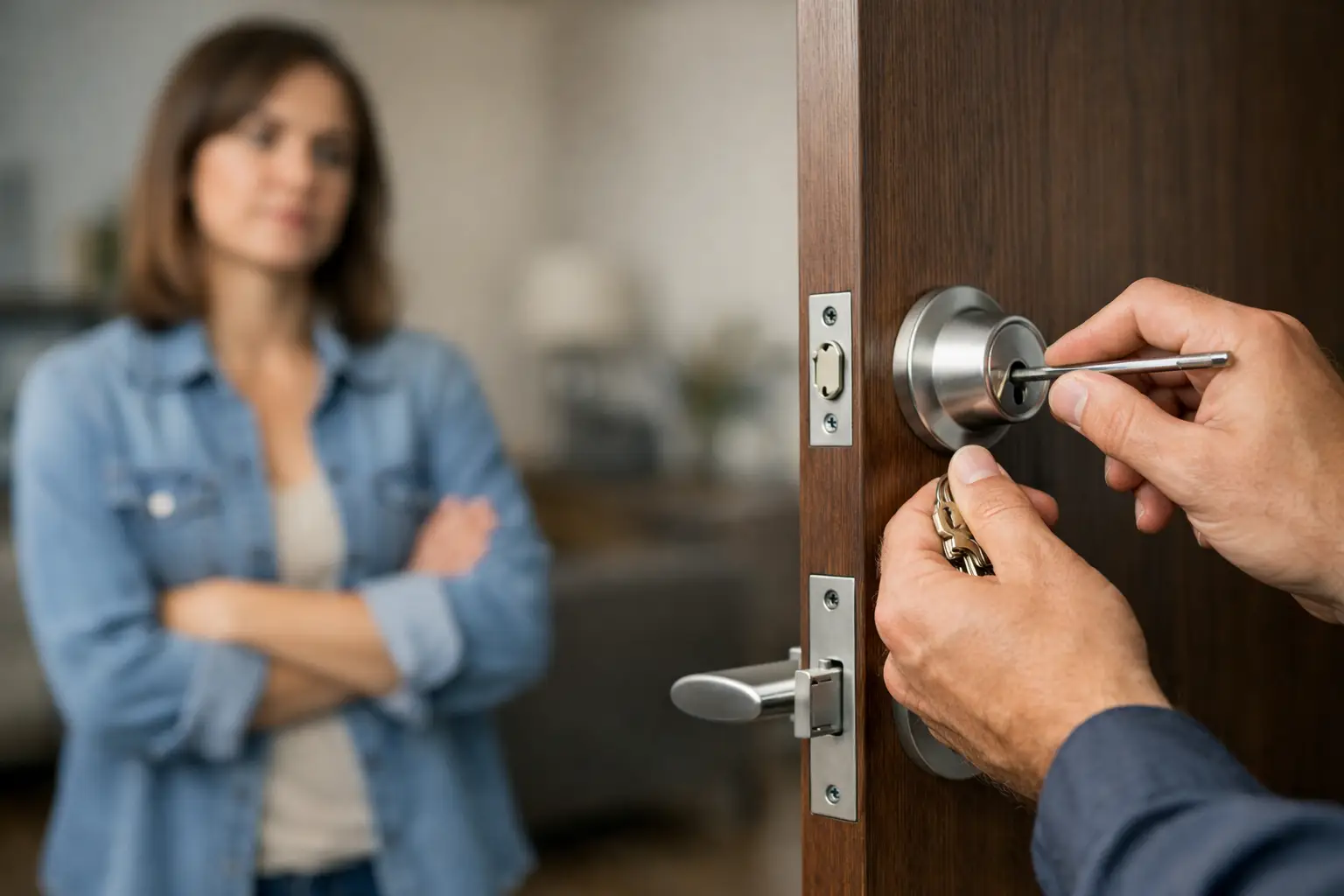
A new lock on your apartment door can turn an ordinary day into an emergency. If your belongings, medications, pets, or family are inside, the question is immediate: can landlords change locks while you still live there? Usually, no. A landlord cannot use a lock change to force a tenant out, collect overdue rent, or pressure someone to leave.
In California, landlords generally must follow the formal eviction process before removing a tenant from a rental home. That process ends with a court order and enforcement by the sheriff, not a landlord, maintenance worker, or property manager showing up with a new deadbolt.
When a landlord changing locks is illegal
Changing locks is an illegal lockout when it denies a current tenant access to a home they still have the legal right to occupy. It does not matter whether rent is late, the lease is ending, there has been an argument, or the landlord believes the tenant should be gone.
A landlord also cannot take other shortcuts designed to make a tenant leave. That can include shutting off utilities, removing doors or windows, taking personal property, blocking entry, or repeatedly entering without proper notice or a valid emergency reason. These actions can create serious legal consequences for the landlord.
A written notice to pay rent or move out is not permission to change locks. Neither is a lease violation notice. Even after a notice period expires, a landlord must use the court process if the tenant does not leave voluntarily.
The key point is simple: a lock change cannot replace an eviction.
When can landlords change locks legally?
There are legitimate reasons to change locks, but timing and access matter. A landlord can normally change locks between tenants, after a tenant has properly moved out, or after a unit has been legally recovered through the eviction process.
There can also be situations involving a clearly abandoned rental. But abandonment is not something a landlord should casually assume because the tenant is away, behind on rent, or has not answered calls. California has procedures for handling suspected abandonment, and getting that decision wrong can expose a property owner to liability.
A landlord may replace a broken lock, repair a damaged door, or upgrade building security while a tenant lives in the unit. In those cases, the tenant must still be able to get into their home. The practical answer is to coordinate the work, give required notice when applicable, and provide working keys or access codes immediately.
There are exceptions and fact-specific situations, especially when protective orders, domestic violence concerns, criminal activity, or emergency damage are involved. Those cases need careful handling. Safety matters, but safety does not give either side a blank check to deny lawful access.
What about a lockout after an eviction?
Once a court has issued the necessary judgment and the sheriff has completed the legal removal process, the landlord can secure the property and change the locks. At that point, the prior tenant may no longer have a right to enter.
That is very different from a landlord changing locks while a tenant is still living in the home or while an eviction case is pending. A pending case is not a completed eviction.
A tenant's first steps after a lock change
Stay calm, but treat the situation seriously. Do not force the door, break a window, or damage the lock. That can create a separate problem and make a stressful situation worse.
Start documenting what happened. Take photos of the door and lock, save texts and emails, note the time you discovered the lockout, and record any conversations with the landlord or manager. If you can, have a neutral witness present.
Then contact the landlord or property manager in writing. Keep it short and direct: state that you are a current tenant, that you have been denied entry, and that you need immediate access restored. Ask for a written response.
If there is an immediate safety concern, a child, pet, medication, or essential belongings inside, call local law enforcement for help. Officers may not decide a complicated landlord-tenant dispute on the spot, but documentation from a call can matter. Local tenant legal aid, a housing attorney, or a tenant-rights organization can also explain the fastest legal options available in your circumstances.
For Orange County renters, a fast locksmith can help when you are locked out of a home you have the right to enter, such as when you lost your own key or a lock failed. But a locksmith should not bypass a lock when ownership or legal possession is disputed. A reputable technician will ask for identification and proof of residency where possible. That protects tenants, property owners, and everyone in the building.
Can a tenant change the locks?
Tenants often ask the reverse question after a frightening experience: can I change the locks myself? In California, tenants may have rights to install or change locks under certain conditions, but the lease, the type of lock, and the reason for the change can affect the answer.
If you are dealing with a safety concern, such as a lost key, stalking, harassment, a former roommate, or domestic violence, do not wait to raise it with the property manager. Put the request in writing and explain the urgency. There may be specific protections and procedures that apply.
Before changing hardware, avoid drilling the door, replacing a master-keyed lock, or installing a lock that violates building rules without checking your lease and applicable law. A simple rekey may solve the security problem without damaging the door or creating a conflict over access. If the landlord is entitled to a key, withholding one can create a separate dispute.
The fair approach is clear communication: explain why the lock needs attention, agree on the work, confirm who receives keys, and get the arrangement in writing.
Property owners: do not turn a lock into a lawsuit
For landlords and property managers, a lock change may feel like the fastest answer when rent is unpaid or a tenant has stopped responding. It is not. A self-help lockout can become expensive quickly, even if the tenant owes money or has violated the lease.
Use the proper notice and eviction process. Keep records. If the unit appears abandoned, follow the required abandonment procedures rather than relying on assumptions. If you need a locksmith for repairs, rekeying, or turnover service, make sure the technician understands whether the unit is vacant, occupied, or subject to an active dispute.
Fast service should never mean careless service. FAST & FAIR LOCKSMITH believes the job is done right only when access, authorization, and pricing are clear before work begins.
The practical bottom line
A landlord can change locks after a lawful move-out, between tenants, or after a completed legal eviction. A landlord generally cannot change locks to remove a current tenant without the court process, even when rent is overdue or the relationship has broken down.
If you find yourself locked out, preserve evidence, request access in writing, and get qualified legal guidance quickly. If the issue is a damaged lock or lost key rather than a possession dispute, use a licensed, transparent locksmith who verifies authorization before starting work. A secure door is the goal, but keeping people out of their lawful home is not a repair.